
Skip to content

agentic-ai

144 posts with the tag “agentic-ai”

How Red Roof Is Bringing In More Customers With Zeta’s Voice-Activated AI Agent

How Red Roof Is Boosting Customer Engagement with Zeta’s Voice-Activated AI Agent Athena

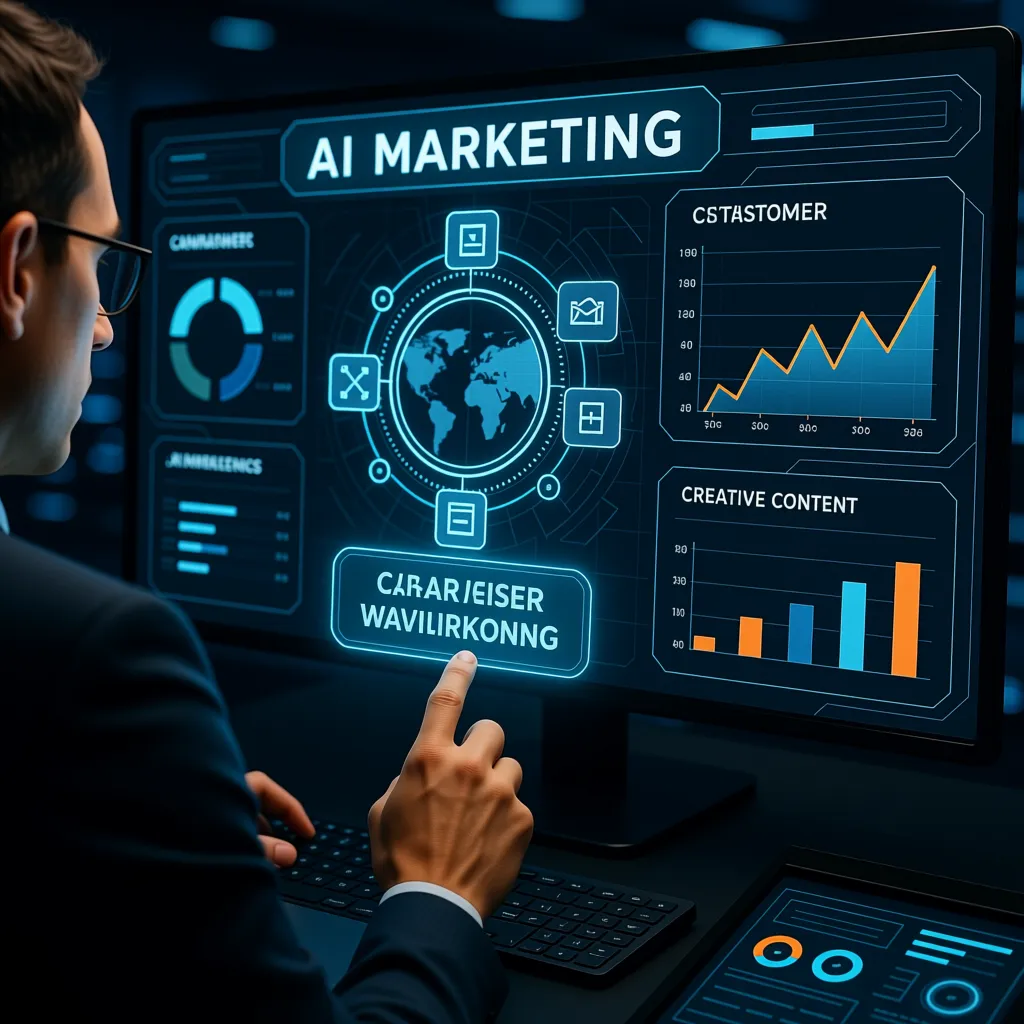
In today’s competitive marketing landscape, real-time insights and rapid strategy adjustments can mean the difference between capturing a customer’s attention and missing out. Zeta, a leader in marketing technology, has introduced Athena, a voice-activated AI agent designed to revolutionize how marketers access data and optimize campaigns. Long-time partner Red Roof has been at the forefront of Athena’s beta testing, illustrating the tangible benefits of integrating this tool into existing marketing platforms.

Introducing Athena: A New Era in Marketing Intelligence

Athena is an innovative AI agent seamlessly integrated into Zeta’s marketing platform, enabling marketers to engage with their campaign data through natural language voice commands. Unlike traditional dashboards, Athena provides instant, conversational responses to complex questions about campaign performance. This creates a hands-free, efficient workflow where team members can swiftly obtain insights and suggestions without navigating multiple screens.

How Red Roof Leveraged Athena to Optimize Marketing Efforts

Red Roof participated in the beta phase of Athena, allowing their marketing team to experience firsthand the advantages of conversational AI. Using Athena, they could analyze booking paths and detect missed opportunities in real time. Athena’s sophisticated predictive capabilities enable Red Roof to refine their audience targeting, extending beyond traditional demographics by incorporating location-based data and first-party customer insights. This resulted in more personalized, data-driven marketing approaches that enhanced campaign effectiveness.

The Technical Edge: Location and Data-Driven Targeting

One of Athena’s standout features is its ability to leverage location-based capabilities alongside first-party data. This combination helps uncover untapped audience segments that standard models might overlook. For Red Roof, this meant discovering new customer niches and optimizing messaging tailored to specific locales, contributing to increased bookings and customer engagement.

Key Insights

  • What is Athena? A voice-activated AI agent that provides real-time, natural language insights into marketing campaign performance.
  • How does Athena help marketers? By enabling quick, voice-driven queries, it simplifies data access and offers actionable suggestions for improving campaign strategies.
  • Why is predictive AI important for marketing? Predictive analytics anticipates outcomes, allowing marketers to proactively adjust efforts, reducing waste and improving ROI.
  • What unique benefits did Red Roof experience? Enhanced targeting beyond demographics, optimization of booking paths, and real-time detection of missed opportunities.

Conclusion

Athena represents a significant advancement in marketing technology, transforming how data is accessed and acted upon. For companies like Red Roof, the integration of this voice-activated AI agent means more efficient campaign management and the ability to reach broader, more relevant audiences. As AI continues to evolve, tools like Athena will become indispensable in crafting smarter, more responsive marketing strategies poised for success in a dynamic market environment.
Source: https://www.adexchanger.com/ai/how-red-roof-is-bringing-in-more-customers-with-zetas-voice-activated-ai-agent/

LTM Expands BlueVerse™ Tech with AppIQ, AgentIQ and FusionIQ to Accelerate AI‑Led Engineering

LTM Enhances BlueVerse™ Platform with AI-Driven Tools to Revolutionize Software Engineering

LTM has unveiled major expansions to its BlueVerse™ technology platform by introducing three innovative AI-powered solutions: AppIQ, AgentIQ, and FusionIQ. These tools are designed to modernize enterprise software development and engineering workflows significantly, driving faster, more efficient outcomes while reducing costs.

Transforming Legacy Systems with AI Automation

AppIQ focuses on automating the modernization of legacy software systems. Leveraging artificial intelligence, AppIQ can analyze complex existing codebases and generate actionable documentation rapidly. This capability helps organizations streamline the daunting task of upgrading outdated software, paving the way for digital transformation initiatives without extensive manual effort.

Streamlined AI Agent Management Across Software Delivery

AgentIQ provides a comprehensive platform to oversee AI agents during the entire software delivery lifecycle. It enables seamless deployment, monitoring, and governance of AI-driven components, ensuring that these systems are efficient, secure, and compliant with organizational standards. This enhances control over increasingly AI-integrated development environments.

Enhancing Quality Assurance with Intelligent Automation

FusionIQ embeds AI directly into testing and quality assurance processes. By automating test execution and validation, FusionIQ accelerates release cycles and boosts reliability. This integration enables development teams to identify and resolve bugs faster, ensuring higher-quality software deliveries while significantly reducing manual testing efforts.

Key Insights

  • What impact will these enhancements have on engineering efforts? These platforms aim to reduce engineering workload by 40-50%, freeing teams to focus on innovation rather than routine tasks.

  • How do AppIQ, AgentIQ, and FusionIQ complement each other? Together, they create a cohesive AI-led workflow, from legacy modernization (AppIQ), through AI agent lifecycle management (AgentIQ), to automated quality assurance (FusionIQ).

  • What benefits do enterprises gain? Faster time-to-market, lower operational costs, and transformation of legacy systems into modern digital assets.

Conclusion

LTM’s expansion of the BlueVerse™ platform signals a significant advancement in leveraging AI to reshape enterprise software engineering. By automating critical modernization, management, and testing tasks, these tools promise to increase efficiency and drive innovation within IT departments. As businesses continue to seek digital transformation, AI-powered solutions like AppIQ, AgentIQ, and FusionIQ will be instrumental in overcoming legacy barriers and accelerating development cycles.


Source: https://martechseries.com/predictive-ai/ai-platforms-machine-learning/ltm-expands-blueverse-tech-with-appiq-agentiq-and-fusioniq-to-accelerate-ai%e2%80%91led-engineering/

Oracle Unveils AI Database Agentic Innovations for Business Data

Oracle Launches Advanced Agentic AI Innovations in Its Database for Enhanced Business Data Management

In an exciting development for enterprises leveraging artificial intelligence, Oracle has introduced groundbreaking agentic AI capabilities within its AI Database. These innovations are designed to streamline the creation, deployment, and scaling of AI-powered applications that address specific business challenges with enhanced security and efficiency.

Revolutionizing Business AI Applications

Oracle’s latest enhancements enable businesses to seamlessly integrate real-time data from diverse sources and environments, including both cloud and on-premises platforms. This flexibility ensures that AI applications can operate effectively across different infrastructures while maintaining rigorous data protection standards.

A highlight of this update is the introduction of the Autonomous AI Vector Database, which supports advanced data processing and retrieval for AI workloads. Alongside this, Oracle’s Private Agent Factory empowers organizations to build custom data-driven agents and automated workflows without sacrificing data privacy or security.

Key Features and Benefits

  • Rapid AI Application Development: By providing tools that simplify AI integration, Oracle reduces the time and resources needed to develop intelligent business solutions.
  • Secure Data Handling: New security measures guard against AI-centric threats, ensuring sensitive business information remains protected.
  • Scalability Across Environments: Whether in the cloud or on-premises, the architecture supports scalable agentic workloads to meet growing AI demands.

Key Insights

  • What are agentic AI innovations? Agentic AI refers to autonomous systems capable of acting on behalf of users or businesses, making decisions, and executing workflows using real-time data.

  • How does Oracle’s update benefit businesses? It accelerates AI adoption by allowing rapid development of secure, scalable AI applications tailored to various business environments.

  • What role does security play? Security is integral, with features designed to prevent AI-related vulnerabilities while maintaining seamless data access.

  • Which industries stand to gain most? Any industry relying on real-time data insights and automation, from finance to retail, can leverage these innovations for operational efficiency.

Conclusion

Oracle’s unveiling of agentic AI innovations within its AI Database marks a significant leap forward in how enterprises can harness AI. By balancing rapid development, scalability, and robust security, Oracle empowers organizations to innovate confidently with AI-driven applications. As AI technology evolves, such innovations pave the way for more intelligent, responsive, and secure business ecosystems.


Source: https://martechseries.com/predictive-ai/ai-platforms-machine-learning/oracle-unveils-ai-database-agentic-innovations-for-business-data/

Palo Alto Networks Unveils the Industry’s Most Secure Browser Built for Agentic AI

The Future of Secure Browsing: Palo Alto Networks Launches Prisma Browser Tailored for Agentic AI

In an era where artificial intelligence (AI) technologies are rapidly evolving, security remains a top concern for organizations. Palo Alto Networks has taken a significant leap forward by unveiling an enhanced version of its Prisma Browser, specifically designed to meet the challenges posed by Agentic AI — AI systems capable of autonomous operation with minimal human oversight.

Introducing Prisma Browser for Agentic AI

Prisma Browser is positioned as more than just a conventional web browser; it is a secure hub for AI-driven workflows. As employee reliance on AI agents grows, so do the associated security risks. Recognizing this, Palo Alto Networks has embedded advanced safeguards within Prisma Browser to counteract emerging threats such as shadow AI agents, which operate without organizational approval, and prompt injection attacks that manipulate AI behavior.

Security Meets Productivity

By integrating tightly with large language models (LLMs), Prisma Browser enables organizations to harness AI’s power while enforcing strict security protocols. This balance helps prevent data leakage during AI interactions and enables businesses to maintain compliance with international data security regulations.

Part of the Broader Prisma SASE Ecosystem

This innovation fits within Palo Alto Networks’ broader Prisma SASE (Secure Access Service Edge) framework, which offers comprehensive cybersecurity solutions across networks, cloud environments, and now AI platforms. The Prisma Browser acts as a critical component in this ecosystem, enhancing IT efficiency and streamlining secure AI adoption across enterprises.

Key Insights

  • What makes Prisma Browser unique? It is tailored for AI workflows, embedding security measures that address specific risks such as autonomous AI agents and AI prompt attacks.
  • How does it enhance security? By controlling and monitoring AI-driven operations, Prisma Browser prevents unauthorized AI activities and safeguards sensitive data.
  • What benefits do organizations gain? Improved productivity through secure AI usage, reduced risk of data breaches, and compliance with global data protection standards.
  • How does this impact AI adoption in the workplace? It creates a safer environment for leveraging AI autonomously, encouraging broader deployment of AI tools.

Conclusion

Palo Alto Networks’ Prisma Browser represents a forward-thinking approach to the evolving intersection of cybersecurity and AI technology. By addressing the specific risks posed by Agentic AI, it helps organizations confidently embrace AI-driven automation while maintaining robust security postures. As AI continues to transform the workplace, solutions like Prisma Browser will be essential in bridging innovation with safety, ensuring that the benefits of AI can be fully realized without compromising security or compliance.


Source: https://martechseries.com/predictive-ai/ai-platforms-machine-learning/palo-alto-networks-unveils-the-industrys-most-secure-browser-built-for-agentic-ai/

Claude, ChatGPT, Cursor, and Other AI Agents Can Now Take Direct Action on WordPress.com Sites Through Natural Conversation

Empowering WordPress.com Sites: AI Agents Now Manage Content via Natural Conversation

In a significant advancement for website management, Automattic’s WordPress.com has introduced new functionality that allows AI agents such as Claude, ChatGPT, and Cursor to create, edit, and manage content directly through natural conversation. This development sets a new standard for the integration of artificial intelligence with content management systems, streamlining workflows for users and developers alike.

Revolutionizing Content Management with AI

Traditionally, website owners and editors have relied on the WordPress dashboard to make changes to their site, from drafting posts to updating pages. The newly launched capabilities breach this convention by enabling AI agents to perform these tasks via conversational commands. Users can now instruct their AI assistant to generate posts, alter existing content, or adjust page elements simply by talking to them in natural language.

This feature is powered by enhancements to the Model Context Protocol (MCP) server, which acts as a secure interface allowing AI agents to interact meaningfully and effectively with WordPress.com sites. By expanding the MCP’s functionality, WordPress.com bridges the gap between natural language AI models and traditional web content management, empowering users with more intuitive controls.

Safety and User Control Are Paramount

Although the AI agents have been given the ability to take direct actions on sites, WordPress.com has placed a strong emphasis on safety and user control. Any changes proposed or initiated by the AI require explicit user confirmation before being applied. This approval process guarantees that users maintain full oversight of their website content and avoids any unintended modifications.

Why This Matters

WordPress.com hosts a vast amount of content, making it a prime candidate for AI-driven enhancements. By integrating AI agents directly into the content workflow, Automattic not only improves efficiency but also addresses common challenges faced by website managers, such as time-consuming editing and content creation tasks.

Key Insights

  • What new capabilities do AI agents have on WordPress.com? They can create, edit, and manage website content through natural conversation.
  • How does the Model Context Protocol (MCP) server facilitate this? It allows AI agents to securely and effectively interact with WordPress sites.
  • What safeguards protect users? Every AI-initiated change requires explicit user confirmation to ensure control and security.
  • What is the broader impact for WordPress users? Enhanced content management efficiency and a more intuitive user experience.

Conclusion

The introduction of conversational AI control on WordPress.com signals a transformational step in website management. By blending AI’s natural language processing with robust security measures, WordPress.com is positioning itself as a leader in AI-powered content management platforms. Users can look forward to more streamlined workflows and smarter website interactions, reshaping how online content is created and maintained in the digital era.


Source: https://martechseries.com/predictive-ai/ai-platforms-machine-learning/claude-chatgpt-cursor-and-other-ai-agents-can-now-take-direct-action-on-wordpress-com-sites-through-natural-conversation/

Cloudflare CEO: Bots could overtake human web usage by 2027

Bots on the Rise: Preparing for a Future Where AI Dominates the Web

The internet landscape is poised for a major transformation. Cloudflare CEO Matthew Prince recently shared a striking prediction: by 2027, AI-powered bots could exceed human users in web traffic. This shift will fundamentally change how websites operate, how brands engage customers, and how advertising is structured.

What Does This Mean?

Bots—automated software agents driven increasingly by artificial intelligence—are busy generating huge volumes of online activity. Unlike human users who visit one or two sites at a time, AI bots can access multiple websites simultaneously, rapidly gathering and processing data. This flood of bot-driven traffic is already reshaping the flow and nature of internet usage.

Impact on Brands and Advertising

With bots becoming the dominant visitors, traditional relationships between customers and brands face disruption. AI bots do not have brand loyalty, meaning they consume content without preference or emotional connection. This challenges businesses to rethink marketing and customer engagement strategies, as the usual metrics based on human interaction may no longer apply.

The Value of Unique Content

As bot traffic rises, unique and authentic content gains even greater importance. Since AI agents prioritize data acquisition over brand allegiance, sites offering genuinely distinctive content will stand out. Meanwhile, advertising models that rely heavily on page views and traffic may see diminished returns because bots inflate traffic numbers without converting to real customers.

Key Insights

  • How significant is the growth of AI bots in web traffic? By 2027, bots could surpass human internet usage, implying a massive shift in how web traffic volume is generated.
  • What challenges do bots create for businesses? Bots lack brand loyalty and do not engage with content like humans, complicating traditional advertising effectiveness and customer relationship models.
  • Why will unique content matter more? In a bot-dominated world, genuinely unique content helps differentiate a site and maintains value beyond mere traffic.
  • How might internet business models change? As bot traffic grows, models based on ad impressions and page views may become less effective, signaling a need for new monetization strategies.

Conclusion

The internet is headed toward a future where AI agents dominate web usage, transforming traditional interactions between brands and consumers. Businesses must start preparing now by emphasizing unique content production and exploring innovative ways to measure engagement and generate revenue. While uncertainties remain about the exact shape of the digital ecosystem after 2027, one thing is clear: adapting to the rise of bots will be essential for long-term success.


Source: https://searchengineland.com/bots-overtake-human-web-usage-2027-472109

From SEO And CRO To Agentic AI Optimization (AAIO): Why Your Website Needs To Speak To Machines via @sejournal, @slobodanmanic

From SEO and CRO to Agentic AI Optimization (AAIO): Why Your Website Must Now Communicate with Machines

The landscape of digital marketing and website management is undergoing a groundbreaking transformation. Traditionally, businesses have optimized their websites primarily for human users, focusing on Search Engine Optimization (SEO) and Conversion Rate Optimization (CRO). However, the emergence of autonomous AI agents interacting with web content is driving a new era—Agentic AI Optimization (AAIO). This shift requires websites to be designed not only for people but also for intelligent machines.

The Evolution of Optimization: SEO to AAIO

In recent years, we’ve witnessed a progression from classic SEO to more sophisticated forms of optimization. First came Answer Engine Optimization (AEO), which tailored content to answer AI-driven queries. This evolved further into Generative Engine Optimization (GEO), adapting sites to be compatible with AI-generated content and responses. The latest stage, AAIO, focuses on making websites usable and functional for agentic AI entities—autonomous systems that can discover, cite, and act on web information.

A landmark moment occurred in December 2025 with the formation of the Agentic AI Foundation. This organization established shared standards for AI interaction with web content, similar to how the World Wide Web Consortium (W3C) set early web standards decades ago. These protocols address three foundational concepts critical to AI-optimized sites: Discovery, Citation, and Action.

What Does Discovery, Citation, and Action Mean?

  • Discovery: Websites must be structured so AI agents can find and access relevant content efficiently.
  • Citation: AI systems need to accurately reference and credit web content in their outputs, ensuring trustworthy responses.
  • Action: Websites should enable AI agents to perform meaningful interactions, such as completing transactions or updating information autonomously.

Why Businesses Need to Adapt Now

With AI-powered browsers and agentic commerce rapidly developing, businesses face a new challenge. Websites that fail to accommodate AI interaction risk losing search visibility, customer engagement, and potential sales. Transitioning to AAIO principles is no longer optional—it’s essential for maintaining competitiveness in the digital economy.

Key Insights

  • How does AAIO differ from traditional SEO? AAIO expands optimization to make web content accessible and actionable by autonomous AI, beyond human-readable ranking factors.
  • What role does the Agentic AI Foundation play? It creates standards to ensure consistent and reliable AI interactions with web content.
  • Why are Discovery, Citation, and Action critical? These pillars enable effective AI operation, ensuring websites are found, trusted, and functional for AI-driven tasks.

Conclusion

The evolution from SEO and CRO to AAIO represents a fundamental shift in website strategy. As AI agents become integral to how information is found and processed online, websites must be optimized for machine communication. Businesses that embrace these changes will unlock new opportunities in AI-driven commerce and user engagement, while those that resist may face diminished presence and lost transactions. This article serves as the beginning of a series exploring emerging protocols and best practices for the AI-powered web. Stay tuned to learn how to future-proof your website in an era of intelligent agents.


Source: https://www.searchenginejournal.com/from-seo-and-cro-to-agentic-ai-optimization-aaio-why-your-website-needs-to-speak-to-machines/569983/

WordPress.com Enables AI Agents to Write & Manage Content

How WordPress.com is Revolutionizing Content Management with AI Agents

Introduction

In a significant advancement for content creators and site managers, Automattic has introduced new AI capabilities on WordPress.com. This update enables AI agents like Claude and ChatGPT to assist users by drafting, editing, and managing website content. These enhancements aim to streamline the workflow of content creators while retaining strict user control and oversight.

Enhancing Content Creation with AI

WordPress.com’s integration of artificial intelligence agents represents a leap forward in the content management system (CMS) landscape. By leveraging AI, users can delegate time-consuming tasks such as composing posts, moderating comments, and organizing content to intelligent agents. This not only improves efficiency but also allows creators to focus more on strategy and creativity.

The underlying technology update, known as the Model Context Protocol (MCP), supports this interaction between users and AI agents. It emphasizes a seamless experience while ensuring that users maintain full control over what is published and how their site operates.

Prioritizing User Control and Safety

One of the standout features of this new AI-driven system is its focus on safety and user permissions. Rather than allowing AI changes to happen autonomously, WordPress.com requires user approval before any modifications are executed. Additionally, new content generated by AI defaults to draft mode, giving site owners the opportunity to review and edit before publication.

Such safeguards aim to build trust in the AI capabilities and assure users that their brand voice and content standards remain uncompromised.

Key Insights

  • What does this mean for content creators? Users gain a powerful tool that can reduce administrative burdens, enabling more time for high-quality content development.
  • How does WordPress.com maintain control over AI actions? Every AI-generated change requires user approval, and no content goes live without explicit consent.
  • What impact could this have on the CMS market? This move places WordPress.com alongside other leading platforms embracing AI, potentially reshaping how content management is performed across industries.

Conclusion

Automattic’s rollout of AI agents on WordPress.com marks a strategic advancement in content management technology. By blending AI efficiency with stringent user oversight, WordPress.com enhances productivity without sacrificing control. As AI integration in CMS platforms grows, users can expect increasingly sophisticated tools to support their digital presence while maintaining the ability to curate and approve content carefully.


Source: https://www.cmswire.com/digital-experience/wordpresscom-enables-ai-agents-to-write-manage-content/?utm_source=cmswire.com&utm_medium=web&utm_campaign=cm&utm_content=all-articles-rss

Dynamiks.ai Introduces the Quarterback: The First Fully Autonomous AI Agent Enabling the Agentic Pipeline

Dynamiks.ai Launches “The Quarterback”: Revolutionizing Sales with Fully Autonomous AI

Introduction

In the evolving landscape of sales technology, Dynamiks.ai has introduced a groundbreaking solution named “The Quarterback.” This fully autonomous AI agent is designed to transform and streamline sales processes, integrating seamlessly with popular customer relationship management platforms like HubSpot CRM. In this article, we explore how this innovative tool brings unprecedented clarity and efficiency to sales teams by harnessing real-time data and intelligent pipeline modeling.

Enhancing Sales Through AI Integration

The Quarterback represents a leap forward in AI-driven sales management. Unlike traditional tools that require manual data input and analysis, this AI agent operates autonomously to model the entire sales pipeline. By continuously analyzing sales data, it delivers real-time insights to sales professionals, allowing them to focus on what matters most—the art of relationship-building.

The system introduces two novel metrics to gauge sales effectiveness: “Impact,” which measures the financial influence of deals in the pipeline, and “Momentum,” reflecting the speed at which deals progress. Together, these metrics provide a comprehensive view of sales health, helping teams prioritize opportunities and strategize effectively.

Seamless CRM Integration and Privacy Focus

One of The Quarterback’s key strengths lies in its seamless integration with HubSpot CRM, a widely used platform in sales environments. This integration ensures that sales data remains centralized and up to date without additional administrative burden. Moreover, The Quarterback accesses existing data without compromising user privacy, addressing a major concern in data-driven sales strategies.

Early Access and Adoption Potential

Dynamiks.ai is currently offering early access trials for sales teams interested in experiencing the capabilities of The Quarterback firsthand. This trial phase provides an opportunity for teams to gain clarity in their sales strategies and witness the AI’s effectiveness in real-world environments.

Key Insights

  • What makes The Quarterback unique? It is the first fully autonomous AI agent that not only models the sales pipeline but also provides actionable insights through innovative measurements.
  • How does it support sales teams? By automating data-driven actions and delivering real-time pipeline insights, it allows sales professionals to focus on customer relationships.
  • Why is integration with HubSpot CRM important? Seamless integration ensures smooth data access and minimizes administrative tasks, making adoption easier for teams already using HubSpot.
  • What are the new metrics Impact and Momentum? Impact relates to the financial value of sales deals, while Momentum indicates the velocity or speed of deal progression.

Conclusion

The Quarterback by Dynamiks.ai introduces a vital advancement for modern sales teams, combining autonomy, intelligent data analysis, and user-centric integration. By automating complex pipeline modeling and offering real-time insights, it paves the way for more effective and efficient sales operations. As sales environments become increasingly competitive, tools like The Quarterback will be essential for teams aiming to optimize their strategies while maintaining strong customer relationships.


Source: https://martechseries.com/sales-marketing/crm/dynamiks-ai-introduces-the-quarterback-the-first-fully-autonomous-ai-agent-enabling-the-agentic-pipeline/

FileSpin Launches MCP-Native DAM Infrastructure for Autonomous Media Workflows

FileSpin Unveils Revolutionary MCP-Native DAM Platform to Automate Media Workflows

Introduction In a significant leap forward for digital asset management, FileSpin has launched a novel digital asset management (DAM) infrastructure that is deeply integrated with the Model Context Protocol (MCP). This platform is designed to empower autonomous media workflows, allowing AI agents to execute complex media management tasks seamlessly through natural language. This development promises enhanced efficiency for organizations handling large volumes of media assets.

A New Paradigm in Digital Asset Management Unlike traditional DAM systems that retrofit protocols atop existing frameworks, FileSpin’s solution is built from the ground up with MCP as the foundation. This native integration enables AI agents to autonomously manage crucial media operations such as tagging assets, preparing marketing campaigns, and managing approval processes. The system’s architecture facilitates smoother, faster automated interactions that are intuitive and natural-language driven.

Security and Governance at the Forefront Recognizing the importance of governance in AI-driven environments, FileSpin incorporates stringent governance measures including comprehensive audit trails and role-based access controls. These features ensure that AI operations remain transparent, secure, and compliant with organizational policies, minimizing risk while maximizing trust in automated workflows.

Optimized for Industry Verticals The platform is tailored for sectors like eCommerce and real estate, which rely heavily on efficient media asset handling for product listings, marketing, and client engagement. By integrating with existing workflow automation tools, FileSpin offers enterprises a way to connect DAM with broader business applications seamlessly, enhancing productivity and operational fluidity.

Key Insights

  • What makes FileSpin’s MCP-native DAM infrastructure unique? It is built entirely upon the Model Context Protocol, enabling native AI-driven media management instead of adding layers onto legacy systems.
  • How does this platform enhance workflow automation? By leveraging natural language interactions, AI agents can autonomously complete tagging, campaign prep, and approvals without manual input.
  • What governance features are included? The system includes robust audit trails and role-based access controls to maintain secure and accountable AI operations.
  • Which industries stand to benefit immediately? eCommerce and real estate are primary targets due to their intensive use of digital media assets.

Conclusion FileSpin’s introduction of an MCP-native DAM infrastructure represents a forward-thinking step toward autonomous media management. By embedding AI deeply into the asset management fabric with strong governance, enterprises can expect more efficient, scalable, and secure workflows. This platform not only addresses current media handling challenges but also sets a foundation for future AI integrations across various industries.


Source: https://martechseries.com/predictive-ai/ai-platforms-machine-learning/filespin-launches-mcp-native-dam-infrastructure-for-autonomous-media-workflows/

Google expands its Universal Commerce Protocol to power AI-driven shopping

How Google’s Universal Commerce Protocol is Transforming AI-Driven Shopping

The landscape of online shopping is continually evolving, and Google has taken a significant step forward with its recent expansion of the Universal Commerce Protocol (UCP). This development enhances AI-driven shopping experiences, aiming to bridge the gap between digital and traditional retail. Here’s an in-depth look at what this means for consumers, retailers, and the future of e-commerce.

What Is the Universal Commerce Protocol?

The Universal Commerce Protocol is Google’s standard framework designed to enable smoother transactions and better interaction between buyers, sellers, and AI agents. Its latest expansion introduces various features that make digital shopping more intuitive and efficient, tailored to meet the increasing demands of AI-powered retail platforms.

Key Features Enhancing Online Shopping

1. Enhanced Cart Functionality: One of the standout updates allows users to add multiple products to their cart simultaneously, significantly improving shopping convenience and reducing checkout friction.

2. Real-Time Catalog Updates: Up-to-date product information is crucial for online shoppers. Google’s real-time catalog feature ensures that customers have access to the latest product details, avoiding the frustration of outdated listings.

3. Identity Linking for Seamless Benefits: The integration of identity linking enables customers to retain loyalty points, discounts, and personalized benefits across different platforms, creating a unified and rewarding shopping experience.

4. Simplified Retailer Onboarding: Recognizing that retailer participation is vital for a thriving shopping ecosystem, Google has streamlined the onboarding process. This approach encourages more retailers to adopt AI-driven solutions, broadening the available product range.

Impact on AI-Driven Commerce

With these enhancements, Google is fostering more natural and efficient interactions between users and AI shopping agents. The improvements emphasize the importance of quality product data, as it directly influences product visibility and user engagement in agent-based commerce environments.

Integration with Google’s Platforms

These updates will roll out across multiple Google platforms, including Google Search and the newly introduced Google Gemini app. By embedding AI-driven shopping capabilities throughout its ecosystem, Google aims to accelerate adoption and set new standards for online retail experiences.

Key Insights

Q: Why is the expansion of UCP important? A: It enhances the online shopping experience by making it more efficient, similar to traditional retail, and leveraging AI for personalized interactions.

Q: How will retailers benefit? A: The simplified onboarding and AI integration enable retailers to reach customers more effectively and keep product information accurate and up-to-date.

Q: What does the emphasis on product data quality imply? A: High-quality data ensures better visibility and customer trust in agent-driven shopping, which is critical as AI shopping agents become more prevalent.

Q: How does identity linking improve user experience? A: It allows customers to maintain their benefits like loyalty rewards across different platforms, creating a seamless shopping journey.

Conclusion

Google’s expansion of the Universal Commerce Protocol marks a pivotal advancement in AI-driven shopping. By improving cart functionality, real-time product data, and customer identity management, Google is setting a new benchmark for digital commerce. Retailers can expect easier integration, while consumers will benefit from a more responsive and personalized shopping experience. As AI continues to reshape e-commerce, innovations like these will be crucial in defining the future of how we shop online.


Source: https://searchengineland.com/google-expands-its-universal-commerce-protocol-to-power-ai-driven-shopping-472061

Hexaware Launches Agentverse™, an Enterprise AI Agent Platform with 600+ Ready-to-Deploy Agents

Hexaware Unveils Agentverse™: A Groundbreaking Enterprise AI Agent Platform With Over 600 Ready-to-Deploy Agents

Introduction

Hexaware Technologies has introduced Agentverse™, a revolutionary enterprise AI agent platform designed to accelerate the adoption and operationalization of artificial intelligence across a variety of business functions. This new platform promises to take organizations beyond traditional AI pilot programs by offering a robust and scalable solution tailored to integrate effortlessly with existing enterprise systems.

Elevating Enterprise AI Adoption

Agentverse™ stands out with its extensive library of more than 600 ready-to-deploy AI agents. These agents are engineered to perform a wide range of tasks within an organization, ranging from customer service automation to regulatory workflow support. By embedding these intelligent agents directly into existing CRM systems, IT service management tools, and communications platforms, companies can streamline workflows and enhance their operational efficiency seamlessly.

Hexaware emphasizes the platform’s capacity to ensure governance and operational security through built-in compliance features, addressing a crucial aspect for modern AI deployments concerned with data privacy and regulatory adherence.

Business Benefits and Use Cases

Organizations deploying Agentverse™ can expect notable improvements, including a 40-60% increase in efficiency in service workflows, faster response times, and meaningful cost reductions. The platform supports diverse sectors such as finance, retail, and compliance-heavy industries, enabling businesses to harness AI to optimize customer interactions, automate repetitive tasks, and enhance regulatory processes.

Key Insights

  • What makes Agentverse™ a transformative AI solution? It bridges the gap between AI experimentation and enterprise-wide deployment with a scalable, secure framework featuring hundreds of prebuilt agents.
  • How does Agentverse™ integrate with existing infrastructure? It offers seamless compatibility with prevalent enterprise tools such as CRM and ITSM systems, ensuring smooth adoption without disrupting current workflows.
  • What tangible outcomes can businesses anticipate? Significant productivity gains, improved service efficiency by up to 60%, cost savings, and faster operational responses.
  • Which industries can benefit most? Finance, retail, customer service, and regulatory compliance sectors stand to gain dramatically from Agentverse™’s capabilities.

Conclusion

Hexaware’s Agentverse™ represents a significant step forward in enterprise AI integration, enabling businesses to move beyond experimentation toward measurable, scalable implementations. As companies navigate increasingly complex operational landscapes, platforms like Agentverse™ will be critical in unlocking the full potential of AI-driven automation and intelligence across corporate ecosystems.


Source: https://martechseries.com/predictive-ai/ai-platforms-machine-learning/hexaware-launches-agentverse-an-enterprise-ai-agent-platform-with-600-ready-to-deploy-agents/

Seekr and GDIT Collaborate to Accelerate Development of Secure, Trusted Agentic AI Solutions for Government

Accelerating Secure, Trusted Agentic AI Solutions for Government: The Partnership Between Seekr and GDIT

In an era where government operations increasingly demand secure, efficient, and intelligent solutions, Seekr has teamed up with General Dynamics Information Technology (GDIT) to advance the development of agentic AI technologies designed specifically for federal use. This collaboration aims to transform how government agencies leverage artificial intelligence by delivering innovative, secure platforms that improve decision-making, optimize processes, and enhance operational efficiency.

Unlocking the Potential of Agentic AI for Defense and Government

Agentic AI refers to systems capable of autonomous decision-making and action, providing significant advantages in complex environments such as defense and government operations. Seekr’s SeekrFlow™ Enterprise AI Platform is at the core of this partnership. It offers a unified system that supports model hosting and decision support tailored for mission-critical, demanding environments.

SeekrFlow has already been deployed across various defense agencies, proving its reliability and trustworthiness. The platform facilitates enhanced model performance, enabling faster, more accurate decision-making while reducing operational costs. This makes it an invaluable asset in federal agencies where decisions often have critical impacts.

Collaboration Objectives: Enhancing Government Efficiency and Security

The joint effort between Seekr and GDIT focuses on innovating AI capabilities specifically aimed at optimizing case management and risk evaluation in government operations. By streamlining these processes, the partnership hopes to improve efficiency, reduce administrative bottlenecks, and enhance overall risk management.

Key objectives include:

  • Developing secure AI solutions that comply with stringent government security requirements.
  • Leveraging SeekrFlow’s unified platform to integrate AI seamlessly into existing workflows.
  • Enhancing the cost-effectiveness of AI deployment in federal agencies.
  • Supporting mission-critical operations with trusted AI tools that elevate decision-making quality.

Why This Partnership Matters

As governments worldwide face increasing pressures to modernize and improve their services, the demand for trusted AI solutions grows. The collaboration between Seekr and GDIT represents a significant stride toward meeting these needs with technology that is reliable, secure, and tailored for high-stakes environments.

Key Insights

  • What makes SeekrFlow unique? SeekrFlow is a comprehensive enterprise AI platform that supports multiple models and adapts to various operational demands, especially in defense.
  • How will this partnership impact government operations? The collaboration will enhance efficiency and risk management by providing secure, streamlined AI-powered decision support.
  • What are the security implications? The solutions developed adhere to rigorous security standards required for federal use, ensuring data and operational integrity.

Conclusion

The partnership between Seekr and GDIT is poised to accelerate the delivery of secure, trusted agentic AI solutions tailored for government needs. As federal agencies continue to adopt advanced technologies, this collaboration serves as a benchmark for integrating AI that enhances efficiency, supports critical decision-making, and upholds the highest security standards. Stakeholders can anticipate more innovative AI-driven tools that will transform government workflows, strengthen defense capabilities, and promote cost-effective operations in the near future.


Source: https://martechseries.com/predictive-ai/ai-platforms-machine-learning/seekr-and-gdit-collaborate-to-accelerate-development-of-secure-trusted-agentic-ai-solutions-for-government/

LINE’s AI agents point to messaging apps becoming sales channels

The Rise of AI Agents: How LINE Is Transforming Messaging Apps into Sales Channels

Messaging apps are experiencing a technological leap as they evolve beyond tools for communication to become critical platforms for customer service and sales. LINE Plus has pioneered this shift with the launch of ActEngine AI, an advanced platform using artificial intelligence agents to automate tasks within its popular messaging app. This innovation highlights a growing trend where messaging apps serve not just as social hubs, but as powerful channels for commerce and consumer interaction.

Automating Service and Sales

ActEngine AI allows businesses to deploy AI agents that handle a variety of operations. These agents can answer customer inquiries and resolve complaints with efficiency, effectively functioning as virtual customer service representatives. Moreover, they can operate as sales agents, analyzing user behavior to send personalized promotions that align with individual preferences, driving engagement and increasing sales opportunities.

The rollout of ActEngine AI within Thailand’s LINE MAN Wongnai service is a compelling example of this technology in action. By reducing the time required to manage customer support and improving response accuracy, it demonstrates how automation can enhance operational efficiency. This is particularly beneficial for small merchants who often struggle to manage promotional activities manually, enabling them to focus on core business functions while maintaining dynamic customer engagement.

Impact on Small Merchants and the Future of AI in Messaging

The platform offers significant advantages to small-scale businesses by easing the burden of manual marketing and customer service tasks. ActEngine AI empowers merchants to maintain personalized communication in real-time, blending customer support with targeted sales strategies seamlessly.

This development also signals a broader evolution in AI’s role—from solely handling background tasks to actively participating in frontline operational roles within customer-facing platforms. Real-time interactions via AI agents are bridging the gap between customer service and marketing, setting the stage for messaging apps to become crucial sales channels in the digital economy.

Key Insights

  • What makes ActEngine AI unique? It combines customer service automation with targeted sales promotion capabilities within a single messaging app platform.
  • How does this impact small businesses? It reduces manual workload, cuts response times, and increases promotional effectiveness, enabling better customer engagement.
  • Why is messaging app integration important? Integrating AI directly into messaging apps leverages existing user behaviors, making interactions natural and immediate.
  • What does this mean for the future? Messaging apps will increasingly function as hybrid service and sales platforms, transforming digital commerce and consumer interaction.

Conclusion

LINE Plus’s ActEngine AI exemplifies a significant shift in how AI technology is integrated into everyday communication channels. By automating and enhancing customer service and sales through messaging apps, it opens new doors for businesses, especially small merchants, to engage customers effectively and efficiently. As this technology develops, messaging apps are positioned to become pivotal sales channels, fundamentally changing the landscape of digital business interactions.


Source: https://www.marketingtechnews.net/news/line-ai-agents-point-to-messaging-apps-becoming-sales-channels/

PagerDuty Expands AI Ecosystem to Supercharge AI Agents and Deliver Autonomous Operations

PagerDuty’s AI Ecosystem Expansion: Empowering AI Agents for Autonomous Operations

As the adoption of artificial intelligence (AI) continues to revolutionize industries, operational efficiency and incident management remain critical factors for success. PagerDuty has taken a significant leap by expanding its AI integration ecosystem, aimed at boosting its AI agents and enabling autonomous operations that streamline workflows and improve reliability.

Enhancing Operational Capabilities with AI Partnerships

PagerDuty’s latest expansion strengthens its ecosystem by collaborating with more than 30 AI partners, including notable companies such as Anthropic, Cursor, and LangChain. These partnerships bring innovative tools into the fold that empower software development and incident management teams. For instance, developers gain access to resources that assess code changes proactively before deployment, reducing the risk of errors in production environments.

The automation of incident responses through AI integration means faster issue identification and resolution, minimizing downtime and enhancing service continuity. These improvements translate to a more resilient infrastructure for organizations relying on AI-driven applications.

Key Features of the New AI Ecosystem

  • Pre-production code assessment: Tools that help developers evaluate code modifications before they impact live environments.
  • Automated incident response: AI-driven workflows that quickly detect and respond to incidents, accelerating resolution times.
  • Multi-partner collaboration: Leveraging the expertise of over 30 AI partners to expand capabilities and foster innovation.

Why This Matters for Businesses

AI adoption is growing rapidly across industries, and organizations face mounting pressure to maintain service reliability and operational agility. PagerDuty’s enhanced AI ecosystem provides:

  • Reduced downtime through faster incident management
  • Improved software development workflows with AI-assisted code review
  • Greater confidence in deploying AI-powered services with autonomous operational support

Key Insights

Q: What does PagerDuty’s AI ecosystem expansion mean for incident management? A: It allows for quicker detection and automated responses to incidents, significantly reducing resolution times and operational disruptions.

Q: How do partnerships with companies like Anthropic and LangChain enhance this ecosystem? A: These collaborations bring specialized AI tools that support developers in preemptively managing code quality and automating operational tasks.

Q: What benefits can businesses expect from deploying these AI-driven tools? A: Enhanced reliability, reduced downtime, and streamlined workflows enable companies to deliver better digital services.

Q: What future trends does PagerDuty’s initiative reflect? A: A shift toward autonomous operations and increased integration of AI to optimize IT service management and software delivery.

Conclusion

PagerDuty’s expansion of its AI ecosystem marks a pivotal moment in the evolution of autonomous operational technologies. By integrating multiple AI partners and deploying intelligent tools, it facilitates faster incident resolution and enhances the reliability of AI applications. Organizations embracing these innovations are better positioned to navigate the complexities of AI adoption while ensuring continuous, resilient service delivery in a rapidly evolving digital landscape.


Source: https://martechseries.com/predictive-ai/ai-platforms-machine-learning/pagerduty-expands-ai-ecosystem-to-supercharge-ai-agents-and-deliver-autonomous-operations/

Synscribe Launches SEO AI Agent That Autonomously Executes SEO & GEO – Claims to Replace Traditional Agencies

Synscribe Unveils Revolutionary AI-Powered SEO Agent Set to Transform Digital Marketing

In a bold step towards reshaping how SEO and GEO marketing are managed, Singapore-based startup Synscribe has introduced an innovative autonomous AI agent designed to perform comprehensive SEO tasks without human intervention. This new technology harnesses the OpenClaw framework to provide scalable, multi-tenant SEO solutions, offering businesses an efficient alternative to traditional digital marketing agencies.

A New Era in SEO Automation

Synscribe’s AI agent is built to independently conduct a wide range of SEO activities typically handled by human specialists. These tasks include everything from meticulous keyword research to crafting optimized landing pages and generating engaging blog content. By learning from a shared knowledge base while serving individual clients, the agent enhances its efficiency and drastically reduces the manual workload—cutting down time and resources by over 90%.

The multi-tenant design means each client benefits from a dedicated agent fine-tuned to their specific needs, while the system as a whole evolves by sharing insights across all users. This collective intelligence empowers the AI to stay ahead of SEO trends, especially in the rapidly shifting landscape influenced by emerging AI-driven search technologies.

Addressing the Challenges of Modern SEO

Today, SEO is becoming more complex as search engines incorporate artificial intelligence to deliver more personalized and contextually relevant results. Traditional agencies often struggle to scale their operations to meet this demand efficiently. Synscribe’s solution emphasizes automation without sacrificing quality, leveraging decentralized human oversight to ensure content and strategies remain effective and aligned with best practices.

This model not only offers cost efficiencies but also enables businesses to execute their digital marketing strategies quickly and at scale, a critical advantage in the competitive online environment.

Key Insights

  • What makes Synscribe’s AI agent unique? It autonomously handles end-to-end SEO tasks, learns from a shared knowledge base, and operates in a multi-tenant environment tailored for individual clients.

  • How does this impact traditional SEO agencies? The technology could reduce reliance on human agencies by automating over 90% of manual SEO processes, reshaping the service landscape.

  • Why is decentralized human oversight important? Ensures quality control and strategic alignment, combining AI efficiency with human judgment.

  • What industries can benefit most? Any business reliant on online visibility—e-commerce, local services, media, and more.

  • What does this mean for the future of SEO? Greater automation coupled with AI intelligence is likely to become the norm, pushing agencies to innovate or integrate similar technologies.

Conclusion

Synscribe’s launch of an autonomous SEO and GEO AI agent represents a significant technological advancement in digital marketing. By blending powerful automation with strategic human oversight, it offers a compelling new approach to SEO execution that promises to boost efficiency, scalability, and results. Businesses looking to stay competitive in an AI-driven search environment may find this solution pivotal as they navigate the evolving SEO landscape.


Source: https://martechseries.com/predictive-ai/ai-platforms-machine-learning/synscribe-launches-seo-ai-agent-that-autonomously-executes-seo-geo-claims-to-replace-traditional-agencies/

AgentMail Raises $6M led by General Catalyst to Build the First Email Provider for AI Agents

AgentMail Secures $6M to Pioneer an Email Platform Tailored for AI Agents

The digital landscape is evolving rapidly, with AI agents increasingly functioning as virtual employees across diverse industries. AgentMail has emerged as a groundbreaking platform, raising $6 million in seed funding led by General Catalyst, to build the very first email provider designed exclusively for AI agents. This innovative solution promises to redefine how autonomous AI entities manage and operate email communications.

Introduction

As artificial intelligence continues to integrate deeply into business operations, the communication needs of AI agents become more sophisticated. Traditional email systems are not equipped to handle the autonomous and specialized nature of AI agent interactions. Recognizing this gap, AgentMail is developing an email provider that caters specifically to AI agents, enabling seamless, automated email handling.

A Platform Built for AI Agents

AgentMail’s platform provides dedicated inboxes tailored for AI agents, supporting two-way communication that mirrors human interactions but is optimized for AI workflows. Key features include:

  • Threading: Organizing conversations logically for better context management.
  • Labeling: Categorizing emails to streamline processing and retrieval.
  • Parsing: Extracting vital information efficiently to enable AI decision-making.

Additionally, AgentMail has introduced an onboarding API, allowing AI agents to securely and independently establish their email inboxes. This fosters a safer, more scalable adoption across industries where AI agents perform various tasks.

Addressing a Growing Market Need

With AI agents acting as autonomous virtual workers, there is an imminent demand for digital infrastructure to support their communication channels. AgentMail’s innovative approach ensures these agents can interact with clients, partners, and internal teams without the limitations of conventional email systems. This positions AgentMail at the forefront of the AI communication market, providing a tailored solution that enhances productivity and operational efficiency.

Key Insights

  • Why is AgentMail’s funding significant? The $6M seed round led by General Catalyst highlights strong investor confidence in the necessity and potential of AI-specific communication tools.
  • How does AgentMail enhance AI agent capabilities? By offering specialized inboxes and advanced features like threading and parsing, it facilitates smarter, context-aware email management.
  • What industries can benefit most? Any sector employing AI agents—such as customer service, sales, and administrative automation—can leverage this platform for improved communication workflows.

Conclusion

AgentMail’s innovative email provider for AI agents marks a critical development in the integration of AI within everyday business functions. As AI agents take on more autonomous roles, having a dedicated email platform designed for their unique needs enables better communication, increased efficiency, and smoother workflows. This funding milestone sets the stage for accelerated growth and adoption, positioning AgentMail as a key player in the AI-driven communication revolution.


Source: https://martechseries.com/predictive-ai/ai-platforms-machine-learning/agentmail-raises-6m-led-by-general-catalyst-to-build-the-first-email-provider-for-ai-agents/

Beyond Automation: How AI Is Rewiring Control In The Ad Tech Stack

Beyond Automation: How AI Is Rewiring Control In The Ad Tech Stack

Introduction

Artificial Intelligence (AI) is no longer just about automating repetitive tasks in advertising technology—it is fundamentally transforming the way control and decision-making occur within the ad tech ecosystem. Dennis Buchheim highlights a pivotal shift that goes beyond efficiency gains to focus on data access and governance, reshaping power structures and how brands interact with their data.

The Traditional Ad Tech Landscape

Historically, a handful of dominant platforms have controlled high-quality data and analytics in advertising technology. Smaller advertisers and brands often found themselves siloed, reliant on limited insights provided by intermediaries. This concentration held back broader innovation and equitable competition within the market.

Enter Agentic AI: Decentralizing Control

The rise of “agentic AI” introduces a new paradigm by decentralizing control and democratizing data access. Unlike traditional models, this technology enables advertisers and brands to engage directly with their datasets in real time, removing the need for heavy reliance on centralized platforms or opaque intermediation.

This shift empowers marketers to make timely, informed decisions on their campaigns and strategies, potentially leading to better outcomes and agility.

Collaborative Governance and Its Future Impact

Platforms that embrace collaborative governance models—where multiple stakeholders can access and contribute to data decision-making—stand to gain prominence. In contrast, platforms that maintain opaque controls and limit access may find themselves increasingly marginalized.

This evolution suggests a move away from simply optimizing existing frameworks towards a more inclusive approach, where the diversity of insights plays a central role in shaping advertising outcomes.

Key Insights

  • Why is data democratization critical in ad tech? It enables broader participation in decision-making, fostering innovation and reducing dependency on a few gatekeepers.
  • What does agentic AI mean for advertisers? It provides more autonomy and agility by allowing direct, real-time engagement with data.
  • How might collaborative governance change the ecosystem? It encourages transparency and shared control, aligning diverse interests and improving trust.
  • What challenges could arise? Transitioning legacy systems and ensuring data privacy remain key concerns.

Conclusion

AI’s role in advertising technology is evolving beyond mere automation to a profound reorganization of control mechanisms. This democratization and decentralization of data access promise to disrupt longstanding power hierarchies in ad tech. Brands and platforms embracing this openness and collaboration will likely thrive, marking a significant step forward in how advertising decisions are made and executed.

The future will increasingly value whose insights are included rather than just the speed or efficiency of those insights.


Source: https://www.adexchanger.com/data-driven-thinking/beyond-automation-how-ai-is-rewiring-control-in-the-ad-tech-stack/

Databricks Launches Genie Code: Bringing Agentic Engineering to Data Work

Databricks Unveils Genie Code: Revolutionizing Data Engineering with Autonomous AI

Databricks has taken a significant leap forward in the realm of data science and engineering with the launch of Genie Code. This new autonomous AI agent is designed to transform how enterprises approach complex data workflows, shifting the paradigm from simple code assistance to what is being called “agentic engineering.”

What is Genie Code?

Genie Code is an advanced AI-powered agent capable of executing sophisticated tasks within data projects. These functions include creating data pipelines, debugging code, and managing ongoing production maintenance. Its ability to handle these tasks autonomously marks a remarkable advancement in the fields of data engineering and analytics.

Enhancing Efficiency and Success in Data Workflows

One of the standout features of Genie Code is its capacity to effectively double the success rate of existing coding agents in real-world data science applications. It achieves this not by replacing human oversight, but by augmenting it—automating routine and complex workflows while allowing data teams to maintain control and make critical decisions.

This transition from mere assistance to agentic engineering means that Genie Code can continuously learn and improve from its actions, making enterprise data projects more efficient and reliable over time.

Strategic Acquisition to Boost AI Capabilities

To further enhance Genie Code’s performance, Databricks has acquired Quotient AI. This acquisition bolsters Genie Code’s ability to continuously evaluate and ensure the quality of its outputs in production environments, reinforcing the system’s robustness and reliability.

Key Insights

  • What differentiates Genie Code from traditional code-assist tools? Genie Code operates as an autonomous agent that not only assists but actively takes charge of complex data tasks with continuous learning capabilities.

  • How does Genie Code impact data teams? It automates repetitive and challenging tasks, freeing up human experts to focus on higher-value strategic work.

  • What benefits does the Quotient AI acquisition bring? It enhances quality assurance by embedding continuous evaluation processes that maintain high standards in production code.

  • Why is this a significant development? It represents a major shift towards intelligent automation in data engineering, promising faster, more reliable workflows.

Conclusion

Databricks’ introduction of Genie Code signals a transformative moment for data-intensive enterprises. By enabling autonomous, agentic engineering, organizations can expect accelerated development cycles, improved code success rates, and optimized resource allocation. As AI continues to evolve, tools like Genie Code are poised to redefine the future landscape of data science and engineering, offering a blend of automation with human oversight that could become the industry standard.


Source: https://martechseries.com/predictive-ai/ai-platforms-machine-learning/databricks-launches-genie-code-bringing-agentic-engineering-to-data-work/

From a Tool to a Partner: the Agentic AI Difference

From a Tool to a Partner: How Agentic AI Is Revolutionizing Marketing

Introduction

The marketing landscape is rapidly evolving, driven by advancements in artificial intelligence. One of the most transformative shifts is the emergence of agentic AI—a form of AI that goes beyond simple content generation to become an autonomous partner in campaign execution. Unlike traditional generative AI, which primarily produces content on demand, agentic AI manages complex, multi-step workflows, optimizing and scaling marketing campaigns with minimal human intervention.

Beyond Generative AI: The Rise of Agentic AI

Generative AI has long been used to assist marketers by creating content, but it still requires regular prompts and manual oversight. Agentic AI, however, acts more like a co-worker than just a tool. It autonomously executes tasks and decisions, enabling marketing teams to focus on higher-level strategic functions such as orchestration and direction-setting rather than day-to-day execution. Debbie Tucek from Kentico highlights this pivotal change, emphasizing how marketers can now dedicate more time to creative and strategic roles, leaving routine processes to AI.

The Importance of a Unified Data Foundation

For agentic AI to perform effectively, a unified and integrated data foundation is crucial. Fragmented systems and scattered data sources can hinder the AI’s ability to deliver meaningful results. A cohesive data infrastructure ensures that the AI has access to comprehensive, accurate information, enabling smarter decision-making and better campaign outcomes.

Balancing Autonomy and Human Oversight

While agentic AI increases efficiency by taking on more autonomous roles, this also underscores the need for robust governance and human oversight. Marketers must implement strong controls to ensure the AI operates reliably and safely, preventing potential risks associated with unchecked automation. This balance protects brand integrity while leveraging AI’s strengths.

Key Insights

  • What makes agentic AI different from generative AI? Agentic AI autonomously manages multi-step workflows, whereas generative AI mainly focuses on single-step content creation.
  • Why is a unified data foundation important? It ensures AI has accurate, comprehensive information to optimize marketing efforts effectively.
  • How does agentic AI impact marketers’ roles? It allows them to shift from execution tasks to strategic planning and leadership.
  • What governance measures are necessary? Strong oversight and controls are essential to maintain trust, reliability, and safety in AI-driven campaigns.

Conclusion

Agentic AI represents a significant leap forward in marketing technology, transforming AI from a passive tool into an active partner. By enabling autonomous campaign management and strategic focus, it promises faster, more efficient marketing execution, helping organizations stay competitive in a fast-changing digital world. However, success depends on solid data infrastructure and vigilant human governance, ensuring that AI’s potential is fully realized without compromising quality or safety.


Source: https://www.cmswire.com/customer-experience/from-a-tool-to-a-partner-the-agentic-ai-difference/?utm_source=cmswire.com&utm_medium=web&utm_campaign=cm&utm_content=all-articles-rss

Seedtag Launches Liz Agent, the Agentic AI Platform for Faster, Smarter Media Strategy

Seedtag Unveils Liz Agent: Revolutionizing Media Strategy with AI-Powered Insights

In the evolving landscape of digital advertising, Seedtag has introduced a groundbreaking tool designed to elevate media planning and campaign execution. Their new conversational AI platform, Liz Agent, harnesses proprietary Neuro-Contextual data to assist brands and agencies in crafting smarter, faster media strategies.

What is Liz Agent?

Liz Agent is an advanced AI consultant that leverages Seedtag’s unique Neuro-Contextual data—a type of advertising intelligence that understands the subtle context of content and audience—to provide real-time insights and detailed audience mapping. This empowers marketers to make informed decisions swiftly, improving the overall effectiveness of their campaigns.

Transforming Campaign Execution

The platform simplifies the complex process of moving from campaign briefs to activation. Liz Agent integrates a variety of campaign components, including targeting criteria and creative messaging, within one seamless conversational interface. This user-friendly approach enables clients to strategize and implement campaigns more efficiently than traditional methods.

Cutting-Edge Technology Behind Liz Agent

Liz Agent combines advanced large language models—AI technologies capable of understanding and generating human-like language—with Seedtag’s exclusive datasets. This synergy allows the platform to simulate expert-level consultancy that enhances human decision-making without resorting to invasive data surveillance.

Industry Impact and Leadership Vision

Seedtag’s CEO, Brian Gleason, emphasized that the platform represents a shift towards using human understanding and neuro-contextual insights rather than surveillance-based strategies. Early adopters are already witnessing improved outcomes in campaign planning and execution, signaling a significant advancement in how advertising strategies are developed.

Key Insights

  • How does Liz Agent improve media planning? It offers real-time, data-driven insights that speed up decision-making and enhance audience targeting precision.
  • What makes Neuro-Contextual data unique? It captures the nuanced psychological and contextual factors influencing consumer behavior, beyond simple demographic data.
  • How does the platform handle campaign components? By integrating targeting and creative messaging within a single, conversational AI interface.
  • What are the benefits to clients? Faster transitions from plan to activation and better-aligned campaigns with audience intent.

Conclusion

Seedtag’s Liz Agent represents a significant leap forward in media strategy, merging AI innovation with proprietary data to empower brands and agencies. It offers a more intelligent, ethical way to navigate media planning, prioritizing human insight over surveillance. As Liz Agent adoption grows, it could redefine standards for campaign efficiency and audience engagement, marking an important milestone in digital advertising technology.


Source: https://martechseries.com/predictive-ai/ai-platforms-machine-learning/seedtag-launches-liz-agent-the-agentic-ai-platform-for-faster-smarter-media-strategy/

WebMCP: What It Is, Why It Matters, and What to Do Now

Understanding WebMCP: The Future of AI and Web Interaction

The rapid advancements in artificial intelligence are reshaping how users and technologies interact with the web. One of the latest developments in this space is the introduction of WebMCP (Web Model Context Protocol), a protocol designed to enable AI agents to interact with websites more effectively and efficiently. This article explores what WebMCP is, why it is a crucial innovation, and the steps website owners and marketers need to take now to prepare.

What is WebMCP?

WebMCP, developed collaboratively by teams at Google and Microsoft, is a cutting-edge protocol that transforms how AI agents access and utilize website functions. Traditionally, AI agents needed to crawl through web pages, manually navigating links and forms, which often led to delays and errors—especially when facing poorly configured inputs or complex navigation structures.

WebMCP changes this by allowing websites to offer callable functions directly to AI agents. Think of it as an API-like interface where the AI can efficiently request and execute specific web functions without cumbersome crawling. This means AI agents can retrieve exactly what they need quickly and interact with sites in a more seamless and accurate way.

Why Does WebMCP Matter?

This protocol is more than just a convenience; it represents a fundamental shift in AI-powered web interaction. For businesses and content owners, it means significantly improved engagement with AI-driven tools and platforms. From an SEO perspective, WebMCP could boost traffic by making site functions directly accessible to AI, which increasingly drives user queries and content delivery.

Moreover, WebMCP paves the way for smarter, more context-aware AI interactions, where agents can perform tasks with fewer errors and increased precision. As AI agents become primary consumers and users of web content, having WebMCP-ready sites will be a competitive advantage in ensuring visibility and usability.

Preparing Your Website for WebMCP

Marketers and SEO professionals should consider adapting their websites for WebMCP. Key actions include:

  • Ensuring clear, descriptive labels for all interactive elements.
  • Maintaining predictable and well-structured input fields.
  • Collaborating with developers to implement WebMCP protocols and test their functionality.

By anticipating this transition, businesses can position themselves to leverage AI’s growing role in web navigation and customer interaction.

Key Insights

  • What problem does WebMCP solve? It eliminates inefficient web crawling by enabling direct function calling for AI agents.
  • Who developed WebMCP? Teams from Google and Microsoft collaborated on this protocol.
  • How does WebMCP affect SEO? It improves SEO by making web functions directly accessible to AI, potentially increasing traffic.
  • What should website owners do now? Prepare sites with clear labels and predictable inputs to ensure WebMCP compatibility.
  • Why is WebMCP important for the future? As AI agents dominate web use, WebMCP will be foundational for AI-driven web experiences.

Conclusion

WebMCP is a significant leap forward in how AI interacts with web content, promising a more streamlined and effective interface between AI agents and websites. For marketers and businesses, embracing this protocol early means staying ahead in SEO and AI usability. As AI continues to evolve, WebMCP will likely become essential for harnessing AI’s full potential to enhance user experience and drive meaningful engagement online.


Source: https://www.semrush.com/blog/webmcp/

Zendesk Acquires Forethought for Self-Learning AI Agents

Zendesk Accelerates AI-Powered Customer Support with Forethought Acquisition

Introduction

Zendesk has taken a significant leap forward in enhancing its AI capabilities by announcing a definitive agreement to acquire Forethought, a company specializing in AI-driven customer experience solutions. This acquisition highlights Zendesk’s commitment to revolutionizing customer service through advanced, self-learning AI agents.

Transforming AI Customer Service with Forethought

Forethought brings to Zendesk its innovative ‘Resolution Learning Loop’ technology, which enables AI agents to autonomously improve their performance by learning from interactions. This means the AI can handle more complex workflows and multi-step service processes without human intervention—speeding up service resolution and increasing efficiency.

The integration will enhance Zendesk’s Resolution Platform by infusing it with advanced AI capabilities designed to address service interactions across multiple channels, including voice. This strategic move positions Zendesk beyond traditional ticketing systems and toward more sophisticated, agentic AI that can redefine how companies deliver customer support.

Why This Acquisition Matters

By acquiring Forethought, Zendesk is not just adding a new tool but embracing a shift toward self-improving AI systems. These systems can reduce the dependency on human agents for routine and complex queries, leading to faster service automation and a more seamless customer experience.

Key Insights

  • What is the Resolution Learning Loop? It’s Forethought’s technology that enables AI agents to learn continuously from past actions, improving their ability to resolve complex service requests autonomously.
  • How will this affect customer support? Customers can expect quicker, more accurate service responses across multiple channels, reducing wait times and improving satisfaction.
  • What does this mean for Zendesk’s AI journey? The acquisition marks a critical evolution from basic automation to advanced agentic AI that can handle multi-step workflows independently.
  • When will the acquisition complete? The deal is expected to close by the end of March, signaling swift integration plans.

Conclusion

Zendesk’s acquisition of Forethought is a strategic milestone that promises to accelerate the adoption of self-learning AI agents in customer service. As businesses increasingly demand faster and more seamless support, Zendesk’s investment in advanced AI technology paves the way for a future where intelligent agents can handle complex tasks, reduce human workload, and deliver superior customer experiences.

This move underscores the growing importance of AI in transforming customer service landscapes and positions Zendesk as a leader in AI-driven support solutions.


Source: https://www.cmswire.com/customer-experience/zendesk-acquires-forethought-for-self-learning-ai-agents/?utm_source=cmswire.com&utm_medium=web&utm_campaign=cm&utm_content=all-articles-rss

BrightEdge Launches AI Hyper Cube, Pulling Back the Curtain on How Brands Show Up in AI Search

Understanding BrightEdge’s AI Hyper Cube: A New Era in AI Search Visibility

In the rapidly evolving world of search engine optimization (SEO), staying visible in AI-powered search is becoming increasingly important. BrightEdge, a leader in SEO and content performance technology, has unveiled its latest innovation: AI Hyper Cube. This platform is designed to help brands decode their visibility across AI-driven search environments like ChatGPT and Gemini, providing unprecedented insight into how they appear within AI-powered customer journeys.

What is AI Hyper Cube?

AI Hyper Cube is a cutting-edge platform that tracks and analyzes how brands show up in AI-generated search results and recommendations. It sheds light on the key prompts and sources that influence AI recommendations, which are often opaque and difficult to understand. This empowers brands by giving them a clearer picture of their AI visibility and the factors shaping their digital presence.

Features of AI Hyper Cube

One of the standout features of AI Hyper Cube is AI Agent Insights. This functionality allows brands to closely examine how AI interacts with their digital content and presence. By identifying any technical obstacles or visibility challenges, brands can optimize their strategies more effectively. As generative AI continues to change how search functions, having the ability to assess and adjust to these new dynamics is crucial.

Why It Matters for Brands

The shift towards AI-driven search represents a new frontier in SEO. Traditional search engines are evolving, and AI platforms are starting to dictate what information users see and trust. With AI Hyper Cube, BrightEdge provides marketers with the tools to understand and influence their brand’s positioning in these emerging AI environments.

Key Insights

  • How does AI Hyper Cube help brands? It offers detailed visibility into how AI systems recommend and present brands during AI-powered searches.
  • What challenges does it address? It helps identify and resolve technical barriers that affect brand visibility in AI search results.
  • Why is this important now? As generative AI reshapes search, brands must adapt their SEO strategies to maintain competitive presence.

Conclusion

BrightEdge’s AI Hyper Cube marks a significant advancement for brands navigating the complexities of AI-driven search ecosystems. By providing in-depth insights into AI search behavior and recommendations, the platform equips marketers to refine SEO strategies, improve visibility, and enhance brand perception in real time. This innovation highlights the growing need for transparency and optimization in the age of generative AI, ensuring brands can confidently meet the challenges of tomorrow’s digital landscape.


Source: https://martechseries.com/predictive-ai/ai-platforms-machine-learning/brightedge-launches-ai-hyper-cube-pulling-back-the-curtain-on-how-brands-show-up-in-ai-search/

Salesforce Launches Agentforce Contact Center to Unify AI, Voice and CRM

Salesforce Agentforce Contact Center: Revolutionizing Customer Service with AI and CRM Integration

In today’s fast-evolving customer service landscape, disconnected systems can hinder contact center efficiency and customer satisfaction. On March 10, Salesforce introduced the Agentforce Contact Center, an innovative platform designed to unify voice, digital channels, CRM data, and AI agents into a seamless ecosystem. This launch underscores Salesforce’s commitment to advancing enterprise service technology by enabling more personalized, efficient, and intelligent customer interactions.

What Is the Agentforce Contact Center?

Salesforce’s Agentforce Contact Center is a next-generation platform that combines Contact Center as a Service (CCaaS) capabilities with Customer Relationship Management (CRM) tools, enhanced by artificial intelligence. The goal is to eliminate the fragmentation seen in many contact centers by bringing all communication channels and customer data into a single, integrated platform.

This integration not only streamlines operations but also supports smarter AI-human handoffs. These handoffs provide agents with complete interaction context, allowing for better decision-making and improved customer experience.

Key Features and Benefits

  • Unified Communication Channels: Voice and digital interactions are consolidated, enabling agents to manage all customer engagements efficiently.
  • AI-Powered Automation: The platform incorporates AI agents that help automate routine tasks, freeing human agents to focus on complex issues.
  • Enhanced Context Awareness: Smarter AI-human handoffs ensure seamless transitions with full context, reducing customer frustration.
  • Operational Efficiency: Early adopters like Compass Working Capital and Savant Systems report improved workflow and significant time savings thanks to automation.

Why Is This Important for Businesses?

The convergence of CCaaS and CRM within a unified platform addresses a critical pain point for many companies: disconnected customer service systems that reduce responsiveness and personalization. Agentforce supports businesses in meeting rising consumer expectations for personalized and cohesive service experiences across channels.

Key Insights

  • How does Agentforce improve customer service? Agentforce offers complete contextual awareness during AI-to-human handoffs, enabling agents to deliver faster and more informed responses.
  • What operational improvements does it bring? Early users have experienced workflow automation and time savings, leading to more streamlined contact center processes.
  • How does this platform leverage AI? AI agents handle routine queries while providing intelligent support to human agents, fostering collaboration and efficiency.

Conclusion

Salesforce’s Agentforce Contact Center represents a significant step forward in integrating AI, voice, and CRM functionalities to elevate customer service. By resolving the challenges of fragmented systems, it enables businesses to deliver consistent, personalized, and intelligent service experiences. As consumer demands continue to evolve, platforms like Agentforce will be crucial in helping organizations stay competitive and responsive in the digital age.


Source: https://www.cmswire.com/contact-center/salesforce-launches-agentforce-contact-center-to-unify-ai-voice-and-crm/?utm_source=cmswire.com&utm_medium=web&utm_campaign=cm&utm_content=all-articles-rss

The Boring Infrastructure That Could Make Agentic AI Happen For Ad Tech

The Boring Infrastructure That Could Revolutionize Agentic AI in Ad Tech

Introduction

Artificial intelligence (AI) is transforming many industries, but the advertising technology (ad tech) sector faces a unique set of challenges when it comes to implementing AI solutions at scale. A core issue is the cumbersome and slow process of transferring audience data from Customer Relationship Management systems (CRMs) into paid media platforms. This article explores how a seemingly mundane piece of infrastructure could unlock the true potential of agentic AI in ad tech.

The Connectivity Challenge in Ad Tech

The current ad tech ecosystem is fragmented with multiple platforms such as CRMs, Customer Data Platforms (CDPs), and Demand-Side Platforms (DSPs) often operating in silos. Transferring data between these underlying systems is a complicated process prone to inefficiency and delays. This limits the ability of AI tools to operate fluidly and makes it difficult for advertisers to leverage real-time, audience-driven AI campaigns.

Introducing the Intelligent Connectivity Layer (ICL)

Credera’s partnership with MadConnect aims to address these challenges through an innovative solution called the Intelligent Connectivity Layer (ICL). The ICL acts as a modern infrastructure layer designed to facilitate easy and efficient connections between CRMs, CDPs, DSPs, and other systems. By harnessing the power of the Model Context Protocol (MCP), this solution enables advanced data interoperability while emphasizing data privacy and security.

The ICL does not take custody of the data itself but manages the connections and context in a way that respects privacy concerns, making it a vital component for ad agencies looking to implement agentic AI workflows responsibly.

Early Adoption and Reported Benefits

Agencies such as Dentsu have already reported improved efficiency and usability with early implementations of the ICL framework. This improvement empowers marketing agencies to adopt agentic AI—where AI systems can make decisions and optimize campaigns autonomously—more confidently and at scale.

Key Insights

  • What problem does the Intelligent Connectivity Layer solve? It eliminates data transfer bottlenecks between CRM and paid media platforms, enabling smoother AI integration.
  • Why is data privacy a critical factor? The ICL’s design avoids taking custody of data, addressing privacy regulations and reducing risks associated with data breaches.
  • How does agentic AI improve ad tech operations? By enabling AI to autonomously manage and optimize marketing campaigns, boosting efficiency and results.
  • Who benefits most from this infrastructure? Advertisers, agencies, and technology vendors seeking scalable and privacy-compliant AI solutions.

Conclusion

The infrastructure improvements introduced by the Intelligent Connectivity Layer represent a crucial step toward scaling AI in the ad tech industry. By bridging data silos efficiently and securely, the ICL paves the way for agentic AI to move beyond pilot projects to full production adoption. This development has the potential to transform marketing workflows, enabling agencies and advertisers to harness AI’s full capabilities while maintaining user privacy—a balance that is increasingly important in today’s data-driven world.


Source: https://www.adexchanger.com/ai/the-boring-infrastructure-that-could-make-ai-in-ads-happen/

Zoom Expands Agentic AI Platform With Workflow Orchestration

Zoom Expands Agentic AI Platform with Advanced Workflow Orchestration

Introduction

Zoom has taken a significant leap forward in enterprise collaboration and automation with the expansion of its agentic AI platform. The new rollout integrates innovative workflow orchestration features across its widely-used products: Zoom Workplace, Zoom Phone, and Zoom CX. At the core of this enhancement lies AI Companion 3.0, designed to connect conversations and enterprise data, enabling seamless task automation and workflow triggers.

Expanding AI Capabilities Across Zoom’s Ecosystem

This update empowers businesses to develop custom AI agents tailored to their needs without any coding expertise. Users can leverage a range of prebuilt templates across various business functions, dramatically improving productivity and customer engagement. By automating routine tasks and workflows, organizations can streamline operations and focus more on strategic objectives.

Key Features and Functional Enhancements

Among the standout features are real-time audio translation and mobile-first application updates, ensuring users have access to the latest AI-driven functionalities on the go. Additionally, contact centers benefit from AI-powered follow-up communications, enhancing customer service responsiveness and quality. These advancements reflect Zoom’s commitment to integrating AI to enhance communication, operational efficiency, and user experience.

Key Insights

  • What makes AI Companion 3.0 transformative? It connects conversations directly with enterprise data, enabling automated task handling and workflow activation without manual intervention.
  • How does this benefit businesses? Organizations can build AI agents tailored to their unique workflows, improving efficiency and reducing the need for coding resources.
  • What impact does real-time audio translation have? It facilitates smoother, more inclusive communication across language barriers in global teams and customer interactions.

Conclusion

Zoom’s expansion of its agentic AI platform marks a pivotal step in how businesses can automate and orchestrate workflows within collaboration tools. The ability to create no-code AI agents, combined with real-time translation and mobile-first updates, positions Zoom as a forward-thinking leader in enterprise AI integration. Moving forward, these enhancements will enable organizations to enhance productivity, streamline customer interactions, and unlock new opportunities for innovation through AI-driven collaboration.


Source: https://www.cmswire.com/digital-workplace/zoom-expands-agentic-ai-platform-with-workflow-orchestration/?utm_source=cmswire.com&utm_medium=web&utm_campaign=cm&utm_content=all-articles-rss

How B2B marketers can prepare for AI agents that do the buying

How B2B Marketers Can Prepare for AI Agents That Do the Buying

Introduction

As artificial intelligence (AI) increasingly shapes the way businesses make purchasing decisions, B2B marketers face a transformative challenge. AI agents that automate buying processes are becoming more prevalent, requiring marketers to rethink their strategies to stay visible and competitive in this new landscape. This article explores actionable steps B2B marketers can take to prepare for an AI-driven purchasing environment.

Embracing Machine-Readable Content and Structured Data

One of the foundational shifts B2B marketers must adopt is prioritizing machine-readable content. This involves creating structured data that AI agents can easily parse and analyze during searches and discovery processes. Structured data formats enhance the clarity and accessibility of your content, making it more likely for AI agents to recommend your offerings.

Treating API Documentation as Top-Funnel Content

API documentation, traditionally considered a technical resource, should now be viewed strategically as essential top-funnel content. Clear, organized, and comprehensive API documentation helps AI agents understand product capabilities and integrations, increasing the chances that your products are considered early in the buying process.

Optimizing for Comparative Queries and Data Interoperability

As AI agents often perform comparative analyses, it is crucial to optimize content for comparative queries. Present your product information in ways that highlight distinct features, pricing, and benefits relative to competitors. Additionally, leveraging open standards for data interoperability ensures seamless integration and communication across diverse AI platforms and procurement systems.

Procurement automation is on the rise, with AI becoming an integral component of purchase workflows. Marketers should align their efforts with these trends by providing content that supports automated procurement decisions, from initial research through contract negotiation phases.

Key Insights

  • Why is machine-readable content important? Machine-readable content ensures AI agents efficiently find and evaluate your products, boosting visibility.
  • How can API documentation influence buying decisions? Well-documented APIs facilitate AI understanding of product capabilities, placing your offerings higher in consideration.
  • What role do comparative queries play? Optimizing for comparisons helps position your products favorably against competitors in AI-driven selections.
  • Why prioritize data interoperability? Open standards enable smooth data exchange across platforms, enhancing AI-powered purchasing efficiency.

Conclusion

The rise of AI agents in B2B purchasing demands a strategic pivot in marketing approaches. By investing in structured, machine-readable content, positioning API documentation as front-line marketing material, optimizing comparative content, and embracing interoperability standards, marketers can maintain competitive edges. Ultimately, succeeding in this evolving landscape requires creating clear, accessible content that serves both human and AI audiences, ensuring relevance in procurement-driven AI ecosystems.


Source: https://martech.org/how-b2b-marketers-can-prepare-for-ai-agents-that-do-the-buying/

‘Always be testing’ worked in 2016 — it’s risky in 2026

Why “Always Be Testing” Is Riskier in 2026: A Strategic Shift in Digital Marketing

In digital marketing, the motto “always be testing” was a staple strategy in 2016, fueling rapid experimentation and optimization. However, as we approach 2026, this approach has become increasingly risky due to rising costs and greater unpredictability in marketing environments. Marketers now must rethink how they conduct tests to avoid inefficient spending and lost opportunities.

The Changing Landscape of Marketing Testing

The once straightforward practice of constant testing has been complicated by tighter budgets and the growing importance of stable algorithms from platforms like Google and Facebook. Unstructured or haphazard testing runs the risk of generating unreliable results or drain marketing resources without providing meaningful insights. The digital marketing ecosystem demands a more disciplined, structured approach.

Introducing Agentic AI for Smarter Experimentation

A promising way forward involves harnessing agentic AI to design testing frameworks that account for key constraints such as budget limits, volatility in marketing conditions, and learning phases. This AI-driven method helps marketers build guardrails ensuring that experiments remain controlled and focused toward valuable outcomes.

A Seven-Step Framework for Effective Testing

To transition from chaotic experiments to insight-driven strategies, experts suggest the following steps:

  1. Set clear constraints to manage risks and resources.
  2. Audit previous experiments to learn from past successes and failures.
  3. Formulate strong, testable hypotheses to guide experimentation.
  4. Perform risk assessments for each test before execution.
  5. Use synthetic audiences to pre-test concepts, minimizing exposure.
  6. Sequence tests in a logical order to maximize learning.
  7. Build a robust knowledge base documenting outcomes for future reference.

Key Insights

  • Why is “always be testing” riskier today? Rising costs and unstable digital platforms make unstructured testing inefficient and potentially harmful to marketing budgets.
  • How does agentic AI improve testing? It establishes smart frameworks with controls that reduce risk and optimize learning from each experiment.
  • What are the benefits of the seven-step framework? It transitions marketers from random testing to strategic experimentation that compounds insights and drives measurable revenue.

Conclusion

The shift away from the ubiquitous “always be testing” mantra towards rigorous, AI-supported frameworks marks an important evolution in digital marketing. By adopting structured experimentation, marketers can transform testing from a costly gamble into a powerful asset for sustained growth and intelligent decision-making. This strategic approach is vital in an era of stricter budgets and increasing market complexity, ensuring that every test contributes value and insight.


Source: https://searchengineland.com/always-be-testing-risky-470927

WebMCP explained: Inside Chrome 146’s agent-ready web preview

WebMCP Explained: A Deep Dive into Chrome 146’s Agent-Ready Web Preview

The digital landscape is evolving rapidly, and Google’s latest introduction and standardization efforts in Chrome 146 are pushing the boundaries of how artificial intelligence (AI) can interact with the web. WebMCP, or the Web Model Context Protocol, represents a significant leap forward in optimizing AI agents for seamless web interactions—far beyond traditional web crawling or manual user inputs.

What is WebMCP?

WebMCP is a new protocol integrated into Chrome 146 that equips websites with structured tools designed to communicate directly with AI agents. Instead of AI systems having to scrape data, reverse-engineer web pages, or simulate human actions inefficiently, WebMCP enables AI to understand the structure and purpose of individual page components. This allows the agents to perform functions like booking flights, making purchases, or other interactive tasks directly and efficiently.

How Does WebMCP Change Web Interaction?

This protocol signals a paradigm shift in web design by embedding AI capabilities within the interface standards of web pages. Human users and AI agents can now share a more unified experience, where websites are designed not just for visual presentation and manual navigation but are inherently optimized for automated AI processes. The result is a smoother, faster, and more reliable interaction model that benefits businesses and consumers alike.

Future Implications and Opportunities

Adopting WebMCP could offer significant competitive advantages for companies embracing AI integration early. The protocol lays the groundwork for next-generation web applications that harmonize human and AI activities, opening new doors to innovation in e-commerce, travel booking, customer service, and more.

Key Insights

  • What is the significance of WebMCP? WebMCP standardizes web page tools in a way that AI agents can directly access and perform tasks, shifting how automation interacts with the web.
  • How does this affect online services? By enabling AI to complete tasks efficiently, businesses can enhance user experience and operational speed.
  • Who benefits from this new protocol? Both web developers, who can build smarter sites, and users, who gain more seamless service.
  • What lies ahead for AI and the web? WebMCP lays a foundation that might inspire other protocols and smarter web integrations.

Conclusion

WebMCP in Chrome 146 marks a crucial turning point toward agent-ready web previews that blend AI functionality with traditional web design. This integration promises to refine how AI participates in everyday digital interactions, potentially accelerating AI adoption in mainstream web applications and offering early adopters a strategic edge in an increasingly AI-driven landscape.


Source: https://searchengineland.com/webmcp-explained-inside-chrome-146s-agent-ready-web-preview-470630

4 CRO strategies that work for humans and AI

4 Effective CRO Strategies That Work for Both Humans and AI

Introduction

In today’s digital marketing environment, the line between human interaction and AI is increasingly blurred, especially when it comes to Conversion Rate Optimization (CRO). Marketers must develop strategies that cater not only to human users but also to AI-driven systems that influence online transactions. This article explores four key CRO strategies designed to optimize experiences for both audiences.

Understanding the Dual Audience: Humans and AI

The evolution of AI in digital marketing means that conversion processes are not just human-centered anymore. AI agents facilitate transactions by interpreting and interacting with content data. As a result, businesses must ensure their CRO strategies deliver clarity and ease of use for both humans and artificial intelligence.

Key CRO Strategies for Dual Optimization

  1. Clear Communication: Use straightforward language that avoids ambiguity. This benefits human users in understanding your message quickly and helps AI systems process content more effectively.

  2. Strong User Experience (UX): A seamless and intuitive UX design ensures that human visitors can navigate your website or platform effortlessly, increasing the likelihood of conversion.

  3. Data Preparation for AI Readability: Structure your data and content to be easily interpreted by AI. This involves optimizing text length, simplifying language, and formatting data so AI can efficiently parse it.

  4. Clear Calls to Action (CTAs): Make CTAs direct and explicit. Clear CTAs guide users towards conversion goals and assist AI in recognizing key actions on the page.

Key Insights

  • Why is clarity important in CRO for both humans and AI? Clarity ensures human users quickly understand and engage with content while allowing AI systems to accurately interpret and act upon it.
  • How does preparing data for AI impact conversion rates? Properly formatted and concise data improves AI efficiency in transaction facilitation, leading to smoother conversions.
  • What role does UX play in AI-driven CRO? An intuitive UX not only enhances user satisfaction but also complements AI’s ability to guide users through conversion paths.

Conclusion

Businesses must adapt their CRO strategies to a dual audience comprising humans and AI. By focusing on clarity, user-friendly design, and AI-optimized data preparation, marketers can boost engagement and conversion rates effectively. Looking ahead, organizations that prioritize a clarity-first approach will be better positioned to thrive in the evolving digital landscape where AI plays a pivotal role in consumer interactions.


Source: https://searchengineland.com/cro-strategies-humans-ai-470545

Dstillery Has A New Agentic AI Interface For Refining Audiences Faster

Dstillery Introduces DS-1: A Revolutionary Agentic AI for Faster Audience Refinement

In today’s fast-paced advertising world, marketing teams often face the challenge of swiftly defining and targeting the right audience segments. Dstillery has addressed this issue with its latest innovation, DS-1, an agentic AI interface designed to radically speed up audience segmentation and targeting.

Streamlining Audience Segmentation

Traditionally, refining audience segments in programmatic advertising has been a time-consuming process. Marketers would often spend up to a week communicating back and forth, analyzing data manually to fine-tune their target groups. DS-1 changes the game by enabling marketers to create custom audiences in mere minutes.

How DS-1 Works

At the core of DS-1 is an intuitive conversational interface, resembling a chatbot. It allows users to specify audience characteristics naturally and receive instant audience refinements. This rapid feedback loop means marketing campaigns can be tested and deployed much faster than before.

DS-1 leverages the Model Context Protocol, which makes it compatible with popular workplace platforms such as Slack and Microsoft Teams. This integration capability allows teams to seamlessly incorporate DS-1 into their existing workflows.

Early Adoption and Benefits

One of the early adopters of DS-1 is Keynes, a company specializing in connected TV (CTV) advertising. Keynes has reported significant time savings and more effective audience targeting, demonstrating the tangible benefits of this new AI technology.

Key Insights

What makes DS-1 different from traditional audience segmentation tools? DS-1’s agentic AI and conversational chatbot-like interface drastically reduce the time required to create and refine audience segments, moving from days to minutes.

How does DS-1 integrate into existing marketing workflows? Its support for the Model Context Protocol allows seamless integrations with tools like Slack and Microsoft Teams, facilitating effortless collaboration.

What immediate impact can marketers expect? Faster audience refinement means quicker campaign launches, leading to more agile and responsive marketing strategies.

Who benefits most from DS-1? Companies engaged in programmatic advertising, especially those focusing on digital and CTV advertising, stand to gain substantially.

Conclusion

DS-1 by Dstillery marks a significant advancement in audience targeting technology. By condensing what previously took up to a week into minutes, it empowers marketers to act swiftly and strategically. As the marketing landscape grows increasingly competitive and fast-moving, tools like DS-1 will be essential to maintaining a competitive edge and enhancing campaign efficiency.


Source: https://www.adexchanger.com/marketers/dstillery-has-a-new-agentic-ai-interface-for-refining-audiences-faster/

Levelpath Launches Agent Orchestration Studio as a Fast Track to Agentic Procurement

Levelpath Unveils Agent Orchestration Studio: Paving the Way for Smarter Procurement

In the fast-evolving procurement landscape, automation and AI continue to reshape how teams work. Levelpath has taken a significant leap forward with the launch of its Agent Orchestration Studio, a no-code platform designed to empower procurement teams by enabling them to build custom AI agents without relying on IT departments. This new tool promises to streamline procurement operations, enhance productivity, and bolster compliance.

Revolutionizing Procurement with No-Code AI Agent Creation

The Agent Orchestration Studio allows procurement professionals to craft tailored AI agents that can be deployed across various procurement workflows — from intake management and sourcing to contract oversight. The no-code nature of the platform means teams can automate complex workflows and easily scale the deployment of multiple AI agents to handle different tasks, all without the traditional bottleneck of IT intervention.

Ensuring Security and Compliance

Levelpath has built the platform with a strong emphasis on security and regulatory compliance. Every action performed by AI agents is fully logged and auditable, providing procurement teams and their organizations with transparency and confidence in automated processes. This ensures that automation does not come at the cost of governance.

Extensive Library of Task Agents Simplifying Operations

The platform includes a comprehensive library of AI Task Agents designed to handle routine and repetitive procurement tasks. These agents help reduce manual workloads by automating approvals, routing, documentation generation, and workflow management. By minimizing manual intervention, procurement teams can focus on strategic decision-making and supplier relationships.

Enhanced AI Assistant for Real-Time Workflow Actions

Alongside the platform release, Levelpath has upgraded its AI Assistant capabilities. The enhanced assistant can now perform real-time actions aligned with procurement workflows, effectively reducing cycle times and removing inefficiencies. This advancement enables smoother, more responsive procurement processes that adapt dynamically to organizational needs.

Key Insights

  • What impact does the Agent Orchestration Studio have on procurement teams? It empowers teams to automate tasks and workflows independently, boosting productivity and agility.
  • How does the platform address compliance challenges? By logging every AI action and ensuring auditability, it upholds security and governance standards.
  • What kinds of procurement tasks can AI agents manage? They automate intake management, sourcing, contract oversight, approvals, routing, and documentation.
  • Why is the no-code aspect important? It removes dependency on IT, accelerating deployment and customization of AI solutions by procurement professionals themselves.

Conclusion

Levelpath’s Agent Orchestration Studio represents a forward-thinking solution to the challenges procurement teams face in today’s digital landscape. By combining no-code AI automation with robust compliance features and an enriched AI Assistant, the platform offers a powerful toolset for maximizing efficiency and reducing procurement cycle times. Organizations looking to innovate their procurement processes can leverage this platform to transform how they operate, enabling faster, smarter, and more secure procurement activities.


Source: https://martechseries.com/predictive-ai/ai-platforms-machine-learning/levelpath-launches-agent-orchestration-studio-as-a-fast-track-to-agentic-procurement/

LiveRamp Launches Agentic AI Upgrades to Power Smarter Growth, Planning, and Measurement

Revolutionizing Marketing: How LiveRamp’s Agentic AI Is Driving Smarter Growth, Planning, and Measurement

In today’s fast-evolving digital marketing landscape, automation and intelligent tools are no longer optional but critical for competitive advantage. LiveRamp’s latest upgrade introduces agentic artificial intelligence (AI) capabilities designed to transform how marketers plan, execute, measure, and optimize campaigns. This shift from manual processes to autonomous agent-powered functionality heralds a new era of smarter marketing strategies.

Empowering Marketers with Autonomous AI Agents

LiveRamp’s platform now allows marketers to license specialized AI agents that seamlessly automate tasks like audience building, campaign measurement, and media buying optimization—all within a governed and secure environment. These AI agents, provided in partnership with companies like SemantIQ and Newton Research, empower marketers by leveraging premium data for more accurate, nuanced audience segmentation and enhanced performance outcomes.

This autonomous approach reduces the friction typically associated with data usage and manual campaign oversight, allowing marketing teams to focus on strategic decisions while the AI handles execution and optimization in real-time.

Key New Features Enhancing Marketing Intelligence

Among the notable features LiveRamp has introduced are advanced lookalike modeling and the capability to create control groups across multiple marketing channels. These innovations enable consistent and reliable performance measurement, ensuring marketers can attribute success accurately and optimize campaigns based on real-world results rather than assumptions.

Key Insights

  • What impact will agentic AI have on marketing workflows? Agentic AI automates traditionally labor-intensive tasks, significantly increasing speed and precision in planning and execution.

  • How do partnerships with data-focused companies enhance LiveRamp’s offering? Partnerships provide marketers access to premium, high-quality data sets, fostering sophisticated audience segmentation and improved campaign results.

  • Why is cross-channel control group functionality important? Cross-channel control groups allow marketers to measure and compare campaign effectiveness across different platforms with greater accuracy.

  • What kind of marketers will benefit most from these upgrades? Marketing teams seeking data-driven automation who want to reduce manual effort but maintain control and governance will find significant value.

Conclusion

LiveRamp’s introduction of agentic AI capabilities signifies a pivotal move towards autonomous marketing powered by intelligent data-driven automation. By reducing manual friction and enhancing measurement accuracy, these tools promise smarter growth, more efficient planning, and effective campaign optimization. As marketing continues to embrace AI, platforms like LiveRamp are setting new standards for how data and automation converge to drive business success.


Source: https://martechseries.com/predictive-ai/ai-platforms-machine-learning/liveramp-launches-agentic-ai-upgrades-to-power-smarter-growth-planning-and-measurement/

Salesforce targets telecom churn with AI agents

Salesforce Targets Telecom Churn with AI-Powered Agents: Transforming Customer Experience and Revenue Growth

Introduction

Telecom companies face critical challenges in managing customer churn and optimizing revenue. Salesforce has introduced a game-changing solution called Agentforce for Communications, a suite of artificial intelligence (AI) agents designed specifically for the telecom sector. This new offering leverages CRM data to enhance the way telecom operators handle customer interactions, turning routine service encounters into profitable opportunities.

Transforming Customer Interactions with AI

Agentforce for Communications equips telecom businesses with five core AI agents focusing on vital operational areas:

  • Billing Disputes: Quickly resolve common billing issues, reducing customer frustration and call times.
  • Service Level Compliance: Monitor and ensure service quality meets agreements.
  • Quote Creation: Generate accurate quotes for complex telecom bundles.
  • Enterprise Sales Assistance: Support sales reps in managing large, complex deals.
  • Field Technician Upselling: Enable technicians to recommend and sell additional services during onsite visits.

This context-aware assistance is enabled by real-time data integration directly from CRM systems, allowing the AI agents to provide relevant support exactly when needed. Such capabilities streamline operations, increasing both efficiency and customer satisfaction.

Why This Matters to Telecom Operators

By integrating these AI agents, telecom companies can blur the traditional divide between customer support and revenue generation. Every customer touchpoint becomes a potential growth opportunity. Moreover, this requires a holistic integration of marketing, sales, and service functions, emphasizing a unified approach to boosting customer lifetime value.

Key Insights

  • What impact will AI agents have on telecom customer churn? AI agents reduce churn by resolving issues faster and engaging customers with personalized offers.
  • How do these agents support revenue growth? Beyond support, the AI agents assist in upselling and deal management, directly driving sales.
  • What operational benefits can telecom firms expect? Improved service compliance, quicker billing dispute resolution, and streamlined quoting enhance overall operational efficiency.
  • Why is CRM data integration vital? Access to live customer and service data enables context-specific assistance, making interactions more relevant and effective.

Conclusion

Salesforce’s Agentforce for Communications represents a significant step forward in telecom operations, merging AI-driven customer service with strategic revenue initiatives. As telecom companies adopt these intelligent agents, they should focus on cross-department collaboration to maximize customer satisfaction and lifetime value. Ultimately, this approach could redefine how the telecom industry manages both customer relationships and business growth in a competitive marketplace.


Source: https://martech.org/salesforce-targets-telecom-churn-with-ai-agents/

Capxel Launches LLM-LD, the First Open Standard for Making Websites Readable by AI Agents

Capxel Unveils LLM-LD: Pioneering an Open Standard to Make Websites AI-Readable

In the rapidly evolving digital landscape, visibility and readability by AI systems have become crucial for brands striving to maintain a competitive edge. Recognizing this, Capxel has launched LLM-LD (Large Language Model Linked Data), the first open standard specifically designed to enhance website readability by AI agents such as ChatGPT and Gemini. This groundbreaking framework offers a structured method for optimizing online content to be better recognized and interpreted by AI, setting a new benchmark for digital presence.

What is LLM-LD and Why Does It Matter?

LLM-LD is an innovative open standard developed to bridge the gap between website content and AI systems. Unlike traditional search engines that rely heavily on keywords and metadata, AI assistants require more structured and semantically rich data formats to understand and retrieve relevant information efficiently. LLM-LD introduces standardized file formats and conformance levels that ensure websites convey their content clearly and coherently to AI agents.

This enhancement allows brands to present their information in a manner that AI can easily parse and recommend, thereby significantly increasing their chances of being surfaced during AI-driven searches and interactions. The introduction of LLM-LD marks a strategic shift in how digital content is optimized—not just for humans, but explicitly for AI interpretation.

How the Standard Works Across Industries

The adoption of LLM-LD is gaining momentum in a variety of sectors, including healthcare and e-commerce, where AI-driven recommendations and content retrieval are becoming integral to user experiences. By implementing LLM-LD, organizations can enhance the clarity and accessibility of their web content, ensuring that AI assistants understand and accurately represent their offerings.

This standardized approach simplifies the often complex interactions between AI agents and website data, making digital content more actionable and discoverable. For brands, this means improved digital visibility, enhanced user engagement, and a stronger presence in emerging AI-driven ecosystems.

Key Insights

Why is LLM-LD important for brands? LLM-LD enables brands to improve their online visibility by facilitating AI agents’ understanding and retrieval of their content, which traditional SEO cannot fully achieve.

What challenges does LLM-LD address? It tackles the difficulty AI assistants face in recognizing web content, providing a clearer, standardized way to present data for AI readability.

Which industries are benefiting from LLM-LD? Sectors like healthcare and e-commerce are rapidly adopting the standard to improve AI-driven user experiences.

How does LLM-LD influence digital marketing strategies? It shifts the focus to optimizing websites for AI comprehension, emphasizing structured data and conformance to enhance brand recommendations.

Conclusion

Capxel’s introduction of LLM-LD represents a significant advancement in digital content optimization by addressing the unique needs of AI systems. As AI assistants become increasingly central to how users seek and interact with information, adopting standards like LLM-LD will be essential for brands aiming to boost their digital visibility and relevance. This new framework not only facilitates clearer communication between websites and AI but also opens avenues for richer, AI-enhanced customer engagement in the future.


Source: https://martechseries.com/predictive-ai/ai-platforms-machine-learning/capxel-launches-llm-ld-the-first-open-standard-for-making-websites-readable-by-ai-agents/

Precisely Expands Data Integrity Suite with New AI Agents for Enhanced Data Quality, Data Enrichment, and Location Intelligence

Precisely Enhances Data Integrity Suite with Cutting-Edge AI Agents to Boost Data Quality and Intelligence

In today’s data-driven world, having reliable, accurate, and enriched data is paramount for organizations aiming to leverage AI, automation, and advanced analytics effectively. Recognizing this critical need, Precisely has expanded its Data Integrity Suite by incorporating innovative AI agents designed to elevate data quality, normalization, standardization, and enrichment processes.

Revolutionizing Data Workflows with AI

The newly introduced AI agents by Precisely serve as intelligent automation tools that simplify complex data workflows. These agents provide automated management of data quality rules coupled with smart recommendations that require minimal technical expertise. This advancement empowers data teams to maintain trustworthy data assets essential for AI systems, business analytics, and automation initiatives.

Bridging Automation and Human Oversight

A notable feature of these AI agents is their synergy between automation and human supervision. By facilitating smart suggestions alongside user control, organizations achieve both speed and accuracy in data handling. The agents ensure data remains contextually accurate and enriched, which is crucial since autonomous AI systems increasingly rely on high integrity data as their foundation.

Facilitating Scalable Data Governance

Beyond enhancing data quality, the AI agents help businesses operationalize data integrity at scale. They support governance frameworks by providing scalable solutions that adapt to evolving data environments while ensuring compliance and consistency. This operationalization allows organizations to maximize the value derived from their data assets securely and confidently.

Key Insights

  • What impact will Precisely’s AI agents have on data management? They streamline automation of data workflows, reducing manual efforts and enabling more reliable data for AI and analytics.
  • How do these AI agents balance automation with human expertise? They provide intelligent recommendations while allowing human oversight to maintain quality control.
  • Why is enriched and context-rich data critical? Such data ensures AI systems operate on accurate and relevant inputs, improving decision-making and outcomes.

Conclusion

Precisely’s integration of advanced AI agents into its Data Integrity Suite marks a significant step forward in the field of data management. By automating complex tasks while preserving human oversight, these tools offer scalable, governed, and enriched data solutions that meet the rigorous demands of modern AI and analytics. Organizations adopting these capabilities are better positioned to harness their data’s full potential with confidence and efficiency.


Source: https://martechseries.com/predictive-ai/ai-platforms-machine-learning/precisely-expands-data-integrity-suite-with-new-ai-agents-for-enhanced-data-quality-data-enrichment-and-location-intelligence/

When AI Becomes the User: Preparing Websites for Agentic Traffic

When AI Becomes the Customer: How Retailers Must Prepare for a Future of Agentic Traffic

Introduction

Generative Artificial Intelligence (AI) is rapidly transforming the e-commerce landscape. Increasingly, AI is not just assisting shoppers—it is becoming the shopper itself, autonomously interacting with online stores to make purchase decisions. This surge in “agentic traffic,” where AI agents actively drive web interactions, is prompting retailers to rethink their digital strategies. This article explores the implications of AI-driven shopping and how businesses can prepare their websites to thrive in this evolving environment.

The Rise of AI-Driven Shopping

Recent trends show that a significant portion of consumers now rely on AI-powered shopping assistants to help navigate product selections and complete purchases. Retail giants like Walmart have embraced this shift by integrating AI assistants that enhance user experience and streamline decision-making. This phenomenon illustrates a fundamental change: the end user is no longer always a human but often an AI agent acting on behalf of a consumer.

Preparing Websites for Agentic Traffic

As AI agents become more prevalent in online shopping, retailers must adapt their infrastructure. Key strategies include:

  • Communication Protocols: Establishing standards for seamless interaction between AI agents and websites ensures smooth transactions.
  • Website Scalability: The ability to handle increased AI-driven traffic is critical for preventing slowdowns or crashes during peak demand.
  • Reduced Latency: Speed is paramount as AI systems require rapid responses to maintain efficiency.
  • Enhanced Search and Discovery: Optimizing algorithms for AI agents to find and recommend products boosts conversion rates.

The Changing Consumer Engagement Model

With AI playing an active intermediary role, traditional marketing and engagement methods must evolve. Retailers need to optimize their web presence for AI visibility, ensuring their products and services are discoverable by these intelligent agents. This shift requires technical upgrades and a revised understanding of consumer pathways.

Key Insights

  • What is agentic traffic? It refers to web traffic generated autonomously by AI agents acting on behalf of users.
  • Why is it important? Because AI agents are influencing significant portions of online purchasing behavior, impacting retailer strategies.
  • How can retailers adapt? By upgrading digital infrastructure to support AI communication, improving site speed, scalability, and search functionality.
  • What’s the impact on consumer engagement? The role of human consumers shifts to managing AI agents, altering marketing approaches.

Conclusion

The rise of AI as an active user in e-commerce signifies a paradigm shift in retail. To remain competitive, retailers must prepare their websites for agentic traffic, ensuring fast, scalable, and intelligent interactions. Those who embrace these changes early position themselves to benefit from enhanced customer experiences and new efficiencies as AI continues to shape the future of shopping.

Businesses ignoring this trend risk falling behind in a world where AI is not just a tool but a primary participant in the digital marketplace.


Source: https://martechseries.com/mts-insights/guest-authors/when-ai-becomes-the-user-preparing-websites-for-agentic-traffic/

AAO: Why assistive agent optimization is the next evolution of SEO

AAO: The Next Evolution in SEO Strategy

Introduction

In the rapidly evolving landscape of digital marketing, Assistive Agent Optimization (AAO) is emerging as the next major development in search engine optimization (SEO). Moving beyond traditional SEO methods that focus largely on improving a brand’s visibility through keyword ranking and backlinks, AAO emphasizes optimizing for AI-powered assistive agents that influence user decisions on behalf of the user.

What is Assistive Agent Optimization?

Assistive Agent Optimization represents a new paradigm where brands tailor their digital content and strategies not merely for users, but for the artificial intelligence systems that act as intermediaries. These AI agents perform internal research, evaluate options, and ultimately recommend or decide solutions for users without necessarily following the classic acquisition funnel.

Why AAO Matters More Than Traditional SEO

Traditional SEO prioritized getting brands noticed by users through search rankings. However, as AI agents take a more active role in filtering, recommending, and automating choices, visibility alone is no longer the ultimate goal. AAO highlights the importance of branding and credibility, ensuring AI systems recognize and prioritize trustworthy, relevant brands.

From AEO to AAO: Evolution of Terminology

Previous terms like Assistive Experience Optimization (AEO), AI Experience Optimization (AIEO), and Generalized Experience Optimization (GEO) focused on segments of AI interaction but fell short of fully capturing the holistic AI recommendation ecosystem. AAO expands on these by encompassing the full spectrum of AI recommendation and decision-making systems, making it a more comprehensive framework for marketers.

How Brands Can Optimize for AAO

To effectively optimize for AAO, brands need to:

  • Deliver concise, actionable content that AI agents can easily analyze and assess
  • Develop a strong, clear brand identity that AI systems can recognize as credible
  • Understand and anticipate user intent as interpreted by AI to align messaging accordingly
  • Adapt content strategies to support automation in decision-making processes

Key Insights

  • What is the core difference between AAO and traditional SEO? AAO focuses on optimizing for AI agents that make decisions for users, whereas traditional SEO targets visibility to human searchers.
  • Why is branding emphasized in AAO? Because AI agents prioritize credible, trustworthy sources, putting stronger emphasis on brand reputation than mere keyword ranking.
  • How does AAO improve user experience? By facilitating AI to deliver more relevant, concise, and accurate recommendations directly to users.
  • What strategic shifts do marketers need to make? They should focus on automated decision frameworks, clear brand messaging, and content that supports AI analysis.

Conclusion

Assistive Agent Optimization represents a significant shift in digital marketing strategy that acknowledges the growing influence of AI in consumer decision-making. Brands embracing AAO will be better positioned to engage with AI intermediaries, improve their credibility, and ultimately enhance the user experience through more precise, AI-driven recommendations. As this trend continues, understanding and implementing AAO principles will be crucial for marketers aiming to stay ahead in a competitive, AI-dominated marketplace.


Source: https://searchengineland.com/aao-assistive-agent-optimization-469919

AUI Acquires CX Start-up Quack AI in $15M Deal to Expand Agentic AI for Customer Service

AUI’s Strategic Acquisition of Quack AI: Revolutionizing Customer Service with Agentic AI

In a significant development on February 23, 2026, Israeli artificial intelligence leader AUI announced the acquisition of California-based customer experience start-up Quack AI in a deal valued at approximately $15 million. This move is set to accelerate the adoption of advanced AI technologies in customer service, particularly focusing on sophisticated AI agents capable of independently managing complex customer interactions.

Expanding Capabilities in Customer Service Automation

AUI is renowned for its groundbreaking Apollo-1 neuro-symbolic AI model, which blends neural networks with symbolic reasoning to deliver enhanced AI performance. The integration of Quack AI’s cutting-edge technology is anticipated to bolster AUI’s research and development capabilities, effectively doubling their capacity and advancing their expertise in conversational AI. This expanded capability enables AUI to push the envelope in creating trainable, autonomous AI agents designed specifically to automate and improve customer service functions.

Transforming Contact Centers into Proactive Value Hubs

With this acquisition, AUI aims to redefine contact centers by transitioning them from traditional support roles to proactive value generators. Their enhanced AI solutions will automate routine tasks and provide anticipatory support, enabling faster and more effective resolution of customer issues. Importantly, these advancements are targeted toward regulated sectors, where compliance and precision in customer interactions are paramount.

Key Insights

  • Why is this acquisition significant? It highlights the growing demand for intelligent AI agents in customer experience management, especially those capable of autonomous operations.
  • How does Quack AI technology complement AUI’s offerings? Quack AI brings innovative approaches to trainable AI agents, enhancing AUI’s Apollo-1 model and expanding their conversational AI capabilities.
  • What impact will this have on the customer service industry? It is likely to accelerate automation, improve efficiency in contact centers, and enhance customer satisfaction by enabling more personalized and proactive service.

Conclusion

AUI’s acquisition of Quack AI marks a strategic effort to lead the AI customer service domain by integrating advanced agentic technologies. The increased R&D capacity and combined expertise promise to innovate how regulated industries manage customer interactions. Going forward, this development suggests a future where AI-driven contact centers not only respond to but anticipate customer needs, transforming customer service into a key contributor of business value and operational excellence.


Source: https://www.cmswire.com/customer-experience/aui-acquires-cx-start-up-quack-ai-in-15m-deal-to-expand-agentic-ai-for-customer-service/?utm_source=cmswire.com&utm_medium=web&utm_campaign=cm&utm_content=all-articles-rss

EnforceAuth Free Version Gives Enterprises AI-Native Auth for AI Agents, Machine Identities & Non-Human Workloads

EnforceAuth Launches Free AI-Native Authentication Platform for Enterprises

Introduction

As enterprises accelerate their adoption of AI technologies, the need for robust security and governance has never been more critical. EnforceAuth, a leading player in identity security, has introduced a free version of its platform designed specifically to manage the authorization and security of AI agents, machine identities, and non-human workloads. This new tier aims to fill a significant gap in AI governance that many organizations currently face.

Addressing the AI Security Challenge

With the rapid deployment of AI agents and automated workflows, enterprises confront complex security challenges. Many AI systems operate without sufficient oversight, leaving potential vulnerabilities in their operations. EnforceAuth’s platform leverages decision-centric authorization, which assesses every action within a broad operational context to ensure that AI-driven processes comply with established security policies.

This level of continuous evaluation and oversight is crucial to mitigate risks associated with unauthorized or harmful AI behaviors. It also supports continuous identity verification, a feature increasingly important as regulatory requirements tighten around automated systems.

Seamless Integration with Existing Security Frameworks

One of the platform’s strengths lies in its vendor-neutral design. It can integrate readily with existing security infrastructures, allowing enterprises to enhance their AI governance without overhauling their current systems. This integration facilitates better control across AI deployments by providing unified authorization management for human and non-human identities alike.

Key Insights

  • What is decision-centric authorization? EnforceAuth’s approach evaluates every operation AI agents perform based on comprehensive context, ensuring authorization decisions reflect real-time conditions and security policies.

  • Why is this free tier significant? It lowers the barrier for enterprises to adopt advanced AI-native security measures amid growing regulatory scrutiny and an expanding identity security market.

  • How does the solution support regulatory compliance? Continuous identity verification helps organizations meet evolving regulations by maintaining persistent identity assurance of AI agents and machine workloads.

  • What market trends does EnforceAuth align with? With the identity security market projected to grow substantially, the platform positions itself to meet enterprises’ needs for scalable and vendor-neutral AI governance solutions.

Conclusion

EnforceAuth’s free version marks an important step forward in securing the increasingly AI-driven enterprise landscape. By offering a robust, context-aware authorization system that integrates seamlessly with existing security frameworks, it empowers organizations to maintain strong governance over AI agents and automated processes. As regulatory pressures and identity security demands grow, such innovative solutions will be essential for enterprises aiming to protect their digital ecosystems while leveraging AI’s full potential.


Source: https://martechseries.com/predictive-ai/ai-platforms-machine-learning/enforceauth-free-version-gives-enterprises-ai-native-auth-for-ai-agents-machine-identities-non-human-workloads/

SAP’s New AI Agents Aim to Fix the Work Behind the Customer Experience

SAP’s New AI Agents Set to Revolutionize Customer Experience Workflows

In the evolving landscape of enterprise technology, SAP has introduced six innovative AI-powered features designed to enhance spend management, procurement, and customer experience operations. By integrating these intelligent agents, SAP aims to address the often overlooked yet critical back-office tasks that influence overall customer satisfaction.

Streamlining Complex Processes with Smart AI

Among the new features are AI agents focused on travel booking, expense categorization, and natural language processing for procurement requests. These tools are crafted to increase operational efficiency by reducing manual workload and automating decision-making tasks. This advancement not only boosts productivity but also ensures greater compliance within organizations, a key factor for regulated industries.

Overcoming Barriers to AI Adoption

SAP’s latest capabilities are specifically designed to remove common obstacles that have slowed AI integration in enterprise settings. By simplifying workflows and enhancing user interfaces, these AI agents empower businesses to optimize processes from travel and expense management to procurement, driving measurable efficiency gains.

Strategic Growth through Partnerships and Acquisitions

Alongside rolling out new features, SAP continues to expand its AI prowess through strategic acquisitions and partnerships. This approach strengthens its portfolio with integrated analytics and conversational AI interfaces, offering comprehensive solutions that improve both operational productivity and customer engagement.

Key Insights

  • What are the main benefits of SAP’s new AI agents? SAP’s AI enhancements increase efficiency, improve compliance, and streamline labor-intensive tasks in customer-related workflows.

  • How do these AI features impact procurement and spend management? By automating routine operations like expense categorization and procurement requests, SAP facilitates faster and more accurate financial processes.

  • In what way does SAP support AI adoption in enterprises? SAP’s emphasis on user-friendly design and targeted functionality helps to lower adoption hurdles, making AI tools accessible and valuable.

  • What role do strategic acquisitions play in SAP’s AI strategy? These moves enrich SAP’s AI offerings, notably through better analytics and conversational capabilities that enhance user interactions.

Conclusion

SAP’s launch of AI agents marks a significant step towards redefining how enterprises handle the work behind customer experiences. By automating and refining essential workflows, businesses can expect not only enhanced customer satisfaction but also increased internal productivity and regulatory compliance. Moving forward, SAP’s continued investment in AI and strategic expansions signals a robust commitment to shaping the future of business operations.


Source: https://www.cmswire.com/customer-experience/saps-new-ai-agents-aim-to-fix-the-work-behind-the-customer-experience/?utm_source=cmswire.com&utm_medium=web&utm_campaign=cm&utm_content=all-articles-rss

5 AI Marketing Trends to Watch in 2026

The marketing landscape is on the cusp of a significant transformation, driven by rapid advances in artificial intelligence (AI). As we approach 2026, five key trends are emerging that marketers must understand and incorporate to remain competitive and effective. These developments bring both exciting opportunities and complex ethical challenges that will shape how brands connect with consumers.

Integration of Paid Advertising Within Large Language Models (LLMs)

One of the most groundbreaking trends is the integration of paid advertising directly within large language models. These AI systems, capable of understanding and generating human-like text, are no longer just tools for content creation—they are evolving into platforms where ads can be embedded seamlessly. While this opens new revenue streams and targeting capabilities, it also raises important ethical questions about transparency, user consent, and the subtle influence of AI-driven ads.

The Rise of Agentic AI

Agentic AI refers to autonomous AI entities that act on behalf of users, capable of managing tasks and making decisions independently. This trend is transforming business-consumer interactions by providing personalized, real-time responses and services without human intervention. For marketers, agentic AI offers the promise of highly efficient customer engagement but demands care in ensuring these AI agents act ethically and maintain trust.

The Importance of Answer Engine Optimization (AEO)

As search engines evolve, so does the competition for visibility. Answer Engine Optimization focuses on optimizing content to rank highly in AI-driven answer engines that provide direct, concise responses to user queries. This shift requires marketers to rethink SEO strategies to include structured data and context-aware content that effectively communicates value in bite-sized answers.

Hyper-Personalization Within Privacy Constraints

Consumers increasingly expect tailored experiences, yet tightening privacy regulations limit data collection practices. The future of personalization lies in leveraging first- and zero-party data—information voluntarily shared by users rather than harvested indirectly. Marketers will need to balance innovation in customization with respect for privacy, building transparent data relationships with their audiences.

Combating the ‘AI Slop’ Phenomenon

With the proliferation of AI-generated content, a glut of low-quality, generic material—dubbed ‘AI slop’—has flooded the market. This oversaturation creates growing demand for authentic, human-generated content that stands out and builds genuine connections. Marketers should prioritize authenticity and creativity to differentiate their messaging in an increasingly automated world.

Key Insights

  • How does ad integration in LLMs impact consumer trust? Marketers must ensure transparency and user consent to maintain trust.
  • What makes agentic AI a game changer? It enables autonomous, personalized interaction that enhances customer experience.
  • Why is AEO critical for marketers? Because AI-driven platforms prioritize direct answers, content must be optimized accordingly.
  • How can marketers achieve hyper-personalization under stricter privacy laws? By focusing on first- and zero-party data and being transparent with users.
  • What is ‘AI slop,’ and why does it matter? It’s the flood of low-quality AI content, making authentic human-created content more valuable.

Conclusion

The AI marketing landscape in 2026 will be defined by advanced technology integration and the delicate balancing act of ethics, privacy, and authenticity. Marketers who adapt by embracing new AI capabilities responsibly and prioritizing genuine, user-centric content will lead the way in creating meaningful connections and sustainable business growth.


Source: https://nogood.io/blog/ai-marketing-trends/

Commotion Launches Enterprise AI Operating System Powered by NVIDIA Nemotron™ Open Models to Scale Productivity For Digital Workforces

Commotion Revolutionizes Enterprise AI with New Operating System Powered by NVIDIA Nemotron™ Models

Introduction

In a significant leap forward for enterprise automation, Commotion has unveiled a new AI Operating System (AI OS) designed to transform how businesses operate by harnessing the power of NVIDIA Nemotron™ open models. This innovative platform aims to scale productivity for digital workforces by automating critical business functions such as customer service, network troubleshooting, and user engagement.

Introducing a Unified AI Operating System for Enterprises

The newly launched AI OS from Commotion integrates deeply with NVIDIA’s advanced Nemotron™ models, providing enterprises with a robust tool to streamline workflows and decision-making processes. Unlike traditional AI solutions that primarily focus on data analysis, this platform empowers what Commotion terms “AI Workers” — autonomous agents capable of executing complex business tasks independently.

Enhancing Operational Efficiency through Automation

By coordinating vast streams of enterprise data, the AI OS facilitates real-time decision-making under full governance controls. This integration reduces the reliance on manual labor and accelerates response times for critical operations such as customer support and network issue resolution. Early deployments across sectors have demonstrated marked decreases in operational turnaround times, resulting in substantial improvements in overall efficiency.

Strategic Collaboration with Tata Communications

Supporting this technological advance is a strategic partnership with Tata Communications, which bolsters the AI OS’s capability in handling enterprise-scale data and connectivity requirements. This collaboration ensures that the platform not only meets current enterprise standards but is also well-positioned to evolve with emerging applications and scalability demands.

Key Insights

  • What makes Commotion’s AI OS different? It moves beyond conventional analytic tools to enable autonomous execution of business processes.
  • How does integration with NVIDIA Nemotron models benefit enterprises? It allows for sophisticated AI-driven automation, improving speed and accuracy in customer service and network management.
  • What results have live deployments shown? Significant reductions in operation times and enhanced business efficiency.
  • What role does Tata Communications play? They provide critical infrastructure and support to ensure seamless, scalable AI implementation.

Conclusion

Commotion’s launch of the AI Operating System represents a critical step toward smarter, more autonomous enterprise systems. By enabling AI Workers to act independently, companies stand to benefit from faster operations, improved customer experiences, and authoritative governance over AI decisions. As enterprises increasingly adopt such technologies, the way digital workforces function is set to transform dramatically, paving the way for more intelligent and efficient business ecosystems.


Source: https://martechseries.com/predictive-ai/ai-platforms-machine-learning/commotion-launches-enterprise-ai-operating-system-powered-by-nvidia-nemotron-open-models-to-scale-productivity-for-digital-workforces/

AI agents in SEO: A practical workflow walkthrough

AI Agents in SEO: A Practical Workflow Walkthrough with n8n

As search engine optimization (SEO) continues to evolve, automation has become a critical element in managing complex workflows efficiently. This article delves into the growing role of AI agents in automating SEO processes, focusing specifically on the capabilities offered by the n8n platform. Readers will gain a practical understanding of how these AI-powered tools streamline tasks from data scraping to content generation and evaluation.

Understanding AI Agents in SEO Automation

AI agents are becoming indispensable in SEO for handling repetitive and multi-step tasks. The n8n platform distinguishes itself by offering a flexible, open-source workflow automation environment. By comparing n8n to popular alternatives like Zapier, the article highlights n8ns unique ability to orchestrate complex SEO workflows, involving data collection, processing, and organizing outputs in structured formats.

Deploying n8n for SEO Workflows

Setting up n8n involves constructing logical flows that integrate various operations such as scraping web page data, processing this data to extract insights, and automating content creation or performance evaluations. The platforms modular design allows SEO professionals to customize workflows to match their specific needs, whether that means generating optimized content or analyzing SEO metrics efficiently.

Limitations and Challenges

While n8n offers impressive flexibility, it is still a relatively immature platform. Challenges include handling very complex task dependencies and ensuring stable performance at scale. The article stresses that despite automations advantages, human oversight remains crucial to manage nuances and strategic decision-making in SEO.

Key Insights

  • How do AI agents improve SEO workflows? They automate repetitive, multi-step tasks, saving time and reducing errors.
  • What makes n8n different from other automation tools? Its open-source flexibility and ability to orchestrate sophisticated SEO workflows.
  • What are the current limitations of n8n? Platform immaturity and complexity management pose challenges.

Conclusion

The integration of AI agents in SEO, especially through platforms like n8n, marks a significant shift toward automation as a core SEO competency. However, successful deployment requires balancing automation with human expertise to handle complexity and strategy. As automation tools mature, SEO professionals who master these workflows will likely gain a competitive edge in the rapidly evolving digital landscape.


Source: https://searchengineland.com/ai-agents-seo-practical-workflow-walkthrough-469607

TQA Announces New Agentic-Focused Identity, Expanding Technology Partnerships With Microsoft and ServiceNow to Break the Enterprise AI Gridlock

Breaking the Enterprise AI Gridlock: TQA’s New Agentic Identity and Strategic Partnerships

Introduction In the evolving landscape of artificial intelligence, enterprises face a common challenge: moving from pilot projects to fully integrated, scalable AI solutions. TQA is addressing this critical gap with a bold rebranding and new strategic partnerships that promise to accelerate AI adoption and effectiveness for businesses.

A New Agentic-Focused Identity TQA has repositioned itself with a focus on “Agentic AI,” which refers to AI systems that can act autonomously and make decisions within real-world business contexts. This rebranding reflects a clear response to market demands, emphasizing scalable AI-driven agents designed to deliver tangible business outcomes rather than remaining confined to experimental stages.

Expanding Technology Collaborations Central to TQA’s strategy is the expansion of partnerships with technology leaders Microsoft and ServiceNow. These collaborations aim to merge TQA’s AI capabilities with advanced platforms, facilitating smoother transitions from AI pilots to enterprise-wide implementations. Additionally, TQA continues to leverage its long-standing partnership with UiPath, a global leader in robotic process automation, enhancing the company’s ability to automate complex workflows effectively.

Addressing the AI Investment-Outcome Gap Industry analysis highlights a significant disparity between AI investments and the realization of desired business results. TQA’s renewed focus on agentic AI is an intentional move to bridge this gap, delivering AI agents that operate effectively in dynamic business environments and drive measurable improvements in efficiency and productivity.

Key Insights

  • What is Agentic AI and why does it matter? Agentic AI enables autonomous decision-making by AI systems, improving scalability and practical application in enterprises.
  • How do the Microsoft and ServiceNow partnerships enhance TQA’s offering? These partnerships bring cutting-edge platforms together, streamlining AI deployment and integration.
  • What challenges does TQA aim to solve? The company addresses the common enterprise hurdle of moving from AI testing phases to full operational deployment.

Conclusion TQA’s rebranding and strategic partnerships signal a new chapter in the enterprise AI journey, focusing on delivering AI solutions that work in real-world scenarios at scale. This evolution not only meets client demands for impactful automation but also positions TQA as a key player in breaking the entrenched gridlock between AI vision and implementation within enterprises. As AI continues to reshape businesses, TQA’s agentic-focused approach offers a promising path to unlock the full potential of AI-driven automation.


Source: https://martechseries.com/predictive-ai/ai-platforms-machine-learning/tqa-announces-new-agentic-focused-identity-expanding-technology-partnerships-with-microsoft-and-servicenow-to-break-the-enterprise-ai-gridlock/

KNOREX Launches Agentic AI-Ready Ads API to Power Cross-Channel Advertising Automation

KNOREX Unveils Agentic AI-Ready Ads API: Revolutionizing Cross-Channel Advertising Automation

Introduction

In an era where global digital advertising spend is expected to soar beyond $740 billion, the need for innovative, scalable advertising technologies has never been greater. KNOREX is addressing this demand by launching its agentic AI-ready Ads API, a groundbreaking solution designed to automate and streamline advertising efforts across multiple platforms.

A New Infrastructure for Advertising Automation

KNOREX’s new Ads API acts as a foundational infrastructure, enabling marketers to automate cross-channel advertising workflows. This means advertisers can now connect and manage campaigns across major platforms like Meta Ads, Google Ads, LinkedIn Ads, and TikTok Ads with unprecedented ease.

The key innovation lies in the API’s ability to process natural language prompts. Marketers can execute tasks such as campaign management, budget adjustments, and performance analysis by simply communicating in everyday language, thereby reducing complexity and saving valuable time.

Seamless Cross-Platform Integration with AdCP

Another standout feature is the API’s compatibility with the Advertising Common Protocol (AdCP), which facilitates smooth, standardized interactions among different advertising channels. This interoperability ensures that campaigns remain consistent and efficient regardless of the platform.

Key Insights

  • What problem does KNOREX’s Ads API solve? It addresses the challenge of managing and optimizing campaigns across diverse advertising platforms by offering a unified, AI-driven interface.
  • How does natural language processing enhance the API? It simplifies user interaction, allowing marketers to manage complex workflows without needing deep technical expertise.
  • What role does AdCP play? AdCP acts as a universal protocol that ensures communication and data exchange between different ad platforms are seamless and standardized.

Conclusion

KNOREX’s agentic AI-ready Ads API sets a new benchmark in advertising automation. As digital advertising continues to grow in scale and complexity, solutions like this will empower marketers to harness AI’s full potential, driving smarter, more effective campaigns. This innovation not only streamlines operations but also opens up new opportunities for data-driven, cross-channel marketing strategies moving forward.


Source: https://martechseries.com/predictive-ai/ai-platforms-machine-learning/knorex-launches-agentic-ai-ready-ads-api-to-power-cross-channel-advertising-automation/

Lumen Boosts AI Network Transformation with Blue Planet’s AI Studio and Agents

Lumen Accelerates Network Automation with Blue Planet’s AI Studio and Intelligent Agents

Introduction

In today’s fast-evolving digital world, network agility and efficiency are critical for delivering superior customer experiences and optimizing operational costs. Lumen Technologies, in collaboration with Blue Planet — a division of Ciena — is pushing the frontier in network transformation by integrating AI-powered agents to automate and enhance network operations.

Driving Network Automation through AI Integration

Lumen is leveraging Blue Planet’s AI Studio to implement AI agents designed to automate complex network tasks. This platform empowers Lumen to streamline functions such as device model generation and real-time network analytics. By embedding intelligence into workflows, the company aims to reduce manual intervention, minimize errors, and accelerate problem resolution across its vast network infrastructure.

AI agents operate by analyzing data patterns and orchestrating network functions autonomously, which significantly enhances operational efficiency. This shift towards intelligent automation supports Lumen’s vision of fully autonomous network management, where systems can self-monitor, self-diagnose, and self-heal without human input.

Enhancing Customer Experience and Operational Insights

The integration of AI tools provides Lumen with enhanced operational insights by delivering real-time, actionable intelligence about network conditions. This proactive approach enables faster issue detection and resolution, leading to improved service reliability and customer satisfaction.

Moreover, automating routine network operations frees up technical teams to focus on innovation and strategic initiatives, thereby fostering a more agile and responsive IT environment.

Key Insights

  • How does AI Studio facilitate network transformation for Lumen? Blue Planet’s AI Studio enables the creation and deployment of AI agents that automate tasks like device modeling and real-time network monitoring, driving efficiency and accuracy.

  • What are the anticipated benefits of AI-driven network operations? Increased automation reduces errors, accelerates issue mitigation, and enhances the overall customer experience through improved network reliability.

  • How does this collaboration position Lumen in the broader trend of autonomous networks? By adopting AI agents for network management, Lumen is leading the shift toward fully autonomous networks capable of self-management and optimization.

Conclusion

Lumen’s partnership with Blue Planet represents a significant leap forward in adopting AI-powered automation for network transformation. This initiative not only streamlines complex network tasks but also elevates operational efficiency and customer satisfaction. As network environments grow increasingly complex, such collaborations will be pivotal in driving the industry towards fully autonomous, intelligent networks that promise agility, reliability, and enhanced user experiences.

The future of network management is autonomous, and Lumen, supported by Blue Planet’s AI innovations, is setting a strong example of how to navigate this next phase of digital evolution.


Source: https://martechseries.com/predictive-ai/ai-platforms-machine-learning/lumen-boosts-ai-network-transformation-with-blue-planets-ai-studio-and-agents/

Email Marketing Is Now a Machine-to-Machine Sport

Email Marketing Enters the Age of Autonomous AI: A Machine-to-Machine Revolution

Email marketing is experiencing a paradigmatic shift as “Agentic AI” technologies take the wheel, transforming this once human-led activity into an autonomous, machine-driven arena. Unlike traditional automated systems, Agentic AI not only executes tasks but independently analyzes complex data to strategize, target, and optimize email campaigns without human intervention.

What Is Agentic AI and How Is It Changing Email Marketing?

Agentic AI can be understood as advanced artificial intelligence agents that perform end-to-end campaign management. They decide who to target, craft personalized content, and modify strategies in real-time by learning from engagement metrics and customer behaviors. This evolution surpasses the capabilities of preset automation workflows, introducing a dynamic approach where AI operates with greater autonomy and sophistication.

The Dual Impact of AI on Marketers

For marketing professionals, this shift comes with key challenges and opportunities. AI-driven filtering tools are becoming more adept at prioritizing emails based on relevance rather than the sender’s reputation alone. Consequently, marketers must rethink their engagement strategies to align with AI’s criteria, which may initially disrupt traditional outbound tactics and require new approaches to message personalization and timing.

Future Outlook: A Surge in AI-Powered Email Traffic

According to industry projections, daily email traffic could skyrocket to an overwhelming 523 billion messages by 2030. A significant portion of these will be generated by AI, signaling a future where human-crafted emails may coexist with, or even be outnumbered by, AI-produced content. This trend amplifies the need for marketers to embrace AI tools and evolve their skills to stay competitive.

Integration and Trust: The Ongoing Challenges

Despite the promising advances, integrating Agentic AI with existing legacy marketing systems poses technical and operational hurdles. Additionally, as AI increasingly influences communication, maintaining trust and transparency becomes essential. Stakeholders are demanding clarity in how AI makes decisions, ensuring that automated campaigns maintain authenticity and respect user privacy.

Key Insights

  • What makes Agentic AI fundamentally different from traditional automation? It autonomously plans and adjusts campaigns based on data insights, not just predefined rules.
  • How will marketers be affected? They must adapt tactics to be relevant in an environment where AI filters prioritize message relevance.
  • What is the scale of AI-generated email traffic expected? By 2030, a substantial share of the projected 523 billion daily emails will be AI-generated.
  • What are the main challenges for adoption? Technical integration with existing systems and the need for transparent AI decision-making.

Conclusion

The transition to AI-driven email marketing marks a significant milestone where machines communicate directly with machines, reshaping marketing strategies and customer experiences. Success in this new landscape requires a delicate balance: leveraging AI’s efficiency and analytical power while retaining human oversight to preserve authenticity and trust. Marketers who embrace this transformation early will be better positioned to thrive as the digital communication ecosystem becomes increasingly intelligent and automated.

This shift encourages businesses to rethink their approach—prioritizing innovation, transparency, and strategic agility in their email marketing efforts to meet the demands of tomorrow’s machine-to-machine marketplace.


Source: https://www.cmswire.com/digital-marketing/email-marketing-is-now-a-machine-to-machine-sport/?utm_source=cmswire.com&utm_medium=web&utm_campaign=cm&utm_content=all-articles-rss

Machine Customers: The Structural Break in Customer Experience

Machine Customers: The Structural Break in Customer Experience

Introduction

The landscape of customer experience is undergoing a profound transformation as machines increasingly take on roles traditionally held by human customers. From AI assistants and procurement bots to connected devices, these machine customers are reshaping how businesses design and deliver experiences. This article explores the implications of this shift and what companies must do to thrive in a future where up to 20% of service interactions could come from non-human actors by 2026.

The Rise of Machine Customers

Machine customers refer to automated entities like AI assistants, bots, and IoT devices that can initiate and complete transactions on behalf of humans. This emergence marks a structural break in customer experience, challenging long-standing assumptions about interaction design. Businesses now need to rethink their engagement strategies to accommodate not only human users but also these automated intermediaries.

Designing for Machines

Adapting customer experience design for machine customers requires an emphasis on structured data, stable application programming interfaces (APIs), and machine-verifiable trust mechanisms. Unlike human customers, machines interact through data-driven processes that demand high consistency and reliability. Companies must ensure their systems are prepared for seamless machine-to-machine transactions with robust governance and security protocols.

The Importance of Governance and Trust

Governance in machine interactions focuses on execution quality and data readiness. Establishing reliable, observable infrastructures that machines can trust is vital. As AI agents become commoditized, the ability to integrate systems and foster trustworthy automated interactions will distinguish market leaders from followers.

Key Insights

  • What are machine customers? Automated systems that conduct transactions on behalf of humans, including AI assistants, bots, and connected devices.
  • How will machine customers affect customer experience design? They require a shift toward structured data usage, stable APIs, and trusted interactions beyond traditional human-centric models.
  • Why is governance critical in this context? It ensures the reliability, security, and trustworthiness of machine interactions and data processing.
  • What does the future hold? A growing share of inbound service interactions will be driven by machine customers, demanding enhanced system integration and trustworthiness.

Conclusion

The rise of machine customers represents a pivotal change in how businesses approach customer experience. Companies that proactively adapt to this new paradigm by refining their systems for automated interactions, focusing on governance, and emphasizing trust infrastructure will be better positioned to succeed. As AI-driven agents become more common, the ability to create seamless, reliable machine-to-machine experiences will become a key competitive advantage.


Source: https://www.cmswire.com/customer-experience/machine-customers-the-structural-break-in-customer-experience/?utm_source=cmswire.com&utm_medium=web&utm_campaign=cm&utm_content=all-articles-rss

Amplitude Introduces Agentic AI Analytics for the Next Era of Product Experiences

Amplitude Unveils Agentic AI Analytics to Transform Product Experience Analysis

In the fast-evolving world of product development, understanding user behavior quickly and accurately is paramount. Amplitude, Inc. has taken a bold step forward by launching a suite of AI-powered agents designed to redefine how product teams derive insights and make data-informed decisions.

Revolutionizing Behavioral Analytics with AI

Amplitude’s new platform introduces an AI-first approach to behavioral analytics, keeping pace with the rapid surge of new software features. At its core is the Global Agent, a versatile AI capable of analyzing vast amounts of product usage data, generating insightful dashboards, and even recommending immediate actions to enhance user experience. This marks a significant move towards automation and deeper intelligence in product analytics.

Specialized Agents for Focused Insights

Beyond the Global Agent, Amplitude has deployed four specialized AI agents, each targeting distinct aspects of product analytics:

  • Dashboard Monitoring Agent: Continuously oversees key metrics and alerts teams to notable changes.
  • Session Replay Agent: Analyzes user session replays to uncover friction points or engagement drivers.
  • Web Experimentation Agent: Assists in the evaluation of A/B tests and other experiments to optimize web features.
  • Feedback Agent: Transforms unstructured user feedback into actionable insights, bridging the gap between qualitative data and decision-making.

This multi-agent architecture ensures product teams receive a comprehensive understanding of user interactions, optimizing every stage of the product lifecycle.

Early Adoption and Impact

Industry leaders like NTT DOCOMO and Mercado Libre were among the first to integrate Amplitude’s AI agents. These early adopters have reported notable improvements in analytics efficiency and increased user conversion rates, underscoring the practical benefits of AI-driven product analytics.

Key Insights

  • Why does AI-first behavioral analytics matter? AI-driven analytics address the complexity and speed of modern software changes, providing timely, context-rich insights that traditional methods struggle to deliver.

  • How do specialized agents enhance product understanding? Each AI agent targets specific data types or analytical tasks, enabling focused and actionable insights that improve overall product decision-making.

  • What advantages are observed by early users? Early adopters report faster, more efficient analysis processes and higher conversion rates, demonstrating tangible business value.

Conclusion

Amplitude’s Agentic AI Analytics platform represents a new frontier in product experience optimization. By combining comprehensive data analysis with specialized AI agents, it empowers product teams to rapidly understand user behavior and make smarter decisions. As AI continues to evolve, tools like these will likely become integral to maintaining competitive advantage in software development and user engagement strategies.


Source: https://martechseries.com/predictive-ai/ai-platforms-machine-learning/amplitude-introduces-agentic-ai-analytics-for-the-next-era-of-product-experiences/

Infosys and Anthropic Announce Collaboration to Unlock AI Value across Complex, Regulated Industries

Unlocking AI Potential: Infosys and Anthropic Collaborate to Transform Complex Regulated Industries

Artificial intelligence continues to reshape industries, and the recent collaboration between Infosys and Anthropic marks a significant advance in developing tailored AI solutions for highly regulated and complex sectors. This strategic partnership aims to harness the strengths of both companies to drive innovation and compliance across telecommunications, financial services, manufacturing, and software development.

A Focused Approach to Industry Challenges

Infosys and Anthropic bring together their cutting-edge technologies to address specific operational challenges faced by regulated industries. A flagship initiative is the launch of an Anthropic Center of Excellence in telecommunications, where AI agents will be fine-tuned to optimize workflows unique to the sector. By combining Anthropic’s advanced Claude AI models with Infosys’s Topaz AI platform, enterprises can expect improved automation, smoother software delivery processes, and AI systems designed for compliance with strict regulatory requirements.

Enhancing Legacy Systems and Complex Task Automation

One of the critical benefits of this collaboration is the modernization of legacy IT systems, which are often a bottleneck in regulated fields. The AI agents developed from their partnership will assist in automating complex tasks such as risk detection in the financial sector and product design advancements in manufacturing. This integration signifies a meaningful step towards making AI adoption safer and more practical for businesses that must adhere to rigorous standards.

Key Insights

  • What industries benefit most from this collaboration? Telecommunications, financial services, manufacturing, and software development are the primary sectors targeted for advanced AI solutions tailored to their unique needs.
  • How does the partnership enhance regulatory compliance? By integrating Anthropic’s Claude AI models with Infosys’s Topaz AI, the collaboration delivers AI tools focused on compliant adoption, ensuring enterprises meet industry-specific regulations while leveraging automation.
  • What is the significance of the Center of Excellence? The Anthropic Center of Excellence in telecommunications serves as a hub for innovation, developing specialized AI agents that address sector-specific challenges and operational complexities.

Conclusion

The Infosys-Anthropic partnership represents a forward-looking approach to AI in regulated industries, focusing on tailored solutions, compliance, and legacy system modernization. As AI technologies evolve, such collaborations will be vital for enterprises seeking to innovate responsibly while navigating regulatory complexities. This alliance not only unlocks new value but also sets a benchmark for AI adoption in sectors with stringent governance demands.


Source: https://martechseries.com/predictive-ai/ai-platforms-machine-learning/infosys-and-anthropic-announce-collaboration-to-unlock-ai-value-across-complex-regulated-industries/

Sumsub Debuts AI Copilot to Transform Compliance Workflows and Fraud Investigations

Introducing Sumsub’s Summy AI Copilot: Revolutionizing Compliance and Fraud Detection

In today’s fast-evolving digital landscape, the rise of sophisticated fraud schemes has put immense pressure on compliance teams worldwide. Responding to this challenge, Sumsub has launched the Summy AI Copilot, an innovative tool designed to empower compliance and fraud investigators by integrating advanced artificial intelligence directly into their existing workflows.

Enhancing Compliance Through Intelligent Assistance

Summy AI Copilot acts as a platform-native AI agent that dives deep into compliance data within Sumsub’s system. By analyzing the complex datasets, it surfaces actionable insights that streamline decision-making and boost operational productivity. In essence, it helps compliance teams make better, faster-informed decisions while handling increasing volumes of data and regulatory challenges.

Why Now? Addressing Escalating Fraud Threats

Industry reports highlight a staggering 180% year-over-year increase in sophisticated fraud attempts. This alarming trend underscores the urgent need for agile, intelligent compliance solutions like Summy to keep pace with evolving fraud tactics while maintaining rigorous regulatory standards.

Key Features That Empower Compliance Professionals

  • Visual analytics provide intuitive data visualization for easy pattern recognition.
  • Compliance advice offers actionable recommendations tailored to regulatory requirements.
  • Case summaries distill complex investigations into concise, understandable reports.

Unlike autonomous AI, Summy is designed to assist—not replace—human experts, ensuring accountability and transparency in the sensitive domain of risk management.

Key Insights

  • What is Summy AI Copilot? It is a smart AI assistant embedded within Sumsub’s platform to support compliance and fraud teams by providing real-time insights and reducing manual analysis time.

  • How does it improve compliance workflows? By offering targeted advice and visual analytics, it enhances the quality of decisions and accelerates investigations.

  • Why is this development significant now? The sharp rise in fraud sophistication necessitates more dynamic and technologically advanced compliance tools.

  • Does it replace human judgment? No, Summy complements human expertise, maintaining human oversight for critical decisions.

Conclusion

Sumsub’s introduction of Summy AI Copilot marks a significant step forward in the compliance industry’s fight against fraud. By combining AI-driven insights with human expertise, organizations can improve efficiency, reduce risks, and maintain stronger regulatory compliance. As fraud continues to evolve, intelligent tools like Summy will be indispensable allies for compliance teams worldwide.


Source: https://martechseries.com/predictive-ai/ai-platforms-machine-learning/sumsub-debuts-ai-copilot-to-transform-compliance-workflows-and-fraud-investigations/

Provenir Launches Comprehensive Decision Intelligence Platform with New Agentic AI Features to Supercharge Business Performance and Agility

Provenir Launches Advanced Decision Intelligence Platform Featuring Agentic AI to Drive Business Success

Introduction

In today’s fast-paced business environment, making quick, informed decisions is crucial for staying competitive. Provenir’s latest offering, a comprehensive Decision Intelligence platform powered by new agentic AI features, promises to transform how organizations analyze data and make strategic moves. This platform aims to enhance business agility and performance by integrating data, models, and decision-making into one seamless solution.

What Is Provenir’s Decision Intelligence Platform?

Provenir’s platform is designed to combine multiple data sources and analytical models to deliver actionable insights in real-time. By utilizing advanced AI, businesses can rapidly interpret customer information and operational data to support smarter decision-making processes. Notably, the platform reduces the time required for strategy testing from months to just days, accelerating innovation and adaptation.

Key Features and Capabilities

  • Agentic AI Integration: The platform includes AI that can act autonomously to analyze scenarios and suggest optimal decisions, significantly boosting business responsiveness.
  • Robust Simulation Tools: Businesses can perform simulations to test models and strategies in a controlled environment, ensuring reliability and effectiveness before deployment.
  • Real-Time and Batch Processing: Flexibility is provided through support for both real-time analytics for immediate decisions and batch processing for complex, large-scale data analyses.
  • Regulatory Compliance: Designed for diverse industries, the platform emphasizes compliance with regulatory standards, providing businesses peace of mind when adopting AI-driven solutions.
  • Natural Language Interface: This user-friendly interface allows professionals to navigate through data insights easily by using everyday language instead of complex commands.
  • Access to Leading LLMs: Integration with public and private Large Language Models enhances the depth and breadth of AI-supported decision-making capabilities.

Why This Matters for Businesses

Provenir’s platform addresses a critical business challenge: turning mountains of data into timely, strategic decisions. The advanced AI capabilities help companies not only react quickly to changing market conditions but also anticipate opportunities and risks.

Key Insights

  • How does the platform improve decision speed? It compresses strategy testing timelines from months to days using advanced simulations and AI-driven analysis.
  • What industries can benefit? The platform’s design accommodates a variety of sectors with an emphasis on compliance, making it versatile across regulated and non-regulated fields.
  • What makes the AI agentic? Its AI features operate autonomously to suggest actionable insights, reducing the need for manual intervention.

Conclusion

Provenir’s Decision Intelligence platform represents a significant step forward in AI-driven business solutions. By combining transparency, agility, and compliance, it empowers organizations to navigate complex data landscapes with confidence. Companies adopting this platform can expect faster strategy execution, improved operational efficiency, and heightened ability to adapt to market dynamics—all essential in today’s competitive environment.


Source: https://martechseries.com/predictive-ai/ai-platforms-machine-learning/provenir-launches-comprehensive-decision-intelligence-platform-with-new-agentic-ai-features-to-supercharge-business-performance-and-agility/

Cloudflare’s Markdown for Agents AI feature has SEOs on alert

Cloudflare’s Markdown for Agents AI: What SEOs Need to Know

Cloudflare has introduced an innovative feature called “Markdown for Agents,” designed to optimize how AI crawlers consume web content. This new tool automatically converts HTML pages into Markdown format, which can reduce token usage by as much as 80%. While this promises greater efficiency and potentially faster AI processing, it has also raised concerns in the SEO community about content integrity and search engine trust.

What Is Markdown for Agents?

Markdown for Agents is a feature that transforms complex HTML structures into a simpler Markdown format specifically for AI agents. By doing so, it streamlines the amount of data these agents need to process, helping them operate more efficiently and cost-effectively. Markdown is a lightweight markup language favored for its readability and simplicity.

Efficiency vs. Cloaking Concerns

Although the feature enhances efficiency, industry experts worry it could lead to cloaking, a practice where different versions of content are served to search engines and human visitors. Cloaking is generally frowned upon because it can deceive search engines, resulting in penalties or ranking drops.

Both Google and Microsoft have expressed that creating separate content versions for AI is unnecessary. They recommend standard HTML pages be used for large language models (LLMs) and AI crawlers, emphasizing transparency and content uniformity.

Implications for SEO and Webmasters

This development introduces a complex challenge for content creators and SEO professionals. On one hand, optimizing content for AI agents could improve indexing efficiency, but on the other hand, it risks creating discrepancies between what humans see and what AI crawlers interpret. Such discrepancies could hurt trust and lead to penalization by search engines.

Key Insights

  • Why does reducing token usage matter? Lower token usage means less computational cost and faster processing for AI agents, making content consumption more efficient.
  • What is cloaking, and why is it risky? Cloaking involves showing different content to search engines than to users, risking penalties and loss of search ranking.
  • How do Google and Microsoft view this? Both discourage different content versions for AI and recommend serving the same HTML to all user agents.
  • What should webmasters do? Focus on clear, consistent content delivery to maintain trust and avoid SEO penalties.

Conclusion

Cloudflare’s Markdown for Agents feature showcases an exciting advancement in AI content optimization but also highlights the delicate balance between innovation and compliance with SEO best practices. As AI continues to play a larger role in content discovery and indexing, webmasters and SEOs must stay vigilant about maintaining transparency and uniformity in their content to avoid unintended negative consequences. This feature paves the way for new efficiency gains but also calls for careful consideration to uphold the integrity of web content.


Source: https://searchengineland.com/cloudflare-markdown-for-agents-469246

Bellagent Launches AI Agent Platform to Remove Barriers to Enterprise AI

Bellagent Launches Innovative AI Agent Platform to Simplify AI Adoption for SMBs

Introduction

Small and medium-sized businesses (SMBs) are often challenged by limited resources and expertise when it comes to adopting advanced technologies like AI. Bellagent’s newly launched AI-powered platform promises to remove these barriers by delivering practical, easy-to-deploy AI solutions that automate everyday business operations, making AI accessible and beneficial for SMBs across diverse industries.

Simplifying AI for Everyday Business Operations

Bellagent’s platform is designed with the average SMB in mind, focusing on practical applications of AI that improve operational efficiency without the complexity usually associated with enterprise AI systems. By automating tasks such as customer inquiry management, lead conversion optimization, and seamless integration with existing software tools, Bellagent helps businesses save time and reduce errors.

The platform’s AI agents utilize advanced memory context protocols, enabling them to maintain context across interactions. This capability streamlines workflows, enabling quicker responses and enhancing customer service quality. Such smart automation can significantly cut operational costs and free up staff to focus on strategic activities.

Versatility Across Multiple Industries

Bellagent’s technology serves a wide range of sectors including healthcare, legal, real estate, and retail. Each industry faces unique operational challenges, and the platform’s flexible design allows it to cater to varying needs. For instance, in healthcare, AI agents can assist in handling patient inquiries and appointment scheduling; in real estate, they can support lead generation and client communication; while in retail, AI helps manage customer support and inventory queries.

This cross-industry applicability is a key factor in leveling the AI adoption playing field, enabling smaller businesses to compete with larger enterprises.

Key Insights

  • What makes Bellagent’s solution different? Its focus on simplicity and speed of deployment sets it apart, making AI accessible to SMBs without IT-heavy implementations.
  • How does the platform improve operational efficiency? By automating routine tasks and maintaining conversational context via memory protocols, it streamlines communication and workflow.
  • Which industries benefit most? Healthcare, legal, real estate, and retail are primary beneficiaries, though the platform’s versatility supports a broad range of businesses.
  • Is the platform scalable? Yes, it is designed to grow alongside businesses, adapting to evolving operational demands.

Conclusion

Bellagent’s AI agent platform represents a significant step towards democratizing AI, breaking down barriers that have traditionally limited its use to larger corporations. By offering a scalable, easy-to-use, and cost-effective solution, Bellagent empowers SMBs to enhance their operations, improve customer engagement, and stay competitive in a technology-driven marketplace. As AI continues to evolve, platforms like Bellagent’s will be crucial in helping businesses of all sizes harness its transformative potential.


Source: https://martechseries.com/predictive-ai/ai-platforms-machine-learning/bellagent-launches-ai-agent-platform-to-remove-barriers-to-enterprise-ai/

The real story behind the 53% drop in SaaS AI traffic

Understanding the Real Story Behind the 53% Drop in SaaS AI Traffic

The recent report of a 53% drop in traffic to SaaS AI platforms has stirred concern and speculation about the future of AI usage in software as a service. However, this significant decline does not signal a downturn in AI adoption but instead reveals shifting dynamics in how businesses engage with AI tools.

Shift from Traditional SaaS Pages to Embedded AI Tools

This drop is largely attributed to a shift in where user interactions are concentrated. Tools like Copilot have seen rapid growth because they embed AI capabilities directly within workflows, capturing user intent more effectively than traditional SaaS product pages. As a result, while standalone SaaS AI product pages experience reduced traffic, AI usage itself is evolving rather than disappearing.

The Importance of Internal Search Functionality

A key insight from the data is that internal search features are becoming central to AI-driven interactions, accounting for 41.4% of all sessions. This highlights a crucial area for SaaS companies to focus on: optimizing internal search to make content more accessible and better aligned with user intent during AI-assisted workflows.

Seasonal and Fiscal Cycle Influences

The traffic drop also aligns with typical corporate fiscal cycles, indicating that these patterns reflect organized B2B buying behaviors rather than a failure of AI as a discovery tool. Understanding these seasonal trends is essential for SaaS providers to adjust their strategies accordingly.

Key Insights

  • Is the 53% drop a sign of AI failure? No, it reflects a shift in how and where AI is accessed within SaaS environments.
  • What platform is gaining from this shift? Embedded tools like Copilot are thriving by integrating AI into user workflows.
  • Why is internal search important? It accounts for over 40% of AI-driven sessions, making it pivotal for content discoverability.
  • How do fiscal cycles affect traffic? Corporate buying seasons influence traffic trends, pointing to planned purchasing decisions rather than market rejection.

Conclusion

The narrative around the 53% decline in SaaS AI traffic should shift from concern to opportunity. SaaS companies must prioritize enhancing their internal search capabilities and optimize content for AI agents, ensuring lasting visibility. Embracing these insights allows businesses to stay competitive and responsive in an AI-driven B2B marketplace.


Source: https://searchengineland.com/saas-ai-traffic-drop-469149

Webflow Adds Claude Connector for AI-Driven Site Management

Webflow Introduces Claude Connector to Revolutionize AI-Driven Site Management

In an exciting development for web developers and digital marketing teams, Webflow has integrated Anthropic’s Claude AI through a direct connector, marking a new era in website management. This integration empowers users to leverage AI to streamline and automate essential site tasks using simple natural language commands, significantly reducing the need for technical expertise.

Enhancing Web Management with AI Automation

The Claude connector in Webflow enables users to manage site content, automate content management system (CMS) updates, conduct SEO audits, and perform usability evaluations efficiently. Tasks that traditionally demanded manual input and technical skills, such as bulk content modifications and comprehensive audits, can now be handled through intuitive AI-driven workflows. This advancement not only saves time but also minimizes errors introduced through manual edits.

Part of Webflow’s Broader AI-Enhanced Platform

This new connector builds upon Webflow’s existing platform capabilities, which since 2025 have included real-time collaboration and AI-powered tools for application development. The Claude integration further advances Webflow’s vision of simplifying website management by offering governed, actionable automation through AI agents, allowing marketing and creative teams to focus more on strategy and creativity rather than technical maintenance.

Key Insights

  • What is the Claude Connector? The Claude Connector is an AI integration within Webflow that allows users to manage and update websites using natural language prompts.
  • How does it improve workflow? It automates routine and complex site management tasks, reducing manual overhead and technical barriers.
  • Who benefits the most? Marketing teams, creative professionals, and web developers who need efficient ways to maintain and optimize sites.
  • What does this mean for the future? It signals a broader industry move toward AI-driven automation that is more governed, precise, and accessible.

Conclusion

Webflow’s addition of the Claude Connector marks a significant step forward in the evolution of website management. By harnessing AI to automate content updates, SEO audits, and usability tests through natural language, Webflow is empowering teams to work smarter and more efficiently. This integration exemplifies the growing trend of embedding intelligent agents into digital workflows, ultimately transforming how businesses manage their online presence.


Source: https://www.cmswire.com/digital-experience/webflow-adds-claude-connector-for-ai-driven-site-management/?utm_source=cmswire.com&utm_medium=web&utm_campaign=cm&utm_content=all-articles-rss

Google previews WebMCP, a new protocol for AI agent interactions

Google Introduces WebMCP: A New Protocol Revolutionizing AI-Agent Interactions with Websites

In a technological leap for web-based AI, Google has unveiled the early preview of WebMCP, a groundbreaking protocol designed to streamline how AI agents engage with websites. This move promises to fundamentally transform user interactions and the framework of technical SEO.

What is WebMCP?

WebMCP is a novel protocol permitting developers to define structured, standardized interactions that AI agents can execute on websites. This is done through the new browser API, navigator.modelContext, which serves as a bridge connecting AI agents directly with website functionalities.

How Does It Work?

The protocol allows developers to create what is termed a ‘Tool Contract.’ This contract details specific actions an AI agent can perform on the site—actions like booking tickets, raising customer support tickets, or other web-based tasks. By standardizing these interactions, AI can act more autonomously and accurately on behalf of users.

There are two new APIs integral to WebMCP’s implementation:

  • Declarative API: Designed for standard, pre-defined actions that an AI can perform.
  • Imperative API: Allows for dynamic, context-sensitive interactions, making AI responses more flexible and adaptive.

Together, these provide a streamlined, powerful method for AI to engage deeply with web content and functionalities.

Implications for Technical SEO and User Engagement

For the technical SEO community, WebMCP signals a major shift. As AI agents gain more defined capabilities on websites, SEO strategies may need to evolve to accommodate AI-driven interactions and the new ways users engage with digital content.

Key Insights

  • What problem does WebMCP solve? It standardizes AI interactions on websites, enabling seamless and efficient task execution by AI on behalf of users.
  • Why is this significant for developers? It offers new APIs that allow precise control and flexibility in defining how AI should behave on websites.
  • How could this impact SEO? Enhanced AI interactions could change how search engines evaluate and rank websites based on AI usability and engagement.
  • What future opportunities does WebMCP open? It paves the way for more autonomous and context-aware AI-driven web services.

Conclusion

Google’s preview of WebMCP introduces a powerful, standardized communication protocol that could redefine AI interactions with web platforms. This innovation not only sets a new precedent for developer capabilities but also heralds potential shifts in SEO and user engagement strategies. Watching WebMCP’s ongoing development will be critical for web developers, marketers, and SEO professionals aiming to stay ahead in the increasingly AI-driven digital landscape.


Source: https://searchengineland.com/google-releases-preview-of-webmcp-how-ai-agents-interact-with-websites-469024

In the age of AI agents, Splio makes prediction the foundation of CRM and launches its AI-first CRM

How Splio is Pioneering the Future of CRM with AI-First Predictions

In today’s rapidly evolving digital marketplace, businesses seek innovative tools to enhance customer engagement through personalized experiences. Splio, a leading CRM provider, is making waves with the launch of its AI-first CRM platform, powered by Tinyclues AI. This bold move places predictive artificial intelligence squarely at the heart of customer relationship management, aiming to revolutionize how brands connect with their audiences.

The New AI-First CRM: What It Means for Brands

Splio’s latest CRM integrates cutting-edge predictive AI technology, enabling brands to tailor and orchestrate their customer communications effectively across multiple channels, including email and SMS. By harnessing the power of data-driven predictions, marketers can anticipate customer preferences and behaviors, thereby delivering more relevant and timely messages.

A standout feature is the ‘Ask My CRM’ intelligent assistant. This tool acts as a virtual marketing advisor, parsing customer data to provide context-aware insights that aid in strategic decision-making. It simplifies the complex task of interpreting vast datasets, allowing marketing teams to operate with greater agility and confidence.

Strategic Vision: Becoming an AI-First Company

Splio’s commitment goes beyond product innovation. The company envisions itself as an AI-first organization and aims to derive 50% of its revenue from AI-driven solutions by 2027. This strategic focus is supported by its early investment in predictive AI capabilities, especially through the acquisition of Tinyclues. By leveraging these technologies, Splio positions itself to help brands navigate the complexities of personalization in an increasingly competitive market.

Key Insights

  • Why is predictive AI foundational for Splio’s CRM? Predictive AI allows for real-time, data-based insights that improve marketing precision and customer engagement.

  • How does ‘Ask My CRM’ enhance marketing decisions? It offers actionable, context-aware insights from customer data, functioning like an intelligent marketing assistant.

  • What is Splio’s long-term AI revenue goal? To generate 50% of its revenue from AI-powered solutions by the year 2027.

  • What advantage does the Tinyclues acquisition provide? It gives Splio access to advanced predictive AI technology, strengthening its personalization capabilities.

Conclusion

Splio’s AI-first CRM launch marks a significant step towards transforming customer relationship management through prediction and advanced AI. Brands that adopt these new tools stand to gain a competitive edge by delivering highly personalized customer experiences efficiently. As AI continues to evolve, Splio’s vision underscores the importance of integrating intelligent technologies to meet the demands of modern marketing and drive future growth.


Source: https://martechseries.com/sales-marketing/crm/in-the-age-of-ai-agents-splio-makes-prediction-the-foundation-of-crm-and-launches-its-ai-first-crm/

The Full Stack of the Agentic Web: Why WebMCP is the New Schema.org Moment

The Full Stack of the Agentic Web: Why WebMCP Represents a Paradigm Shift Like Schema.org

Introduction

The web has long served as a digital library for humans, organizing content primarily for our browsing and consumption. However, a transformative shift is underway that is evolving the web into a dynamic operating environment for AI agents. At the forefront of this change is the Web Model Context Protocol (WebMCP), a new standardized protocol emerging as the critical counterpart to Schema.org.

Understanding the Evolution: From Schema.org to WebMCP

Schema.org revolutionized the internet by providing a shared language for structuring web data, making content understandable to search engines and other tools. Yet, while Schema.org laid the groundwork for data interoperability, it primarily focused on defining “nouns” — the entities we find on the web. What was missing were the “verbs,” the actions that these agents might take based on that data.

Enter WebMCP, which fills this crucial gap by enabling AI agents to perform transactions and actions directly on the web. By defining standardized verbs for web interactions, WebMCP allows AI systems to go beyond passive data interpretation into active participation. This protocol complements Schema.org’s data framework by adding the necessary context and commands that empower autonomous digital agents.

The Role of WebMCP in the Emerging Reasoning Web

As AI agents become more sophisticated, the web must support a seamless transactional environment. WebMCP’s integration alongside server-side standards such as OpenAI’s Agent Communication Protocol (ACP) and Google’s Unified Compliance Protocol (UCP) is fundamental for this vision. Together, these protocols enable AI agents to negotiate, execute, and verify tasks more efficiently and securely, marking the dawn of what some call the “Reasoning Web.”

Implications for Businesses

For businesses, the shift heralded by WebMCP carries both significant opportunities and challenges:

  • Data Accessibility: Companies need to adapt their data architectures to be more AI-friendly, enabling agents to understand and interact with their digital assets.
  • Automation Potential: WebMCP opens doors to automating complex transactions and workflows, improving efficiency and customer engagement.
  • Strategic Adaptation: Success in this new environment requires rethinking business logic to be agent-accessible, ensuring compliance and interoperability.

Key Insights

  • Why is WebMCP a breakthrough comparable to Schema.org? WebMCP introduces the critical “verbs” missing in structured data, enabling AI agents to act autonomously rather than just interpret data.
  • How does WebMCP change digital transactions? It standardizes the ways AI agents perform and verify actions online, facilitating trust and automation.
  • What challenges might businesses face? Adjusting data and business logic for AI interaction and maintaining compliance across evolving standards.
  • What opportunities arise? Automation of processes, enhanced AI-driven services, and new digital ecosystems.

Conclusion

WebMCP represents a foundational leap toward a web where AI agents not only access information but actively participate in digital ecosystems. As this protocol matures alongside other standards, it will reshape how businesses operate online, unlocking new efficiencies and capabilities. Organizations that proactively embrace these changes stand to lead in the emerging Reasoning Web era, while others may struggle to keep pace with increasingly autonomous digital agents.


Source: https://wordlift.io/blog/en/webmcp-is-the-new-schema-org/

Introducing iSpot SAGE: The Proprietary Agentic AI Platform Powered by Video Advertising’s Most Trusted Data

Discovering iSpot SAGE: Revolutionizing TV Ad Measurement with AI

The world of video advertising has entered a new era with the introduction of iSpot SAGE, an innovative AI-powered platform designed to transform how marketers measure and attribute TV advertising impact. Developed over two years in collaboration with major brands like General Motors and Airbnb, iSpot SAGE leverages massive datasets and advanced AI technology to offer unprecedented insights into the advertising ecosystem.

What is iSpot SAGE?

iSpot SAGE is a proprietary agentic AI platform that uses trusted and vast video advertising data to enhance campaign measurement and attribution. It analyses data from 2.5 million TV ads and around 100 million survey responses, harnessing this wealth of information via NVIDIA AI servers. This allows marketers to obtain a holistic understanding of advertising effectiveness across 185 TV networks and 500 publishers.

Key Features and Capabilities

  • Comprehensive Analysis: iSpot SAGE examines the creative elements within ads and audience interactions, helping marketers optimize campaigns from several angles.
  • Performance Diagnostic Tools: These specialized features empower advertisers to pinpoint what drives ad success or failure, enabling continuous improvement.
  • Workflow Automation: By streamlining the journey from data insights to actionable production deliverables, iSpot SAGE accelerates decision-making and operational efficiencies.

The platform’s agentic AI capabilities mean it doesn’t just report data—it actively enables brands to connect more meaningfully with consumers by understanding the full context and impact of their advertising efforts.

Why iSpot SAGE Matters to Marketers

TV advertising has always been complex to measure given its scale and the diversity of audiences. iSpot SAGE solves this challenge by integrating vast and varied data sources within a unified AI framework. This brings clarity and reliability to campaign insights, making it easier for brands to justify advertising investments and refine strategies in real-time.

Key Insights

  • How does iSpot SAGE transform ad measurement? It combines massive datasets with powerful AI to provide a detailed and actionable view of campaign performance across multiple platforms.
  • What opportunities does this open for marketers? Brands can now optimize creative elements, target audience segments more effectively, and automate workflows to boost efficiency.
  • How reliable is the data used? With insights drawn from millions of ads and survey responses, the platform relies on highly trusted and comprehensive video advertising data.

Conclusion

iSpot SAGE represents a significant leap forward in marketing intelligence by providing advertisers with a powerful AI-driven tool for measuring and enhancing TV advertising impact. As brands continue to demand more transparency and effectiveness from their campaigns, platforms like iSpot SAGE will be critical in delivering robust, trusted insights that drive better consumer engagement and business results.

Marketers can look forward to a future where AI not only analyzes but actively guides campaign strategies, ensuring advertising dollars are spent wisely and creatively effective.


Source: https://martechseries.com/tv-advertising/introducing-ispot-sage-the-proprietary-agentic-ai-platform-powered-by-video-advertisings-most-trusted-data/

Oracle expands its AI agents for marketing, sales and CS teams

Oracle Enhances Marketing, Sales, and Customer Service with Advanced AI Agents

In a significant move towards smarter enterprise solutions, Oracle has launched a new suite of AI-powered agents tailored specifically for marketing, sales, and customer service teams. Integrated into Oracle’s Fusion Cloud Applications, these role-based AI agents are designed to streamline operations, improve decision-making, and close data gaps that often hinder strategic growth.

Bridging Data Silos with AI

One of the core challenges many businesses face today is fragmented data spread across multiple departments. Oracle’s new AI agents address this by unifying data insights, enabling teams to work from a consolidated information base. This integration paves the way for actionable insights that empower teams to act with greater precision and agility.

Key Features Driving Marketing and Sales Excellence

These AI agents come with a variety of tools suited to specific roles. For marketers, features include enhanced program planning and customer insights, which help target campaigns more effectively and optimize messaging. Sales teams benefit from data-driven forecasts and process automation, allowing them to focus more on customer engagement. Meanwhile, customer service teams gain predictive analytics that anticipate client needs and improve response efficiency.

Furthermore, a notable aspect of Oracle’s offering is that these AI enhancements come at no extra charge to existing users, encouraging adoption without adding financial barriers.

Encouraging a Shift in Marketing Strategy

Oracle advocates for a gradual adoption of these tools, highlighting a strategic shift from traditional outbound prospecting to leveraging rich, existing customer data. This evolving paradigm encourages marketers to deepen customer relationships and stimulate growth from within the enterprise.

Key Insights

  • How do Oracle’s AI agents impact business operations? They enhance efficiency by automating processes and consolidating data insights, which leads to better-informed strategic decisions.
  • What advantages do these agents offer marketing teams? They improve campaign targeting through predictive analytics and comprehensive customer insight tools.
  • Are there cost implications for users? No, Oracle provides these AI-driven capabilities at no additional cost within its Fusion Cloud Applications.

Conclusion

Oracle’s introduction of tailored AI agents represents a meaningful advancement in enterprise technology, especially for marketing, sales, and customer service functions. By breaking down data silos and delivering intelligent automation, these tools empower teams to innovate and optimize their customer strategies. As AI continues to evolve, organizations that embrace such integrated solutions will likely gain a competitive edge and foster more sustainable growth trajectories.


Source: https://martech.org/oracle-expands-its-ai-agents-for-marketing-sales-and-cs-teams/

Say Hello To SAGE, The Latest Agentic AI Platform

Meet SAGE: iSpot’s Innovative Agentic AI Platform Transforming Advertising

In the fast-paced world of advertising, companies constantly seek smarter tools to plan campaigns and analyze their performance. iSpot has introduced a cutting-edge solution, SAGE, an agentic AI platform designed to simplify and enhance how media buyers approach campaign strategy and analytics. This platform promises to bring advanced insights and competitive intelligence into a user-friendly experience.

What is SAGE?

SAGE is an AI-driven platform developed by iSpot to optimize advertising campaign planning and performance evaluation. Unlike traditional analytics tools, SAGE offers a conversational interface similar to ChatGPT, enabling users to interact naturally and receive actionable recommendations without wading through complex data reports.

Key Features and Functionality

The platform employs distinct AI agents specializing in creative planning and performance analysis, ensuring focused and comprehensive insights. By analyzing millions of ad creatives, SAGE connects ad performance metrics to specific themes based on consumer reactions and real sales outcomes. This deep integration of data helps advertisers understand what content drives engagement and conversions.

Additionally, SAGE incorporates competitive intelligence, allowing media buyers to benchmark their campaigns against industry leaders. Brands like Airbnb and General Motors participated in early testing phases, providing valuable feedback to refine the platform’s capabilities.

Why SAGE Matters for Advertisers

As the demand grows for accessible measurement tools, especially among users without technical backgrounds, SAGE stands out as a bridge between complex advertising analytics and actionable intelligence. Its approachable interface and in-depth analysis tools empower marketers to make informed decisions quickly—an essential advantage in today’s dynamic media environment.

Key Insights

  • How does SAGE simplify campaign planning? SAGE uses conversational AI agents to interpret campaign goals and suggest actionable strategies, reducing the need for manual data crunching.

  • What sets SAGE apart from other AI platforms? Its dual-agent system for creative and performance analysis combined with competitive intelligence offers a holistic view of advertising effectiveness.

  • Who benefits most from using SAGE? Media buyers and marketers seeking user-friendly yet powerful analytics without requiring advanced technical skills.

  • What industries are involved in SAGE’s development? Major brands such as Airbnb and General Motors have contributed to its testing, highlighting its applicability across sectors.

Conclusion

SAGE represents a significant step forward in advertising technology, making sophisticated AI-driven analytics accessible to a wider audience. By blending creative insight with performance data and competitive benchmarks, it empowers advertisers to craft smarter campaigns that resonate with consumers and drive measurable results. As technology continues to evolve, platforms like SAGE will likely become indispensable tools for media professionals aiming to stay ahead in a competitive landscape.


Source: https://www.adexchanger.com/marketers/say-hello-to-sage-the-latest-agentic-ai-platform/

AI Agents Are Leaving the Chat Window—and CX Leaders Are on the Hook

AI Agents Are Leaving the Chat Window: What CX Leaders Need to Know

Artificial intelligence (AI) is evolving rapidly, and customer experience (CX) leaders must adapt to these changes to stay ahead. At the recent World Economic Forum in Davos, industry leaders highlighted a crucial shift: AI is moving beyond traditional digital chat windows to become a persistent, integrated presence in daily life. This transformation has significant implications for how businesses design and manage customer interactions.

The Shift from Chatbots to Ambient AI

Historically, AI-driven customer service has been confined to chat interfaces—think chatbots on websites or messaging apps. However, AI agents are now becoming more embedded in our environments through devices and wearables, such as Google’s upcoming smart glasses. Predictions at the forum suggest that as many as 10 billion AI devices could soon surpass smartphones in ubiquity, enabling continuous AI assistance throughout the day. This shift means AI will interact with customers more seamlessly and proactively, beyond waiting for a user to initiate contact.

What This Means for Customer Experience

The move to persistent AI agents requires CX leaders to rethink everything from experience design to trust management. Customers will expect AI that not only understands context but also respects privacy and consent. These new interactions demand well-crafted strategies that balance innovation with ethical considerations. CX leaders are now on the hook to develop frameworks that ensure AI experiences are transparent, trustworthy, and user-friendly.

The Investment Landscape and Future Outlook

Discussions at Davos also noted current uncertainty about AI investments—is the industry in a bubble, or part of a long-term tech cycle? While skepticism exists, major tech companies continue to invest heavily in AI innovations, anticipating widespread adoption that will reshape consumer technology and engagement.

Key Insights

  • Why is AI moving beyond chat windows? To provide a more natural, proactive, and integrated customer experience through persistent AI devices.
  • What challenges do CX leaders face? Designing trustworthy AI experiences that respect user consent and privacy in an omnipresent AI environment.
  • How might this impact technology adoption? The proliferation of AI devices could accelerate tech adoption beyond smartphones, integrating AI into everyday life.

Conclusion

The evolution of AI agents from simple chatbots to persistent companions signals a new era in customer experience management. CX leaders must embrace this change by prioritizing strategic design focused on trust, consent, and seamless interactions. Staying informed and adaptable will be key to leveraging AI’s full potential while maintaining customer confidence in an increasingly AI-driven world.


Source: https://www.cmswire.com/digital-experience/ai-agents-are-leaving-the-chat-windowand-cx-leaders-are-on-the-hook/?utm_source=cmswire.com&utm_medium=web&utm_campaign=cm&utm_content=all-articles-rss

FourKites Launches Loft: AI Platform to Orchestrate Enterprise Systems with Real-World Intelligence

FourKites Unveils Loft: Revolutionizing Enterprise Operations with AI-Driven Orchestration

Introduction

In today’s fast-paced business landscape, enterprises face the daunting challenge of managing numerous complex systems that often operate in isolation. FourKites, a leader in supply chain visibility, has introduced Loft™, an innovative AI orchestration platform designed to bridge these gaps and transform how organizations orchestrate their operations across various enterprise systems. With a focus beyond supply chain management, Loft leverages real-world intelligence to streamline workflows and enhance decision-making.

What is Loft and Who is Sophie?

At the heart of Loft lies Sophie, an AI agent that acts as a bridge between human operational needs and automated technical execution. Unlike traditional approaches that require extensive engineering resources and time, Sophie interprets operational needs expressed in natural language and quickly translates them into actionable automations within days. This capability significantly reduces engineering workloads, enabling faster deployment and scalability of enterprise workflows.

Integrating Real-Time External Intelligence

A key differentiator for Loft is its integration with the FourKites Intelligent Network, which aggregates real-time data and insights from over 500,000 trading partners. This vast and dynamic data ecosystem empowers businesses to make informed, data-driven decisions across their operations, leveraging external intelligence that reflects the realities of global supply chain and enterprise environments.

Overcoming Fragmentation and AI Deployment Challenges

Fragmented enterprise systems and the complexities of AI adoption have long hindered operational efficiency for many organizations. Loft addresses these challenges by providing a platform that supports reusable workflows and decision reasoning, promoting consistency and optimized performance across diverse systems. This orchestration capability ensures that businesses can unify their operations and harness AI benefits without the typical barriers.

Key Insights

  • How does Loft reduce engineering workloads? By using Sophie, an AI agent that translates natural language requests into automations quickly, Loft minimizes the need for lengthy engineering development cycles.
  • What role does external data play in Loft’s functionality? Real-time data from a network of over half a million trading partners enriches the platform’s intelligence, enabling comprehensive operational insights.
  • Why is orchestration important in enterprise systems? It helps unify disparate systems and processes, reducing inefficiencies and improving overall decision-making.
  • What industries can benefit from Loft? While rooted in supply chain management, Loft’s design makes it applicable across multiple enterprise sectors seeking smarter operations.

Conclusion

FourKites’ Loft platform represents a significant advancement in enterprise AI orchestration. By combining conversational AI with an extensive real-world data network, it offers enterprises a powerful tool to break down operational silos and rapidly implement intelligent workflows. As businesses continue to seek agility and insight in an increasingly complex environment, Loft positions itself as a catalyst for smarter and more efficient operations across industries.


Source: https://martechseries.com/predictive-ai/ai-platforms-machine-learning/fourkites-launches-loft-ai-platform-to-orchestrate-enterprise-systems-with-real-world-intelligence/

CloudX Hits GA With Plans To Rewire The Mobile Ad Stack Using AI Agents

Revolutionizing Mobile Advertising: CloudX Launches AI-Driven Ad Stack Automation

Introduction The mobile advertising landscape is on the cusp of transformation as CloudX, a startup founded by the creators of MoPub, moves from beta into general availability (GA) with a cutting-edge AI solution. CloudX leverages large language model (LLM) agents to automate complex ad operations, promising greater efficiency and revenue potential for app publishers.

A New Era for Mobile Ad Operations Mobile ad monetization has long been complicated by labor-intensive and time-consuming tasks. CloudX seeks to change that by automating key operational functions such as configuring line items and dynamically adjusting pricing strategies in real time. This innovative approach reduces the manual workload faced by ad operations teams, allowing them to focus on higher-level decision-making.

Trust and Transparency in Programmatic Advertising To address the critical issue of auction integrity — a concern in programmatic advertising — CloudX operates its platform within a Trusted Execution Environment (TEE). This technology ensures that buyers can trust the bidding and auction processes, fostering transparency and fairness in the ecosystem.

AI Agents Empowering Revenue Growth By letting AI agents handle routine ad stack tasks, CloudX aims to make the mobile ad stack more adaptable and efficient. Publishers benefit from maximized revenue opportunities because pricing and inventory decisions can be adjusted responsively based on real-time data and market conditions.

Key Insights

  • What is the core innovation CloudX introduces? CloudX automates mobile ad operations using LLM-powered AI agents to streamline tasks traditionally handled manually.
  • How does CloudX ensure auction integrity? The platform runs within a Trusted Execution Environment (TEE) to guarantee trustworthy and transparent bidding.
  • What benefits does this bring to publishers? Increased operational efficiency, real-time price optimization, and ultimately maximized ad revenues.
  • Why is this timing significant? Transitioning from beta to GA signals CloudX’s readiness to influence the mobile advertising ecosystem broadly.

Conclusion CloudX’s introduction of AI-driven automation within a secure and transparent framework marks a significant advancement in mobile ad technology. As the platform gains wider adoption, it could reshape how publishers manage monetization strategies, ushering in an era of smarter, more agile mobile advertising operations tailored for the dynamic digital economy.


Source: https://www.adexchanger.com/publishers/cloudx-hits-ga-with-plans-to-rewire-the-mobile-ad-stack-using-ai-agents/

Luciq Expands Agentic Mobile Observability With a Full Lifecycle Agentic Loop

Luciq Enhances Mobile App Reliability with Full Lifecycle Agentic Observability Loop

As mobile applications continue to grow in complexity and user expectations soar, maintaining app performance and reliability becomes crucial for delivering optimal user experiences. Luciq’s latest advancement in its Agentic Mobile Observability platform marks a significant leap in proactive mobile app maintenance, introducing a comprehensive full lifecycle agentic loop that revolutionizes how mobile engineering teams detect, diagnose, and resolve app issues.

Revolutionizing Mobile App Observability

Luciq’s enhanced platform now incorporates a multi-agent system designed to monitor the entire mobile app lifecycle through four specialized and coordinated agents: Detect, Triage, Resolve, and Release. These agents work collaboratively to not just identify issues but to predict and prevent them, shifting the traditional mobile app engineering approach from reactive troubleshooting to proactive maintenance.

  • Detect Agent: Identifies silent failures that impact user experience but often go unnoticed by conventional tools.
  • Triage Agent: Groups similar issues to reduce redundancy and lighten the workload for developers by managing the influx of data more efficiently.
  • Resolve Agent: Delves deep into user session data to rapidly pinpoint root causes, facilitating quicker fixes.
  • Release Agent: Focuses on quality assurance by analyzing code changes before they are implemented, preventing potential new issues.

Streamlined Onboarding and Debugging Tools

Beyond issue detection and resolution, Luciq’s upgraded platform introduces an improved onboarding process and new visual debugging tools tailored to speed up resolution times. These features not only enhance developer productivity but also contribute to delivering a seamless and more satisfying end-user experience.

Key Insights

  • What makes Luciq’s multi-agent system unique? The coordinated approach allows continuous lifecycle monitoring, enabling early detection and resolution of issues before they affect users.
  • How does this impact developer workload? By grouping issues and automating root cause analysis, developers spend less time on repetitive troubleshooting and more on innovation.
  • What benefits do users see? With fewer silent failures and improved app reliability, users enjoy smoother, uninterrupted interactions.
  • Why is proactive maintenance important? It prevents critical failures, reduces downtime, and accelerates release cycles, ensuring apps stay competitive.

Conclusion

Luciq’s full lifecycle agentic observability loop signifies a major evolution in mobile app engineering, emphasizing prevention over reaction. This holistic, agent-based system empowers teams to improve app reliability, reduce developer fatigue, and ultimately enhance user satisfaction. As mobile ecosystems continue to evolve, tools like Luciq’s platform will be pivotal in supporting scalable and resilient app development.


Source: https://martechseries.com/predictive-ai/ai-platforms-machine-learning/luciq-expands-agentic-mobile-observability-with-a-full-lifecycle-agentic-loop/

OpenAI vs. Google: Two Visions for the Future of Agentic Commerce

The Future of Shopping: OpenAI vs. Google and the Rise of Agentic Commerce

Introduction The way consumers shop is undergoing a fundamental transformation fueled by rapid advancements in artificial intelligence (AI). A new framework, known as Agentic Commerce, is emerging as a revolutionary approach to buying behavior—one that promises to reshape interactions between shoppers and brands through intelligent, autonomous assistants. This article explores two major competing visions that stand at the forefront of this evolution: OpenAI’s Agentic Commerce Protocol (ACP) and Google’s Universal Commerce Protocol (UCP).

Understanding Agentic Commerce Agentic Commerce represents a shift beyond traditional e-commerce by empowering AI agents to act autonomously on behalf of consumers. Instead of browsing endless product listings manually, shoppers can rely on conversational AI assistants to understand their preferences and make purchase decisions seamlessly. This marks a new chapter in customer experience where buying becomes more intuitive, personalized, and efficient.

OpenAI’s Agentic Commerce Protocol (ACP) OpenAI, in partnership with payment giant Stripe, has developed the Agentic Commerce Protocol (ACP). This protocol emphasizes conversational assistant-led buying, where AI acts as a literal purchasing agent conversing with users to identify needs, compare options, and complete transactions. The ACP prioritizes smooth dialogue and personalized service, making the purchase process feel natural and straightforward.

Google’s Universal Commerce Protocol (UCP) On the other side, Google champions the Universal Commerce Protocol (UCP), which focuses on broad, platform-wide product discovery. UCP integrates commerce functionalities across Google’s wide array of tools, helping users discover products in a more expansive, interconnected ecosystem. Its strength lies in leveraging Google’s data infrastructure to present a vast array of choices, encouraging exploration and comparison rather than direct assistant-driven purchases.

Implications for Retailers Both protocols signal a major shift in commerce strategy. Retailers will need to adopt a dual-track approach that supports both structured data for extensive discovery (UCP) and conversational readiness for AI-driven buying experiences (ACP). This means integrating data infrastructures that facilitate seamless AI interactions and preparing customer touchpoints for intelligent, dialogue-based engagement.

Key Insights

  • What is Agentic Commerce? It is an AI-driven buying paradigm where agents autonomously assist customers in purchase decisions.
  • How do OpenAI and Google’s protocols differ? OpenAI focuses on assistant-led conversations for purchases, while Google enables broad product discovery across platforms.
  • What does this mean for retailers? Embracing both conversational AI and structured data strategies will be critical to compete.
  • Why is this evolution significant? It signals a shift comparable to previous technological revolutions in commerce, promising enhanced personalization and efficiency.

Conclusion Agentic Commerce is poised to redefine retail by blending AI autonomy with user preferences. The contrasting visions of OpenAI and Google highlight the multifaceted nature of this change. Retailers and brands must prepare for a complex landscape where AI-driven agents and broad product discovery coexist, ultimately creating richer, more dynamic shopping experiences for consumers. This emerging paradigm offers exciting opportunities to innovate and stay ahead in the fast-evolving world of commerce.


Source: https://www.cmswire.com/customer-experience/openai-vs-google-two-visions-for-the-future-of-agentic-commerce/?utm_source=cmswire.com&utm_medium=web&utm_campaign=cm&utm_content=all-articles-rss

Your AI strategy fails without data and context

Why Your AI Strategy Is Doomed Without Solid Data and Context

As organizations increasingly embrace artificial intelligence (AI) to transform their operations, many overlook a critical factor: the foundation of their AI initiatives. In a recent conversation with Salesforce’s Rahul Auradkar, the emphasis was clear—without accurate, well-governed data and contextual understanding, AI strategies are prone to fail.

Building a Strong Data Foundation

Data is the cornerstone of any AI system. As companies evolve from traditional large language models (LLMs) to more advanced AI agents, the quality and governance of their data become even more crucial. Auradkar highlights that merely deploying AI models is not enough; the data feeding these models must be precise, meticulously managed, and trustworthy. Poor data quality or lack of governance leads to unreliable AI outputs, hindering business decisions and innovation.

The Role of Contextual Understanding in AI

Beyond data accuracy, adding context to data is vital. Contextual understanding allows AI systems to interpret data more meaningfully, adapting responses to specific scenarios or nuanced business environments. This refinement can turn raw data into actionable insights, improving AI’s effectiveness and relevance in practical applications.

Challenges in Data Management for AI

Organizations often struggle with fragmented data sources, inconsistent formats, and insufficient oversight, all of which undermine AI potential. Addressing these obstacles requires strategic initiatives focused on data integration, quality control, and governance frameworks that support dynamic AI agents, rather than static models.

Key Insights

  • Why is a solid data foundation essential? AI relies on quality data to generate reliable and actionable insights; without this, AI outcomes risk being flawed or irrelevant.

  • How does contextual data improve AI strategies? Context helps AI systems understand the nuances behind raw data, enabling smarter, more tailored decisions.

  • What challenges do businesses face with AI data? Many organizations grapple with disorganized data ecosystems and governance gaps, which limit AI effectiveness.

  • What is the next step for companies? Investing in data quality, governance, and context integration is critical to unlocking AI’s full potential.

Conclusion

A successful AI strategy hinges on more than just deploying advanced models—it depends fundamentally on strong data foundations and contextual awareness. Organizations that prioritize data accuracy, governance, and context will unlock greater value from AI, driving innovation and competitive advantage. As AI technology evolves, the companies that master these elements will be best positioned for future success.


Source: https://martech.org/your-ai-strategy-fails-without-data-and-context/

Are we ready for the agentic web?

Are We Ready for the Agentic Web? Exploring the Future of Autonomous AI on the Internet

The internet is evolving rapidly, and at the forefront is the concept of the “agentic web.” This new paradigm involves advanced AI tools that operate with the user’s permission to handle complex, time-consuming digital tasks, making online interactions smoother and more efficient. But what exactly is the agentic web, and how will it change the way we engage with technology?

Understanding the Agentic Web

The agentic web is a digital ecosystem where autonomous software agents act on behalf of users across various web platforms. These agents are designed to interpret user intent, perform tasks, and interact seamlessly with online services, effectively being digital assistants with enhanced autonomy.

Two critical protocols support this concept:

  • Agentic Commerce Protocol (ACP): Drives explicit, intent-based digital transactions and actions.
  • Universal Commerce Protocol (UCP): Supports a broader, more inclusive shopping experience across multiple platforms.

These protocols enable AI agents to negotiate, complete tasks autonomously, and continually optimize user interactions.

Current Applications of the Agentic Web

Today, the agentic web is already influencing several areas:

  • Intent-driven Commerce: AI agents make purchasing decisions based on user preferences without constant supervision.
  • Brand-owned AI Assistants: Companies deploy their own intelligent agents to improve customer engagement.
  • Autonomous Task Completion: Routine digital chores are handled without user intervention.
  • Agent-to-Agent Negotiations: Different AI agents communicate and negotiate on behalf of users.
  • Continuous Interaction Optimization: AI learns and adapts to improve user experiences over time.

Balancing Convenience and Control

While the agentic web promises increased convenience, it raises questions about user control and privacy. Users must understand the balance between delegating tasks to AI and maintaining oversight of their digital footprint.

Key Insights

  • What makes the agentic web significant? It introduces a new level of digital autonomy, enabling AI to perform complex actions with user consent, revolutionizing the online experience.
  • How can brands benefit? Brands can leverage the agentic web to enhance customer interactions through personalized AI assistants and innovative commerce models.
  • What are the risks? Over-reliance on autonomous agents could lead to loss of user control and potential privacy concerns.
  • What’s next for the agentic web? Expect broader adoption and advanced protocols, increasing AI agency and smarter digital ecosystems.

Conclusion

The agentic web represents a transformative leap toward a more intelligent and proactive internet. As AI agents gain the ability to act autonomously, users and brands alike must navigate both opportunities and challenges. Embracing this technology requires thoughtful strategies that balance convenience, control, and security in the rapidly evolving digital landscape.


Source: https://searchengineland.com/are-we-ready-for-the-agentic-web-468154

Introducing the Agentic Customer Platform

Unlocking Business Potential with the Agentic Customer Platform

In today’s fast-evolving business landscape, artificial intelligence (AI) promises a lot but often falls short in delivering clear, actionable outcomes that truly benefit companies. This is the challenge the new Agentic Customer Platform is designed to overcome. By providing a richer, more contextual understanding of customer data, this innovative platform aims to bridge the gap between AI’s potential and real-world business results.

What Is the Agentic Customer Platform?

The Agentic Customer Platform is developed by HubSpot to address a frequently heard complaint among business leaders: AI tools generate impressive outputs, but these often don’t translate into meaningful business outcomes. Unlike many existing AI solutions, this platform emphasizes the critical importance of context—something that is often missing.

At its core, the platform integrates multiple layers of information: detailed customer data, relevant business context, and the dynamics of internal teams. This comprehensive approach allows businesses to harness both human expertise and AI efficiency in a coordinated manner.

The Platform’s Innovative Architecture

The architecture of the Agentic Customer Platform is structured around three main layers:

  • Context Layer: Consolidates full customer profiles and gathers insights from all previous interactions. This ensures that every AI recommendation or action is informed by a holistic view rather than isolated data points.

  • Action Layer: Equipped with advanced hubs and AI agents designed to carry out tasks intelligently and automate workflows, this layer transforms insights into tangible actions.

  • Coordination Layer: Facilitates seamless collaboration between human teams and AI tools, ensuring that each complements the other and fostering productive synergy.

Why Context Matters in AI

AI systems traditionally rely heavily on raw data but often miss what surrounds that data—the context. Context includes the nuances of customer preferences, past interactions, team objectives, and broader business goals. The Agentic Customer Platform’s focus on context means smarter, more relevant AI-driven recommendations, leading to improved customer experiences and stronger business results.

Key Insights

  • How does the Agentic Customer Platform improve AI outcomes? It integrates customer context, business factors, and team dynamics to create a unified environment where AI and humans work smarter together.

  • What makes this platform different from other AI tools? Its layered structure that explicitly addresses the gap between raw outputs and real-world outcomes by embedding complete customer and business context.

  • Who will benefit most from this platform? Business leaders and teams seeking to leverage AI to drive measurable results and enhance customer interactions meaningfully.

  • What is the broader impact on business operations? It encourages more informed decision-making, greater collaboration between people and machines, and more personalized customer engagement.

Conclusion

The Agentic Customer Platform represents a significant step forward in how businesses can leverage AI—not just for automation or data processing but as a truly intelligent partner in decision-making and customer engagement. By uniting comprehensive customer data with business context and team collaboration, it empowers organizations to achieve better, measurable outcomes and foster deeper, more tailored customer relationships moving forward.


Source: https://blog.hubspot.com/marketing/introducing-the-agentic-customer-platform

Universal Commerce Protocol Is Here — And Ecommerce Won’t Look the Same

How Google’s Universal Commerce Protocol is Transforming Ecommerce Forever

The landscape of ecommerce is on the brink of a major transformation, driven by Google’s introduction of the Universal Commerce Protocol (UCP). This innovative technology redefines how online purchases are made by allowing AI agents to handle everything—from discovering products to completing transactions—without the need for traditional storefronts or the familiar metrics that have long defined online retail.

What is the Universal Commerce Protocol?

UCP is a standardized framework developed by Google that enables artificial intelligence to interact directly with merchants. This means an AI can manage your entire purchasing process seamlessly. Instead of navigating through pages or filling out forms over and over, an AI agent can take care of it all, including entering address and payment information usually required from shoppers.

The Shift from Traditional Ecommerce to AI-Driven Shopping

Traditional online shopping involves clicking through storefronts, comparing products, and manually entering payment details. UCP replaces these steps with conversational AI interactions. Consumers can simply tell their AI what they want, and it negotiates and transacts on their behalf, creating a smoother, faster shopping experience.

Changing Metrics: From Clicks to Intent Fulfillment

With AI agents conducting transactions, old metrics such as clicks and conversions become less relevant. Instead, success will be measured by how well the AI understands and fulfills consumer intent and ensures reliable transactions. This shift requires businesses to rethink how they evaluate performance and consumer engagement.

Implications for Ecommerce Giants and Retailers

The rise of agent-driven shopping could upset current ecommerce power structures. Major players like Amazon may face challenges as the UCP evolves. Retailers and brands need to adapt their strategies and technology frameworks to stay competitive in this new environment where AI effectively becomes the buyer.

Key Insights

  • What problem does UCP solve? UCP eliminates repetitive consumer input and streamlines the shopping process through AI, making purchases quicker and less cumbersome.
  • How does UCP affect ecommerce metrics? It shifts the focus from traditional metrics (clicks, conversions) to intent fulfillment and transaction reliability, changing how success is measured.
  • Who benefits most from UCP? Consumers benefit from convenience, while businesses must innovate to align with agent-driven commerce models.
  • What challenges lie ahead? Companies must redesign their ecommerce strategies and infrastructures to accommodate AI agents acting as buyers.

Conclusion

Google’s Universal Commerce Protocol heralds a new era in ecommerce by integrating AI in core purchasing operations. This technology streamlines transactions, eliminates friction, and calls for a reassessment of business models and performance metrics. As AI agents become the norm in shopping, the ecommerce ecosystem will undergo profound changes, pushing retailers and marketplaces to innovate or risk falling behind.


Source: https://www.cmswire.com/digital-experience/universal-commerce-protocol-is-here-and-ecommerce-wont-look-the-same/?utm_source=cmswire.com&utm_medium=web&utm_campaign=cm&utm_content=all-articles-rss

Amazon Ads Opens A Beta Test For Its New MCP Server

Amazon Ads Unveils Beta Test for New MCP Server to Revolutionize AI Advertising Integration

Amazon Ads has launched an exciting beta program for its new Model Context Protocol (MCP) server, aimed at transforming how advertisers integrate AI-driven solutions into their campaigns. This innovative MCP server acts as a sophisticated ‘translation layer,’ enabling seamless connection between existing advertising software and AI-based systems without the complexity of traditional custom integrations.

Streamlining AI and Advertising Integration

Traditionally, integrating AI technologies with legacy advertising platforms requires extensive technical work and custom API development, which can slow down campaign management and increase operational costs. Amazon’s MCP server bridges this gap by linking APIs directly with agentic AI systems, allowing advertisers to utilize their own AI tools while taking advantage of Amazon Ads’ robust infrastructure.

This approach significantly reduces the need for coding and manual intervention, making it easier for businesses to automate and optimize their marketing efforts. For advertisers, this means more time focusing on creative strategy rather than grappling with technical challenges.

Automating Campaign Management with Natural Language Prompts

One of the most transformative features of the MCP server is its ability to process natural language prompts from advertisers. Instead of navigating complex dashboards or writing scripts, marketers can simply instruct the system to create campaigns, adjust budgets, or optimize keywords using straightforward language.

This function democratizes campaign management, empowering users who may not have deep technical expertise to leverage powerful AI capabilities effortlessly. The result is a streamlined workflow that alleviates operational burdens and improves overall campaign efficiency.

Key Insights

  • What is the primary purpose of the MCP server? To act as a liaison between existing advertising systems and AI technology, simplifying integration processes.
  • How does MCP improve campaign management? By enabling natural language prompts for tasks such as campaign creation and budget adjustments, reducing manual workload.
  • What advantages does this offer advertisers? The ability to use custom AI tools alongside Amazon’s infrastructure, enhancing flexibility and efficiency.
  • Who benefits most from this beta? Advertisers seeking to automate operations and streamline AI adoption without requiring extensive technical skills.

Conclusion

Amazon Ads’ new MCP server beta represents a significant step forward in AI-enabled advertising. By reducing integration complexity and providing intuitive natural language controls, it promises to make advanced campaign automation accessible to a broader range of users. As this technology matures, advertisers can look forward to greater operational efficiency, more strategic focus, and enhanced innovation in digital marketing.


Source: https://www.adexchanger.com/marketers/amazon-ads-opens-a-beta-test-for-its-new-mcp-server/

6 Ways AI Turns Contact Centers Into Intelligence Hubs

How AI is Transforming Contact Centers into Strategic Intelligence Hubs

Contact centers are undergoing a significant transformation. Once viewed merely as cost centers focused on handling routine customer inquiries, they are evolving into dynamic intelligence hubs powered by cutting-edge artificial intelligence (AI). This shift is enabling organizations to glean deeper insights that impact product development, marketing strategies, and revenue growth.

The Changing Role of Contact Centers

Advancements in AI are reshaping the traditional customer service model. Instead of agents solely addressing everyday customer issues, companies are deploying agentic AI—autonomous AI systems that learn and act independently. This evolution is creating new job roles such as AI trainers and automation supervisors, who focus on improving AI capabilities and overseeing its operations.

The Importance of Data Infrastructure

The success of AI implementation depends heavily on data quality. Clean, unified customer records are crucial for AI to provide accurate and actionable insights. Without solid data infrastructure, AI deployments can falter, limiting the potential benefits.

New Metrics for Performance Measurement

As AI takes on more customer interactions, contact centers are adopting new performance metrics. Traditional indicators are being supplemented—or even replaced—by AI-generated insights that offer a more nuanced view of operational effectiveness and customer satisfaction.

Governance and Compliance in an AI-Driven Environment

With AI increasingly handling frontline interaction, robust governance and compliance frameworks become critical. Companies are moving towards hybrid AI models that combine rule-based and generative AI, which require careful monitoring to ensure transparency, ethical use, and regulatory compliance.

Key Insights

  • How does AI impact product and marketing strategies? AI uncovers customer behavior and preferences, enabling tailored offerings and campaigns.
  • What new roles are emerging in contact centers? Alongside traditional agents, roles like AI trainers and automation supervisors focus on optimizing AI systems.
  • Why is data quality vital? Unified and clean data ensures reliable AI insights, essential for effective decision-making.
  • What challenges remain? Analytics capability gaps and undervaluing AI’s contributions are significant hurdles to address.

Conclusion

The integration of AI into contact centers marks a substantial shift towards strategic value generation. By evolving from cost centers to intelligence hubs, these centers can unlock efficiencies, innovate customer engagement, and drive business growth. Organizations must prioritize data quality, evolve workforce roles, and establish stringent governance to fully harness AI’s potential and navigate emerging challenges effectively.


Source: https://www.cmswire.com/contact-center/6-ways-ai-turns-contact-centers-into-intelligence-hubs/?utm_source=cmswire.com&utm_medium=web&utm_campaign=cm&utm_content=all-articles-rss

Forethought Surpasses $1B in Customer ROI as Enterprise Demand for Agentic AI Accelerates

Forethought Breaks $1 Billion in Customer ROI as Demand for Agentic AI Surges

In a remarkable achievement for the customer experience technology sector, Forethought has surpassed $1 billion in customer return on investment (ROI) since its foundation in 2018. Known for its pioneering agentic AI solutions, Forethought is reshaping how enterprises approach customer service and operational efficiency.

Leading the Charge in Agentic AI

Agentic AI refers to artificial intelligence systems designed to perform autonomous tasks and make decisions, enhancing human workflows. Forethought has leveraged this advanced technology through products like Headless Forethought, Custom Insights, and Browser Agent. These innovations simplify and accelerate customer service processes, enabling companies to meet growing consumer expectations for swift, effective support.

Multi-Agent Architecture Enhances Performance

One of Forethought’s unique innovations is its multi-agent architecture, which coordinates multiple AI agents to manage complex customer interactions seamlessly. This approach reduces support costs and shortens resolution times, helping businesses operate more efficiently while improving customer satisfaction.

Growing Enterprise Adoption

The rapid expansion in the adoption of agentic AI by enterprises underscores the technology’s strategic value. As companies increasingly invest in AI-driven customer service solutions, Forethought continues to expand its product portfolio and client base, solidifying its role as a key market player.

Key Insights

  • How significant is Forethought’s $1 billion ROI milestone? It highlights the substantial impact AI can have on operational savings and customer satisfaction.
  • What does multi-agent architecture mean for businesses? It allows more complex and adaptive customer service solutions, providing faster and more cost-effective support.
  • Why is demand for agentic AI accelerating in enterprises? Businesses seek to improve efficiency and customer experience in a competitive marketplace.

Conclusion Forethought’s landmark achievement of generating over $1 billion in customer ROI marks a pivotal moment for the agentic AI industry. With continuous innovation and growing enterprise adoption, Forethought is well-positioned to drive the future of intelligent customer experience solutions. This milestone not only validates the effectiveness of AI-driven support but also points to broader trends where autonomous technologies will play an increasingly central role across industries.


Source: https://martechseries.com/predictive-ai/ai-platforms-machine-learning/forethought-surpasses-1b-in-customer-roi-as-enterprise-demand-for-agentic-ai-accelerates/

Google’s SAGE Agentic AI Research: What It Means For SEO via @sejournal, @martinibuster

Understanding Google’s SAGE Agentic AI Research and Its Implications for SEO

Introduction

Google’s pioneering research into artificial intelligence continues to push the boundaries of what search technology can achieve. Their latest paper introduces the SAGE framework, designed to advance AI agents capable of deep search—addressing complex questions that require nuanced reasoning. This breakthrough holds important implications for Search Engine Optimization (SEO), changing how content creators should approach structuring and presenting their information online.

What is the SAGE Framework?

The Steerable Agentic Data Generation for Deep Search with Execution Feedback (SAGE) is a novel dataset and framework developed by Google to train AI agents. Unlike traditional datasets, which have limitations in teaching AI to manage multifaceted queries, SAGE aims to improve the AI’s comprehension and navigation through intricate search tasks that entail multiple reasoning steps.

AI Agents and Search Behavior

Key insights from the research reveal that current AI agents often take shortcuts during searches. These shortcuts include co-locating related pieces of information or collapsing several related queries into fewer steps. This behavior suggests that AI prefers content that is well-organized and consolidated, making it easier to find comprehensive answers within fewer clicks.

SEO Implications: How Content Should Adapt

For SEO professionals and content developers, these findings emphasize the need to rethink content architecture:

  • Consolidate related information: Instead of spreading subtopics across multiple pages, grouping them on a single page helps AI agents to retrieve complete answers more efficiently.
  • Anticipate multiple sub-questions: Structuring your content to address various related queries preemptively can improve your page’s AI search relevance.
  • Optimize for traditional and AI search: Since AI agents primarily source information from highly ranked pages, maintaining strong traditional SEO remains critical for visibility.

Key Insights

  • What is the main goal of Google’s SAGE research? To develop AI agents capable of handling complex, multi-step search queries through enhanced datasets.
  • How do AI agents currently handle search tasks? They often use shortcuts by grouping related information and minimizing query steps.
  • What should SEO content developers focus on? Creating comprehensive, consolidated content that anticipates related questions.
  • Why is traditional SEO still important? Because AI agents rely heavily on top-ranked pages for their data sources.

Conclusion

Google’s SAGE framework signals a shift in how AI will interact with search information, demanding smarter content strategies. SEO specialists should focus on creating well-structured, comprehensive pages that not only satisfy AI agents’ deep search requirements but also perform well in conventional search rankings. This balanced approach ensures content remains authoritative, accessible, and optimized for the evolving landscape of search technology.


Source: https://www.searchenginejournal.com/googles-sage-agentic-ai-research-what-it-means-for-seo/566215/

Why agentic AI is different from traditional marketing automation

Why Agentic AI is Transforming Marketing Beyond Traditional Automation

Marketing automation has long been a staple for businesses aiming to streamline their campaigns, but the emergence of agentic AI is redefining what automation can achieve. Unlike traditional marketing tools that strictly follow preset instructions, agentic AI empowers systems to independently conceive, execute, and enhance marketing strategies with minimal human intervention. This shift marks a significant evolution in how companies connect with their customers and manage campaign operations.

Understanding the Difference: Agentic AI vs. Traditional Marketing Automation

Traditional marketing automation relies heavily on predefined rules and manual input to carry out repetitive tasks such as email scheduling or ad placements. In contrast, agentic AI acts autonomously, utilizing real-time data to make decisions, dynamically adjusting campaigns on the fly, and optimizing outcomes based on continuous learning.

This autonomous capability means that agentic AI can take initiative: it formulates marketing strategies, manages multiple channels simultaneously, and refines lead nurturing processes to elevate customer engagement more effectively than ever before.

Key Capabilities of Agentic AI in Marketing

  • Personalized Customer Experiences: By analyzing complex behavior and interaction data, agentic AI crafts tailored messaging and offers that resonate personally with each customer, significantly boosting conversion rates.
  • Cross-Channel Campaign Management: It seamlessly integrates efforts across email, social media, search, and other platforms, ensuring consistent and harmonized outreach.
  • Automated Testing and Budget Allocation: Agentic AI continuously tests different campaign variables and optimizes budget use to maximize ROI without constant human oversight.

Real-World Applications and Impact

Businesses adopting agentic AI benefit from faster campaign adjustments to market trends and customer needs. This technology handles nuanced tasks such as personalized follow-ups and resource allocation, which traditionally required substantial manual effort.

However, human oversight remains critical for complex judgments and strategic decisions that require contextual awareness beyond current AI capabilities.

Key Insights

  • How does agentic AI improve marketing efficiency? It reduces manual workload by independently managing campaign execution and optimization, allowing marketers to focus on strategic creativity.
  • What makes agentic AI more adaptive? Real-time data integration enables it to respond instantly to market changes and consumer behavior shifts.
  • Can agentic AI fully replace human marketers? Currently, it complements rather than substitutes human expertise, especially in high-level decision-making.

Conclusion

Agentic AI is revolutionizing marketing automation by moving beyond repetitive rule-based systems to intelligent, proactive campaign management. Companies leveraging this technology can expect enhanced personalization, improved ROI, and more dynamic interactions with their audiences. As the technology matures, the role of human marketers will evolve toward strategic oversight, creativity, and governance, ensuring the best of both human insight and AI efficiency in marketing operations.


Source: https://martech.org/why-agentic-ai-is-different-from-traditional-marketing-automation/

AI Agents Are The Next Era of Search; Can The CMA Help Publishers Wrest Control From Google?

AI Agents and the New Era of Search: Empowering Publishers Beyond Google

Introduction

The digital advertising landscape is undergoing a transformative shift with the rise of AI agents, reshaping how brands optimize sales and engage audiences. At the same time, regulatory changes are poised to alter content control dynamics, especially in how publishers interact with tech giants like Google. This blog delves into these groundbreaking developments and their broader impact on the digital ecosystem.

The Emergence of AI Agents in Digital Advertising

AI agents represent autonomous, intelligent systems capable of handling complex interactions such as sales optimization and customer engagement. Startups like Limy are leading the charge, equipping brands with tools to track AI-driven interactions and gauge prompt effectiveness. This approach allows for more precise targeting and improved return on ad spend, signaling an exciting frontier for marketers leveraging artificial intelligence.

Regulatory Shifts: CMA’s Role in Rebalancing Power

A significant development comes from the UK’s Competition and Markets Authority (CMA), which has recently mandated Google to grant publishers greater control over their content. Publishers can now opt out from having their content used in AI-driven search results without compromising their visibility, a ruling that sets a global precedent. This move aims to restore some balance in the digital ecosystem where a handful of tech giants have traditionally dominated content distribution.

Consumer Behavior and Platform Changes

Meanwhile, the social media landscape is witnessing shifts, exemplified by TikTok’s recent divestment of its US business and the ensuing user decline. Growing consumer concerns around data privacy and platform trustworthiness are influencing user behavior across digital spaces, signaling a need for platforms to reassess their data practices to retain engagement.

Advertising Spend Outlook Amid AI Advancements

Optimism prevails in advertising circles, especially in the US, where AI-driven technologies are expected to spur increased ad spend. Companies like Google and Amazon are adapting their strategies to integrate AI capabilities, further cementing artificial intelligence’s central role in future digital marketing efforts.

Key Insights

  • What are AI agents? Autonomous systems that optimize sales and marketing interactions through intelligent data analysis and customer interaction tracking.
  • How does the CMA ruling affect publishers? It empowers them to control how their content is used in AI search results, protecting their interests without loss of visibility.
  • Why is the TikTok user base shrinking post divestment? Increased skepticism around data privacy is causing user departures, reflecting broader consumer trends.
  • What is the forecast for advertising spend? AI advancements are expected to drive significant growth in ad investments, especially in the US market.

Conclusion

The advent of AI agents marks a pivotal evolution in both search and digital advertising, offering new tools and opportunities for brands and publishers alike. The UK’s CMA ruling represents a crucial regulatory step towards a more equitable digital content landscape. As consumer expectations around data privacy evolve and platforms recalibrate strategies, AI’s role in reshaping advertising and content control will only become more pronounced, promising an exciting, if complex, future for the industry.


Source: https://www.adexchanger.com/daily-news-roundup/thursday-29012026/

CognyX AI Launches Chatbix.AI: A No-Code AI Agent Platform for Customer Support

Revolutionizing Customer Support: Introducing Chatbix.AI by CognyX AI

In an age where exceptional customer service is a key differentiator, CognyX AI steps forward with a groundbreaking solution: Chatbix.AI. This newly launched no-code AI agent platform is tailored to empower organizations to build and deploy intelligent customer support agents swiftly and efficiently, with no programming skills required.

Simplifying AI Deployment for Customer Support

Chatbix.AI enables businesses to create AI-powered agents capable of handling routine customer inquiries across multiple channels, including websites and messaging applications. The platform leverages approved knowledge sources such as FAQs and documentation to provide accurate, consistent responses, minimizing the need for constant human supervision.

Designed with ease of use in mind, the no-code interface allows teams to customize the types of questions the AI agents answer and continually manage the knowledge base as products and policies evolve. This reduces setup time and technical barriers, making AI-based customer support accessible for companies of all sizes.

Key Features and Flexibility

One of the standout capabilities of Chatbix.AI is its support for seamless human handoffs when inquiries fall outside the AI’s scope, ensuring complex issues get timely human attention. The platform also supports multilingual interactions, broadening support to diverse customer bases.

Integration options further enhance flexibility, allowing Chatbix.AI to fit into existing workflows and systems effortlessly. Whether a startup or an established brand, organizations can adopt the platform to standardize customer support processes while maximizing operational efficiency.

Key Insights

  • What makes Chatbix.AI accessible for non-technical users? Its no-code design allows users to set up and configure AI agents without programming expertise.
  • How does Chatbix.AI improve customer support quality? By referencing trusted knowledge bases and facilitating human follow-up where needed, it ensures consistent and accurate responses.
  • Can Chatbix.AI support global audiences? Yes, its multilingual capabilities make it suitable for diverse customer demographics.

Conclusion

CognyX AI’s Chatbix.AI represents a significant advancement in customer support technology, offering a practical and scalable way to integrate AI into service operations. By lowering the barriers to AI adoption and emphasizing flexibility, it helps organizations improve their customer interactions and operational workflows while maintaining the human touch where it matters most. As customer expectations continue to evolve, tools like Chatbix.AI will be critical for businesses aiming to maintain a competitive edge through superior support experiences.


Source: https://martechseries.com/predictive-ai/ai-platforms-machine-learning/cognyx-ai-launches-chatbix-ai-a-no-code-ai-agent-platform-for-customer-support/

The future of search visibility: What 6 SEO leaders predict for 2026

The Future of Search Visibility: Insights from 6 SEO Leaders on What to Expect by 2026

As we approach 2026, the realm of search visibility is undergoing a profound transformation driven largely by advances in artificial intelligence and changes in consumer behavior. This evolution is set to redefine how brands interact with both users and AI systems, creating new challenges and opportunities for digital marketers and SEO specialists alike.

The Rise of Agentic Commerce and Machine-Readable Brands

One of the most significant shifts predicted is the rise of “agentic commerce.” Unlike traditional searches where AI systems simply deliver information, agentic commerce involves AI autonomously making purchases on behalf of users. This creates an imperative for brands to ensure their offerings are fully machine-readable, so AI agents can seamlessly understand and transact products or services without human intervention.

Dual SEO Strategies: Human-Centric and AI-Focused

SEO is expected to bifurcate into two distinct strategies by 2026. The first remains traditional SEO, focused on optimizing content and websites for human users to enhance traffic and engagement. The second, increasingly critical strategy will emphasize optimization specifically tailored for AI agents, involving sophisticated product information management and technical SEO to ensure discoverability within AI-driven environments.

Evolving Monetization and Organic Visibility

The way brands approach monetization through search visibility will also shift. AI-driven advertisements will develop new monetization patterns, making it crucial for brands to secure strong organic visibility before integrating paid AI-centric ads. This approach ensures relevance and trustworthiness in a landscape increasingly dominated by AI decision-making.

The Growing Importance of Proprietary Data and AI Literacy

As AI becomes central to search visibility, proprietary data will emerge as a highly valuable asset. Marketing teams will need to blend traditional skills with AI literacy, with hiring practices evolving to screen for candidates capable of navigating this complex ecosystem.

Key Insights

  • What is agentic commerce, and why does it matter? Agentic commerce allows AI to independently make purchases, so brands must ensure their product data is AI-accessible to capitalize on this emerging trend.
  • How will SEO strategies change? SEO will diverge into human-focused strategies and AI-optimized tactics, requiring marketers to adopt dual methods to remain competitive.
  • What does evolving AI-driven ad monetization imply for brands? Securing organic search visibility ahead of paid AI ads will be critical for maintaining consumer trust and maximizing reach.
  • Why is proprietary data increasingly important? Unique data sets will help brands stand out in AI algorithms and support personalized, effective marketing efforts.

Conclusion

The future of search visibility by 2026 will demand a transformative approach from businesses and marketers. Success will no longer hinge solely on human engagement but on becoming a trusted source for AI systems as well. Brands that adapt by focusing on machine-readability, dual SEO strategies, organic presence, and AI competence will lead the way in navigating this next frontier of digital marketing.


Source: https://searchengineland.com/ai-search-visibility-seo-predictions-2026-468042

Atrium Launches AIR, Its New Innovation Lab and Product Incubator, and Unveils ZephyrIQ, a Conversational AI Platform for On-Demand Workforce Insights

Atrium has proudly launched its new Atrium Innovation & Research (AIR) lab, along with its inaugural product, ZephyrIQ. This groundbreaking conversational AI platform is designed to provide instant insights into contingent workforce data. By harnessing the power of agentic AI, ZephyrIQ simplifies the access and analysis of workforce information, making it an essential tool for HR and procurement leaders.

Gone are the days of sifting through outdated dashboards and cumbersome reporting methods. ZephyrIQ’s conversational interface streamlines the process, delivering real-time, clear insights to support strategic decision-making. With a commitment to enhancing service delivery and client partnerships, Atrium’s AIR lab represents a significant advancement in managing complex workforce ecosystems. This innovative approach will not only empower organizations but also transform how they interact with workforce data.


Source: https://martechseries.com/predictive-ai/ai-platforms-machine-learning/atrium-launches-air-its-new-innovation-lab-and-product-incubator-and-unveils-zephyriq-a-conversational-ai-platform-for-on-demand-workforce-insights/

Optimove Launches AI Content Decisioning Agent

Optimove Unveils AI Content Decisioning Agent

In an impressive move to revolutionize digital marketing, Optimove has announced the launch of its AI Content Decisioning agent. This state-of-the-art tool is specifically designed to tackle the challenges of content variations, enabling marketers to optimize personalized content in real-time during their campaigns.

The AI agent continuously evaluates the effectiveness of various content options, ensuring that marketing teams can select the best-performing material based on user engagement. By integrating this powerful tool into the OptiGenie AI Decisioning Suite, Optimove is significantly enhancing the capacity for marketers to manage content personalization independently.

This launch signifies a crucial step towards simplifying the complexities of digital marketing. With automated content selection, optimizing marketing strategies becomes more efficient, allowing for precise real-time adjustments that can lead to improved performance. It’s clear that Optimove is paving the way for more effective and impactful marketing campaigns with this new technology.


Source: https://www.cmswire.com/digital-marketing/optimove-launches-ai-content-decisioning-agent/?utm_source=cmswire.com&utm_medium=web&utm_campaign=cm&utm_content=all-articles-rss

Agentic AI and vibe coding: The next evolution of PPC management

The Future of PPC Management: Embracing Agentic AI and Vibe Coding

In the ever-evolving landscape of digital marketing, the integration of technology into Pay-Per-Click (PPC) management has reached a pivotal moment. With advancements such as Agentic AI and vibe coding, marketers now have a transformative toolkit that streamlines workflows and enhances campaign effectiveness. This article delves into these modern innovations, illustrating how they revolutionize PPC management and empower advertisers to optimize their campaigns with unprecedented efficiency.

Understanding Agentic AI and Its Role in PPC

Agentic AI refers to intelligent systems capable of executing tasks autonomously while learning from data inputs. In the realm of PPC, Google’s Agentic Ads Advisor exemplifies this technology by utilizing AI to assist marketers in optimizing campaign performance. From adjusting bids to reallocating budgets in real-time, Agentic AI allows advertisers to focus more on strategic planning rather than the routine intricacies of campaign management. This not only enhances the quality of the work produced but also maximizes the return on investment for advertising spend.

The Concept of Vibe Coding

Complementing Agentic AI, vibe coding represents an innovative approach to creating personalized marketing tools. By leveraging AI platforms, marketers can develop custom solutions tailored specifically to their unique needs, all without requiring extensive coding knowledge. This democratization of tool development means that more team members can contribute to the design and execution of marketing strategies, fostering creativity and experimentation in campaign development.

Synergizing Agentic AI and Vibe Coding

Together, Agentic AI and vibe coding offer a powerful combination that stands to redefine PPC workflows. With agentic AI managing the routine, data-driven tasks, marketers can allocate their time to creative testing and high-level strategy. Additionally, vibe coding empowers teams to implement personalized solutions that reflect their brand voice and marketing objectives. This synergy not only increases the effectiveness of campaigns but also allows for a more agile response to market changes.

Key Insights

  • How does Agentic AI improve PPC management?
    Agentic AI automates routine tasks, enabling real-time adjustments and allowing marketers to focus on strategy.
  • What advantages does vibe coding offer?
    Vibe coding provides an intuitive way for marketers to design customized tools, fostering innovation without deep technical skills.
  • What is the impact of combining these technologies?
    The pairing increases efficiency and effectiveness in campaigns, leading to higher returns and more data-driven strategies.

Conclusion

As PPC management continues to evolve, embracing technologies like Agentic AI and vibe coding is not just advantageous but essential for marketers aiming to stay competitive. These innovations enhance campaign performance, streamline workflows, and promote a more creative approach to digital advertising. The future of PPC is indeed bright, driven by smart, autonomous systems and personalized marketing solutions.


Source: https://searchengineland.com/agentic-ai-and-vibe-coding-the-next-evolution-of-ppc-management-467805

Agentic AI in Marketing: We’ve seen a glimpse but is full autonomous marketing here?

Exploring Agentic AI in Marketing: The Future is Here!
In recent years, Agentic AI has transitioned from being mere marketing tools to becoming fully autonomous agents that manage campaigns with minimal human input. This AI technology not only interprets business goals but also executes and refines marketing strategies in real time.
As we move into 2026, businesses are poised to fully leverage agentic AI to enhance operational efficiency. The advancements in AI capabilities and the need for integrated platform ecosystems drive this evolution. It’s time for marketers to embrace a strategy-first approach, aligning business objectives with automated execution and ensuring compliance and brand integrity through robust oversight.
Ultimately, agentic AI is redefining the role of marketers, enabling them to focus on strategic decision-making while AI optimizes the execution processes. Ready to explore how Agentic AI can transform your marketing efforts? Let’s discuss the new frontier in autonomous marketing!


Source: https://www.roboticmarketer.com/agentic-ai-in-marketing-weve-seen-a-glimpse-but-is-full-autonomous-marketing-here/

RainFocus Introduces RainFocus Nexus, a Secure, Cloud-Agnostic System of Specialized AI Agents to Act As Teammates to Event Marketers

RainFocus has just unveiled the groundbreaking RainFocus Nexus, a cloud-agnostic system of specialized AI agents designed to revolutionize event marketing. This innovative platform transitions from traditional event management into a more collaborative ecosystem that empowers marketers, planners, and sales representatives alike.

At its core, RainFocus Nexus features a three-tiered architecture: an orchestration layer with specialized agents—such as Configuration and Concierge Agents—that automate tasks and provide real-time guidance. This is augmented by a context layer that translates vast amounts of data into actionable insights, ensuring that event marketers can optimize their strategies effectively.

One of the most significant impacts of RainFocus Nexus is its potential to break down the limitations of siloed tools. By promoting interoperability, organizations can seamlessly integrate these AI agents into their existing infrastructures, thereby enhancing their ability to manage customer journeys and maximize event marketing opportunities.

The executives at RainFocus assert that this evolution not only improves operational efficiency but also transforms events into substantial revenue-generating avenues. With RainFocus Nexus, the future of event marketing looks more dynamic and resourceful than ever before!


Source: https://martechseries.com/mts-insights/events-promotion/rainfocus-introduces-rainfocus-nexus-a-secure-cloud-agnostic-system-of-specialized-ai-agents-to-act-as-teammates-to-event-marketers/

New Global Report Finds Enterprises Hitting Agentic AI Inflection Point

New Global Report Finds Enterprises Hitting Agentic AI Inflection Point

A recent global report highlights a significant shift as enterprises begin to hit an inflection point with Agentic AI. This advancement presents both opportunities and challenges across various sectors, pushing organizations to rethink their strategies and technology adoption. Understanding this inflection point is crucial for businesses looking to stay ahead in an increasingly competitive landscape.

As more companies embrace Agentic AI, they are repositioning themselves to leverage this transformative technology, ensuring they remain relevant and efficient in providing services and products to their customers. The report dives deep into success stories and outlines the key factors contributing to this shift, making it a valuable resource for industry leaders and decision-makers.

Stay tuned for more updates on how Agentic AI is reshaping the future of enterprise operations!


Source: https://martechseries.com/predictive-ai/ai-platforms-machine-learning/new-global-report-finds-enterprises-hitting-agentic-ai-inflection-point/

How AI agents shaped the record-breaking 2025 holiday season

How AI Agents Revolutionized the $1.29 Trillion 2025 Holiday Shopping Season

The 2025 holiday season marked an unprecedented milestone in retail, with global sales soaring to a record $1.29 trillion. Much of this remarkable growth is attributed to the transformative role of AI agents, which enhanced customer engagement and significantly improved operational efficiencies for retailers worldwide.

The Rise of AI in Holiday Retail

This past season, U.S. sales alone reached $294 billion, showcasing the immense impact of AI-driven strategies. Retailers leveraging AI agents experienced growth rates 59% higher than those who did not adopt these technologies. AI transformed from a nascent experiment to a critical tool integrated into retail operations.

Mobile Shopping Takes Center Stage

Mobile devices dominated the holiday shopping landscape, accounting for 78% of online traffic during Cyber Week—marking a major shift in consumer behavior toward convenience and accessibility. Retailers investing in mobile optimization and AI-powered personalized experiences significantly outperformed their competitors.

Managing Returns in a High-Spending Environment

With average purchase amounts increasing, returns also surged to $181 billion, representing 14% of total purchases. This highlights the need for smarter, AI-supported customer service automation to efficiently manage returns and maintain customer satisfaction.

Key Insights

  • How did AI agents influence retail growth in the 2025 holiday season? AI agents enhanced customer engagement and operational efficiency, helping brands achieve 59% higher growth compared to those without AI.

  • Why is mobile shopping pivotal to future retail strategies? With 78% of online holiday traffic from mobile devices, optimizing mobile experiences is crucial for capturing and retaining customers.

  • What challenges do rising returns present, and how can AI help? The $181 billion in returns calls for efficient AI-powered automation in customer service to reduce costs and enhance user experience.

Conclusion

The 2025 holiday season clearly demonstrates that AI is no longer optional but essential for retail success. Brands that effectively integrate AI agents, especially focusing on mobile optimization and customer service automation, are positioned to lead the market. Moving forward, the blend of AI and retail operations will continue reshaping consumer experiences and business outcomes in holiday shopping and beyond.


Source: https://martech.org/how-ai-agents-shaped-the-record-breaking-2025-holiday-season/

It’s time for AI to join your workflows

Integrating AI Into Your Workflows: Unlocking Efficiency and Avoiding Silos

In today’s rapidly evolving business landscape, organizations are eager to harness the power of artificial intelligence (AI) to boost productivity and streamline operations. However, the journey to effective AI adoption is not without its challenges, particularly the risk of creating ‘AI silos’ — isolated pockets where AI tools operate independently rather than as part of a unified workflow. Jason Ing, Chief Marketing Officer of Typeface, sheds light on this critical issue in a recent episode of Conversations with MarTech.

The Danger of AI Silos

AI silos emerge when different AI systems or teams use technology without integrated processes, leading to inefficiencies and missed opportunities for collaboration. This fragmentation can hinder the overall benefits that AI promises, preventing businesses from fully automating repetitive tasks and optimizing campaign creation.

Seamless Integration for Maximum Impact

The key to unlocking AI’s full potential lies in thoughtful integration. By embedding AI tools directly into workflows, organizations can automate tedious aspects of campaign management, freeing up human talent to focus on strategic and creative work. This hybrid approach leverages the strengths of both human and AI agents, fostering a collaborative environment that drives innovation and efficiency.

Balancing Excitement and Frustration

Marketers often experience a mix of excitement and frustration with AI capabilities. While AI can accelerate processes and offer new insights, it also requires careful management and realistic expectations. Successful integration demands a clear strategy, ongoing training, and a willingness to adapt workflows that harness AI without creating dependence or redundancy.

Key Insights

  • What are AI silos, and why do they pose a risk? AI silos are isolated AI implementations that limit collaboration and efficiency.
  • How can businesses prevent AI silos? Through strategic integration and aligning AI with existing workflows.
  • What benefits does AI integration bring? It automates repetitive tasks, enhances productivity, and enables hybrid teamwork.
  • How should organizations manage the human-AI workforce? By defining roles clearly and encouraging continuous learning.

Conclusion

As AI becomes an essential part of business operations, preventing AI silos and fostering integration will be crucial. Companies that successfully blend human creativity with AI automation stand to gain a significant competitive edge by improving operational efficiency and adaptability. Embracing this hybrid future is not just an option — it’s a necessity for sustainable growth in a technology-driven world.


Source: https://martech.org/its-time-for-ai-to-join-your-workflows/

Medallia & Ada Partner on Agentic AI for Customer Experience

Medallia & Ada Join Forces to Revolutionize Customer Experience with Agentic AI

In the rapidly evolving world of customer service, two industry leaders, Medallia and Ada, have announced a strategic partnership designed to redefine how businesses approach customer experience (CX). By integrating customer intelligence with advanced agentic AI, this collaboration aims to turn AI initiatives from experimental projects into real, measurable business outcomes.

Bridging the Gap Between AI and Business Impact

The partnership unites Medallia’s deep expertise in customer experience insights with Ada’s strengths in automation technology. This creates a unified platform tailored for contact centers and CX leaders, enabling seamless transformation of customer data insights into automated, actionable processes that directly address customer problems.

Key Features of the Unified Solution

The integration offers several notable capabilities, including:

  • A unified data platform that consolidates various CX insights
  • Real-time integration of these insights into automated workflows
  • Enhanced risk scoring for AI interactions, improving safety and accuracy
  • Simplified AI deployment across complex and diverse customer journeys

These features empower service teams to modernize customer service programs, making AI a practical and effective tool for improving performance rather than just an experimental technology.

What This Means for the Customer Experience Landscape

The collaboration addresses critical challenges faced by many companies attempting to translate AI capabilities into tangible results. By providing a streamlined solution that connects insight directly to action, Medallia and Ada are helping transform customer service into a proactive, intelligent, and efficient function.

Key Insights

  • How will this partnership impact businesses? It enables CX leaders to leverage AI more effectively to improve customer satisfaction and operational efficiency.
  • What makes this approach unique? The combination of deep customer intelligence with automation in real-time workflows sets this platform apart.
  • Are there risks involved in AI interactions? Improved risk scoring helps mitigate potential issues, ensuring safer and more reliable AI usage.
  • What’s next for this partnership? Further discussion and demonstration of the platform’s potential will take place at Medallia’s upcoming conference.

Conclusion

The Medallia and Ada partnership represents a significant step forward in the application of AI within customer experience management. By transforming AI pilots into operational realities, the collaboration promises to modernize customer service programs, enhance automation, and ultimately deliver greater value to businesses and their customers alike.


Source: https://www.cmswire.com/customer-experience/medallia-ada-partner-on-agentic-ai-for-customer-experience/?utm_source=cmswire.com&utm_medium=web&utm_campaign=cm&utm_content=all-articles-rss

CX Industry Leader Atento and Omilia Establish Strategic Partnership to Lead the Next Wave of Conversational AI Innovation

Leading CX Innovators Atento and Omilia Join Forces to Revolutionize Conversational AI

In the rapidly evolving landscape of customer experience (CX) management, two industry leaders, Atento and Omilia, have announced a strategic partnership aimed at advancing the next wave of conversational Artificial Intelligence (AI) innovation. This collaboration is set to enhance how businesses engage with customers through AI-driven, conversation-centric solutions across key markets globally.

Elevating Customer Experience with Agentic AI

Atento, renowned for its customer experience management and business transformation outsourcing expertise, is teaming up with Omilia, a pioneer specializing in Agentic AI solutions for customer interactions. Agentic AI refers to AI systems designed to proactively assist and interact with customers in human-like conversations, learning and adapting continuously.

The partnership focuses on three core pillars to elevate customer interactions:

  • AI Advance Insights: Leveraging AI to gain deeper understanding and actionable intelligence from customer interactions.
  • AI Agent Assist: Empowering human agents with AI tools that provide real-time assistance and insights during customer engagements.
  • AI Agent: Deploying autonomous virtual agents capable of handling complex customer conversations effectively.

Transforming Operations Across Major Markets

By integrating Omilia’s advanced conversational AI technologies, Atento aims to automate and streamline complex customer service processes. This move not only improves operational efficiency but also enhances the overall customer journey by providing more natural, responsive interactions.

The strategic alliance targets significant markets including the U.S., Europe, the Middle East, Africa (EMEA), and Latin America, promising scalable and adaptable AI-driven CX solutions tailored to diverse cultural and business environments.

Key Insights

  • Why is this partnership significant? It unites Atento’s extensive CX management expertise with Omilia’s pioneering AI technology, creating a synergy that pushes the boundaries of intelligent customer engagement.

  • What benefits will businesses experience? Companies leveraging these solutions can expect enhanced efficiency, reduced operational costs, and improved customer satisfaction through smarter, real-time AI assistance.

  • How does Agentic AI differ from traditional AI? Agentic AI is proactive and adaptive, capable of managing complex interactions autonomously, unlike traditional AI which often follows scripted responses.

  • What markets will this impact most? The U.S., EMEA, and Latin America will see significant advancements in conversational AI-driven customer service through this collaboration.

Conclusion

The Atento-Omilia partnership marks a pivotal step forward in the conversational AI domain, offering innovative, scalable solutions that promise to redefine customer service excellence. As businesses continue to seek smarter, more adaptive technologies to meet growing customer expectations, this alliance is well-positioned to lead the industry into a new era of AI-powered engagement. For companies operating in diverse global markets, the integration of advanced conversational AI tools will be key to staying competitive and delivering superior experiences in the digital age.


Source: https://martechseries.com/predictive-ai/ai-platforms-machine-learning/cx-industry-leader-atento-and-omilia-establish-strategic-partnership-to-lead-the-next-wave-of-conversational-ai-innovation/

Parloa Valued at $3 Billion with $350M Series D to Lead Agentic AI for Customer Experience

Parloa: Revolutionizing Customer Experience with AI

Introduction

Parloa, a leader in the development of AI-powered customer experience solutions, has made headlines with its recent success in securing $350 million in a Series D funding round. This achievement has elevated Parloa’s valuation to an impressive $3 billion. Led by General Catalyst, with contributions from previous investors such as EQT Ventures and Altimeter Capital, this funding is set to bolster Parloa’s international expansion and enhancement of its cutting-edge AI Agent Management Platform (AMP).

AI Agents and Customer Engagement

As companies increasingly seek to enhance customer interactions, Parloa positions itself at the forefront of this transformation. Trusted by Fortune 200 companies, Parloa provides scalable and personalized AI technology that offers efficient, human-centric solutions. The AI Agent Management Platform allows teams to design and manage AI agents flexibly, without the need for extensive coding knowledge.

Strategic Expansion Plans

With the new investment, Parloa aims to expand its foothold in North America and Europe, broadening its geographic influence. This move aligns with Parloa’s strategic vision to make advanced AI solutions more accessible globally, enabling businesses to harness AI to meet evolving customer demands.

Strengthening AI Agent Capabilities

The newly acquired funds will also enable Parloa to enhance its platform further, ensuring that the AI solutions remain reliable and effective. This focus on development underscores their commitment to staying at the cutting edge of AI technology, providing value through innovative and adaptable customer engagement strategies.

Key Insights

  • What makes Parloa’s AI solutions distinct? Parloa’s focus on human-centric and scalable technologies allows it to offer personalized customer interaction on a large scale efficiently.
  • How does the recent funding support growth? The $350 million will expedite geographic expansion and platform improvements, solidifying Parloa’s market leadership.
  • What is the significance of investor confidence? The support from renowned investors like General Catalyst highlights the trust in Parloa’s vision and potential to transform the customer experience landscape.

Conclusion

Parloa’s latest funding success marks a significant milestone in its journey to redefine customer experience through AI. As it seeks expansion in key markets, the innovation it brings to AI-driven customer relations is poised to set new standards in the industry. With a commitment to delivering tailored, efficient solutions, Parloa not only enhances customer engagement but also paves the way for sustainable growth in an ever-evolving technological landscape.


Source: https://martechseries.com/predictive-ai/ai-platforms-machine-learning/parloa-valued-at-3-billion-with-350m-series-d-to-lead-agentic-ai-for-customer-experience/

How to scale marketing performance with agentic AI

Elevating Marketing Strategies with Agentic AI

Introduction

In an era where marketing complexities are ever-growing, businesses are seeking transformative solutions to streamline their operations and enhance efficacy. Enter Agentic AI—an evolution beyond traditional AI systems. Not just a tool, Agentic AI acts as a dynamic partner in marketing, automating routine tasks and enabling marketers to center their focus on strategic initiatives.

From Automation to Collaboration

Traditional AI models are typically confined to executing prompt-response tasks. However, Agentic AI enriches these capabilities, functioning as a smart collaborator. By automating mundane tasks, marketers save precious time, allowing for greater creativity and strategic planning.

Initial Applications and Impact

The practical applications of Agentic AI are already revolutionizing the marketing landscape. Key areas include:

  • AI-driven Competitor Analysis: Offering insights faster and more accurately than manual methods.
  • Conversational Analytics: Improving customer interactions through enhanced data interpretation.
  • Product Feed Audits: Ensuring data accuracy, which improves product listings and maximizes reach. These innovations not only save time but significantly elevate the quality of output.

Advanced Forecasting: The Game Changer

The ability of Agentic AI to forecast and simulate future scenarios is a substantial leap forward. These capabilities empower marketers to make well-informed decisions, mitigating risks and taking advantage of emerging opportunities. The process is divided into three phases:

  1. Planning: Laying the groundwork with robust strategic frameworks.
  2. Implementation: Integrating Agentic AI into existing workflows.
  3. Deployment: Enabling full-scale operation across departments. Clean and well-structured data environments are critical in each stage to ensure success and efficacy.

Key Insights

  • What makes Agentic AI unique in the marketing realm? Agentic AI transforms standard AI operations by enhancing collaboration and decision-making capabilities.
  • How does it enhance marketing efficiency? Through automation of repetitive tasks, Agentic AI frees marketers to engage in creative and strategic efforts.
  • What are the initial applications of this technology? It includes competitor analysis, conversational analytics, and auditing product feeds for better accuracy and reach.
  • Why are forecasting and simulations crucial? They allow for anticipatory strategies, thereby improving decision-making processes.

Conclusion

As marketing demands grow increasingly complex, agentic AI presents a cutting-edge mechanism for achieving clarity and efficiency. By augmenting the conventional marketing toolkit, businesses are better positioned to navigate challenges and capitalize on new opportunities. This pioneering technology is crafting the future of marketing—a future where human intuition meets machine precision.


Source: https://martech.org/how-to-scale-marketing-performance-with-agentic-ai

The CMO who blew up her company’s website

A CMO’s Bold Move: Transforming Satisfi Labs’ Digital Identity

In the rapidly evolving landscape of digital marketing, staying ahead means embracing change—sometimes even radical change. This is exactly what Danika Wong, the Chief Marketing Officer at Satisfi Labs, undertook by revolutionizing the company’s website from a standard, static interface to an innovative AI-driven experience. This blog post delves into the motives, strategies, and anticipated outcomes of this bold transformation.

The Shift to AI-Driven Engagement

Under Wong’s leadership, Satisfi Labs is moving beyond conventional text-and-image based web layouts to embrace technology that genuinely engages users through real-time responsiveness. This AI-driven redesign is more than just a cosmetic upgrade; it encapsulates a strategic pivot towards creating a more interactive and user-centric digital presence.

Redefining Website Interaction

What does an AI-driven website actually mean for user engagement? By integrating agentic AI, the company aims to offer a personalized user experience that adapts to individual customer needs. Instead of static content, visitors will find themselves interacting with a digital assistant that provides information and suggestions tailored to them, making the web experience more fluid and relevant.

Measuring Success: New Metrics of Engagement

The move to AI is not just about innovation for innovation’s sake. Wong highlights that they expect this change to reflect in key performance metrics. Enhanced user engagement, increased time spent on site, and improved customer satisfaction scores are just a few indicators the team will monitor. By focusing on vertical-specific AI, Satisfi Labs plans to effectively cater to different segments with precision.

Key Insights

  • Why make such a dramatic change now? Moving to AI ensures Satisfi keeps up with escalating consumer expectations for more interactive and personalized experiences.
  • How does AI improve website performance? AI offers adaptive interactions, ensuring users receive pertinent content and responses in real-time, leading to higher engagement.
  • What is agentic AI? It’s AI that acts autonomously, handling real-time queries, and decisions based on user inputs, making interactions more meaningful.
  • Expected outcomes? Wong anticipates an increase in user engagement metrics, indicating a successful shift in how consumers interact with their digital platforms.

Conclusion

Danika Wong’s groundbreaking approach to redefining Satisfi Labs’ web presence signals a future where traditional content is no longer enough. By adopting AI-driven strategies, companies like Satisfi Labs are not only meeting but surpassing modern user expectations, paving the way for deeper interactions and more meaningful online experiences. As these technologies continue to evolve, the websites of the future may well become increasingly proactive entities, anticipating user needs before they’re even expressed.


Source: https://martech.org/the-cmo-who-blew-up-her-companys-website/

Nutshell’s Ai Agent Marketplace Is Here to Save You Time and Keep Moving Deals Forward

Unlocking Efficiency: How Nutshell’s AI Agent Marketplace Transforms Sales Strategies

Introduction

In the fast-paced world of sales and marketing, time is a precious commodity. Companies constantly strive to optimize operations and focus on what truly matters: closing deals and forming strategic relationships. Enter Nutshell’s AI Agent Marketplace — a groundbreaking platform designed to automate tedious tasks and significantly boost team productivity. This blog explores how this innovative solution is reshaping the sales landscape.

Revolutionizing Task Automation

Nutshell’s AI Agent Marketplace offers a suite of smart AI agents crafted to alleviate the burden of repetitive activities. By handling tasks such as logging meetings, drafting outreach emails, generating detailed reports, and enriching CRM leads, these agents free up valuable time for sales teams. Imagine a world where your sales and marketing personnel can dedicate more hours to strategizing and less to mundane data entry!

Enhancing Strategic Focus

With automation of basic processes, sales teams can shift their focus from clerical to strategic tasks. This reallocation of effort can lead to a significant uptick in closing deals and forming valuable business relations. By allowing AI to handle scheduling, communication duties, and data analysis, teams are better positioned to engage in high-level strategic planning.

Measurable Productivity Gains

The immediate benefit of implementing the AI Agent Marketplace is the measurable boost in productivity. Businesses report a noticeable surge in efficiency, enabling them to allocate resources more effectively. As the agents streamline operations, the saved time can be redirected towards core business functions that drive growth.

Key Insights

  • What are the primary advantages of Nutshell’s AI Agent Marketplace? Automating tedious tasks and refocusing staff on strategic objectives enhances productivity and efficiency.
  • How does this impact sales and marketing teams? Teams experience less burnout from repetitive work and more time for creative and strategic activities.
  • What business outcomes can be expected? Enhanced focus on critical business strategies likely results in increased deal closures and improved client relationships.

Conclusion

Nutshell’s AI Agent Marketplace is more than just a tool; it’s a transformative approach to modern sales tactics. By automating the mundane and allowing talent to focus on strategy, businesses can expect enhanced relationships, more closed deals, and streamlined operations. The future of sales is not just in human hands, but in AI-driven support that propels businesses forward in a competitive market.


Source: https://martechseries.com/sales-marketing/crm/nutshells-ai-agent-marketplace-is-here-to-save-you-time-and-keep-moving-deals-forward/

SymphonyAI Launches Next-Generation CINDE Merchandising Agents, Bringing Agentic AI Into Core Merchandising Decisions, Powered by Microsoft Foundry and Azure

SymphonyAI’s Next Frontier: Revolutionizing Retail with CINDE Merchandising Agents

Introduction

In a groundbreaking move, SymphonyAI has introduced its next-generation CINDE Merchandising Agents, set to transform retail merchandising. These intelligent agents integrate agentic AI technology, empowering merchants to shift from reactive to proactive strategies. With the backing of Microsoft Foundry and Azure, retailers now have the tools to gain real-time insights and streamline their decision-making processes.

Empowering Merchandising with AI

The core of SymphonyAI’s innovation lies in the application of agentic AI to various facets of retail merchandising. The focus is on moving beyond traditional business intelligence tools, which often suffer from delayed insights. By using these AI-driven agents, merchants can react promptly to emerging challenges, aligning with dynamic market needs.

The Role of CINDE Merchandising Agents

Each CINDE agent is tailored to specific merchandising tasks:

  • Merchant Planner: Provides strategic planning support by analyzing market trends and projecting future demands.
  • Promo Coach: Optimizes promotional strategies, ensuring effective resource allocation and maximizing ROI.
  • Launch Analyst: Evaluates new product introductions, delivering insights on timing and positioning.
  • Reset Advisor: Advises on inventory adjustments and store resets based on consumer behavior.

Key Insights: Transformative Retail Strategies

  • How does agentic AI redefine merchandising? Agentic AI provides a proactive approach to merchandising, enabling decisions based on real-time data and predictive analysis rather than historical performance alone.
  • What advantages does Microsoft Foundry bring to the table? It offers robust cloud infrastructure and advanced AI capabilities, enhancing the scalability and functionality of SymphonyAI’s solutions.
  • How does this innovation impact retail margins? By identifying true performance drivers and optimizing workflows, retailers can quickly recover margins, a critical need in today’s competitive environment.

Conclusion

SymphonyAI’s CINDE Merchandising Agents represent a significant leap in retail technology, positioning businesses to not only meet but anticipate market changes. This proactive approach, supported by Microsoft’s cutting-edge technology, enables retailers to optimize their operations and secure a competitive edge in the rapidly evolving retail landscape.


Source: https://martechseries.com/mts-insights/symphonyai-launches-next-generation-cinde-merchandising-agents-bringing-agentic-ai-into-core-merchandising-decisions-powered-by-microsoft-foundry-and-azure/

Agentic Commerce: What SEOs Need To Consider (ACP & UCP) via @sejournal, @alexmoss

Understanding Agentic Commerce: A New Horizon for SEOs

In the rapidly evolving landscape of digital commerce, agentic commerce marks a new chapter, transforming the way business transactions occur online. Defined by the autonomous actions of AI agents conducting online transactions on behalf of users, this shift requires businesses to innovate their strategies to appeal to both human consumers and their digital counterparts - AI agents. The emergence of the Agentic Commerce Protocol (ACP) from OpenAI and Stripe, along with Google’s Universal Commerce Protocol (UCP), offers pivotal mechanisms for this transition, with significant implications for SEO professionals.

Agentic commerce significantly alters traditional e-commerce dynamics, where AI-powered agents autonomously interact, negotiate, and transact across platforms. As these intelligent agents become more prevalent, businesses must revise their digital strategies to cleverly balance engagements with human users and AI agents. This evolution necessitates a robust digital infrastructure ready for seamless interactions between these two audiences.

The Role of ACP & UCP

The ACP, introduced by OpenAI and Stripe, and Google’s UCP are at the forefront, facilitating agent-driven transactions. ACP supports these interactions by ensuring secure, efficient exchanges, while UCP provides a universal framework for AI integration in e-commerce platforms. Understanding and implementing these protocols is crucial for businesses aiming to stay competitive in this new era.

Redefining SEO for AI Audiences

SEO professionals now face the task of optimizing websites for AI agents. This involves enhancing site crawlability, utilizing concise and clear formatting, ensuring structured data usage, and maintaining strong brand authority. By doing so, SEOs can effectively attract AI agents to their sites, creating opportunities to serve not just human visitors but AI transactions as well.

Key Insights

  • What is agentic commerce?
    • A new e-commerce model where AI conducts transactions autonomously.
  • Why are ACP and UCP critical?
    • They provide frameworks and protocols essential for integrating AI into digital marketplaces.
  • How should SEOs adapt?
    • By optimizing sites for AI interactions, ensuring structured data, and maintaining brand integrity.

Preparing for a Future Dominated by AI

As agentic commerce reshapes digital markets, businesses must embrace and adapt to these changes proactively. By leveraging the strengths of ACP and UCP, and optimizing online content for both human and AI consumption, companies can position themselves at the forefront of this digital revolution. This evolution not only necessitates technological upgrades but also a shift in strategic thinking, ensuring that businesses remain relevant in an AI-driven future.


Source: https://www.searchenginejournal.com/agentic-commerce-what-seos-need-to-consider-acp-ucp/563503/

Anthropic launches Cowork, a Claude Desktop agent that works in your files — no coding required

Unlocking the Power of AI with Anthropic’s Cowork: A New Era of Desktop Agents

Artificial intelligence continues to transform the way we interact with technology, and Anthropic’s latest launch, Cowork, is no exception. Building on the success of their Claude AI agent, Cowork provides an innovative way for non-technical users to handle tasks that would typically require a coding background. From reading and organizing files to efficiently executing queued tasks, Cowork simplifies complex operations into user-friendly interactions without a single line of code.

Empowering Non-Technical Users

Cowork revolutionizes how individuals manage their digital workload. Unlike traditional AI tools that require programming skills, Cowork’s design caters to everyone. By allowing Claude to directly interact with user-designated files and folders, the agent performs actions like reading and editing files. This level of access fosters a unique and streamlined workflow that enhances productivity without sacrificing ease of use.

A Leap Forward from Claude Code

The development of Cowork took just over a week, thanks to the foundation laid by Claude Code, Anthropic’s tool for developers. While Claude Code automated complex programming tasks, Cowork takes a step further by simplifying these processes for a broader audience. This transformation underlines the potential for AI agents to not only assist in daily tasks but also self-improve through user interaction.

Trust and Competition

As with any powerful tool, Cowork requires user trust, especially when granting access to personal files. Anthropic addresses potential concerns head-on, ensuring that security is a top priority. Furthermore, positioning Cowork as a competitor to established services like Microsoft Copilot signifies a strategic advance in the AI landscape.

Key Insights

  • What is Cowork and how does it differ from other AI tools?
    Cowork is a desktop agent allowing file interaction without coding, setting it apart from other AI tools that require technical expertise.

  • Why is Cowork considered a groundbreaking development?
    It democratizes AI usage, making sophisticated file management accessible to non-programmers.

  • How does Cowork build on the foundation of Claude Code?
    Cowork extends Claude Code’s capabilities to a non-technical user base, simplifying complex AI interactions.

  • What security measures are in place for users?
    Anthropic focuses on safety by proactively addressing file access and command execution risks.

Conclusion

Anthropic’s Cowork stands as a testament to the evolving accessibility of AI technology. By bridging the gap between complex programming tasks and everyday file management, Cowork not only elevates user experience but also challenges the status quo of desktop assistants. As it expands beyond macOS, its impact on personal and professional productivity is poised to grow significantly.


Source: https://venturebeat.com/technology/anthropic-launches-cowork-a-claude-desktop-agent-that-works-in-your-files-no

Cordial Brings AI Into the Work, Not Just the Workflow

Transforming Marketing with AI: How Cordial Revolutionizes Operations

Introduction

In today’s dynamic digital landscape, businesses constantly seek innovative solutions to enhance efficiency and reliability in their marketing strategies. With the introduction of AI-driven systems, Cordial, a leader in marketing technology, has made significant strides in this domain. Recently, Cordial unveiled its latest offering: AI agents designed to bring efficiency directly into marketing work rather than merely the workflow. These tools, the Email Production Agent and the Data Intelligence Agent, promise to reduce manual processes significantly while improving overall marketing performance.

Integrating AI in Marketing

Cordial’s AI agents are a game-changer for marketers. Unlike traditional AI that offers only insights or suggestions, these agents perform substantive operations within actual marketing ecosystems. They navigate real-time data to deliver streamlined processes, ensuring marketers can focus more on strategic endeavors instead of getting bogged down by repetitive tasks.

1. What are Cordial’s New AI Agents?

The new AI agents are designed to handle significant marketing operations tasks. The Email Production Agent streamlines end-to-end email tasks, incorporating capabilities such as personalization and sophisticated audience targeting. In parallel, the Data Intelligence Agent provides continuous performance analytics to refine marketing campaigns effectively.

2. How Do These Agents Improve Workflow?

These agents minimize manual labor by integrating with current marketing systems. They not only help marketers execute tasks efficiently but also provide insightful analytics that inform decision-making processes, thus elevating operational efficiency across campaigns.

Key Insights

  • Significance: How do Cordial’s AI agents impact current marketing practices?
    • By automating high-repetition tasks, Cordial’s AI agents let marketers prioritize creative and strategic work, greatly enhancing productivity.
  • Opportunities: What potential do these agents unlock?
    • They offer unprecedented integration, providing marketers immediate access to actionable insights and precise audience engagements.
  • Next Steps: How should businesses adapt to this technology?
    • Companies should focus on integrating these agents into their existing systems to leverage their full potential, ensuring their teams are trained and adept in utilizing these advanced tools.

Conclusion

Cordial’s innovative approach to integrating AI directly into marketing tasks marks a significant milestone in digital marketing evolution. By reducing manual workload and enhancing campaign performance through intelligent insights, businesses are empowered to cultivate deeper customer engagement and maintain a competitive edge. Staying ahead in marketing technology isn’t just about having the tools; it’s about using them effectively to transform how work gets done.


Source: https://martechseries.com/predictive-ai/ai-platforms-machine-learning/cordial-brings-ai-into-the-work-not-just-the-workflow/

Google Announces AI-Powered Updates for Retailers

Google’s AI-Powered Retail Innovations: A Game Changer for E-Commerce

Introduction

At the National Retail Federation conference, a significant announcement by Google has set the stage for a transformative experience in online shopping. With the introduction of cutting-edge AI-powered features, Google aims to revolutionize how retailers engage with customers, moving from traditional keyword searches to interactive conversational commerce. This blog post delves into Google’s latest innovations and their implications for the future of retail.

Advancing Customer Experience with AI

Google unveiled Gemini Enterprise for Customer Experience, a sophisticated AI solution allowing retailers to create bespoke AI agents tailored specifically to their product catalogs. These AI agents are designed to manage the entirety of customer interactions autonomously. From helping shoppers discover products with natural language queries to providing seamless post-purchase support, this tool offers a comprehensive enhancement of the customer journey.

Streamlining Transactions with In-Chat Purchases

Another groundbreaking feature is the introduction of the Universal Commerce Protocol, designed to facilitate seamless in-chat transactions. Retailers can integrate this protocol into their services, enabling customers to complete purchases within a chat environment using Google Pay, with plans to incorporate PayPal soon. This advancement empowers retailers to maintain control over transactions while offering a smooth customer experience.

Key Insights

  • What makes Gemini Enterprise a standout? Its ability to handle entire customer interactions from product discovery to post-purchase autonomously sets it apart.
  • How does the Universal Commerce Protocol benefit retailers? It simplifies purchasing processes, keeping transactions efficient and under the retailer’s control.
  • Why is conversational commerce essential? It aligns with consumer expectations for more natural shopping experiences, improving satisfaction and engagement.

Conclusion

Google’s latest advancements in AI-driven tools for retailers represent a significant leap forward in the e-commerce landscape. By enhancing customer engagement through conversational commerce and streamlining transaction processes, these tools promise to not only meet but exceed modern consumer expectations. As AI technology continues to evolve, retailers equipped with these innovations can look forward to more robust and refined online shopping experiences.


Source: https://www.socialmediatoday.com/news/google-announces-ai-powered-updates-for-retailers/809378/

Shopify wants to put commerce inside every AI conversation

Revolutionizing Online Retail: Shopify’s Vision for AI-Powered Commerce

Introduction

In a significant leap toward modernizing online retail, Shopify has unveiled the Universal Commerce Protocol (UCP). This groundbreaking initiative is set to transform how transactions occur within AI-integrated platforms like ChatGPT, Google AI Mode, and Microsoft Copilot. By facilitating direct connections between AI agents and merchants, Shopify aims to simplify and enhance the e-commerce experience for consumers across multiple platforms.

A Seamless Shopping Experience

The UCP is designed to streamline the merchant and consumer interaction by eliminating the need for multiple platform-specific integrations. It supports essential checkout functions, including applying discount codes and selecting flexible payment terms, and is compatible with any payment processor like Shopify Payments. This innovation redefines the flexibility and efficiency with which transactions can be handled, whether entirely within a chat or through embedded systems.

Unlocking New Opportunities

Shopify is not merely stopping at streamlining AI integrations for existing merchants. By expanding access to its product catalog, even brands without existing Shopify stores can now leverage its technology across AI channels. This positions Shopify not as just a storefront provider but as a crucial commerce enabler for the AI era.

Key Insights

  • Why is UCP a game-changer for e-commerce? UCP allows for direct merchant-AI interaction, enhancing consumer convenience and cutting down integration costs for merchants.
  • How does UCP affect payment processing? Its compatibility with various payment processors, including Shopify Payments, offers merchants flexibility in handling transactions.
  • What are the benefits for merchants new to Shopify? Access to Shopify’s expansive suite of features without creating a Shopify store broadens market opportunities and improves brand visibility.
  • How does AI integration affect consumer shopping habits? AI-driven conversations are becoming integral in decision-making, offering personalized experiences and increasing consumer engagement.

Conclusion

Shopify’s Universal Commerce Protocol is a pivotal step towards integrating e-commerce with today’s AI advancements. By focusing on seamless transactions and broadening access to its features, Shopify is redefining its role in the retail industry, offering both merchants and consumers a more integrated and efficient shopping experience. As AI becomes more intertwined with everyday commerce, businesses must continually optimize their product data and interaction strategies to stay ahead in this evolving marketplace.


Source: https://martech.org/shopify-wants-to-put-commerce-inside-every-ai-conversation/

Authentic Brands Group Taps Google Cloud and Gemini to Power the Future of Brand Building with AI

Leveraging AI: How Authentic Brands Group is Enhancing Brand Building with Google Cloud

Introduction

In the rapidly evolving landscape of branding and marketing, technology continues to revolutionize how businesses operate and compete. Authentic Brands Group (ABG), a powerhouse in global brand development and licensing, is at the forefront of this transformation. By partnering with Google Cloud and integrating its cutting-edge Gemini and Vertex AI platforms, ABG is pioneering the future of brand building, bringing AI-driven strategies to the forefront of their operations.

The Strategic Partnership

The collaboration between ABG and Google Cloud marks a significant shift in how brands can leverage AI to enhance productivity and creativity. This alliance introduces Authentic Intelligence, a proprietary AI platform designed to streamline and optimize ABG’s workflows. By doing so, the company aims to boost the efficiency of content creation across various departments, ultimately reinforcing their brand management capabilities.

Impact on Marketing Performance

One of the most remarkable outcomes of this AI integration is the dramatic improvement in marketing performance metrics. Initial trials with AI-augmented ad campaigns have reportedly led to a 60% increase in return on ad spend (ROAS) for iconic brands like Reebok. This significant boost underscores the power of AI tools in crafting marketing strategies that are not only efficient but also extraordinarily effective.

Operational Efficiency Across Departments

Beyond enhancing marketing, ABG’s AI initiatives extend to supporting business development and even legal processes. By leveraging AI agents, the company ensures operational efficiency without compromising brand integrity. This technological empowerment allows ABG to maintain its competitive edge, fostering an environment where brands can grow and evolve in a dynamic market effectively.

Key Insights

  • How does AI enhance ABG’s operations? AI provides tools for faster, more efficient content creation and brand management, pivotal for staying competitive.
  • What has been the financial impact of AI on marketing? A remarkable 60% increase in ROAS demonstrates AI’s effectiveness in enhancing marketing outcomes.
  • What areas beyond marketing are benefiting from AI? AI is transforming business development and legal processes, contributing to overall operational efficiency.

Conclusion

The collaboration between Authentic Brands Group and Google Cloud is a testament to the transformative power of AI in the branding sphere. By effectively harnessing AI and cloud technology, ABG is not only improving operational workflows but is also paving the way for future innovations in brand strategy. As AI continues to evolve, its application in branding promises even greater potential for brands striving to establish their mark in a competitive global marketplace.


Source: https://martechseries.com/predictive-ai/ai-platforms-machine-learning/authentic-brands-group-taps-google-cloud-and-gemini-to-power-the-future-of-brand-building-with-ai/

Google Cloud Brings Shopping and Customer Service Together with Gemini Enterprise for Customer Experience

Google Cloud Unveils Revolutionary Customer Experience Platform with Gemini Enterprise

In a groundbreaking step towards transforming retail customer service, Google Cloud has introduced the Gemini Enterprise for Customer Experience, a cutting-edge solution that harmonizes shopping and customer service within a single interface. This innovative platform empowers businesses, including retail giants like Kroger and Lowe’s, to redefine customer interactions from initial discovery through to post-purchase support using advanced artificial intelligence.

Unified Customer Journey

Gemini Enterprise integrates AI to orchestrate seamless transitions across various stages of the customer journey. By leveraging sophisticated reasoning capabilities, the platform can comprehend and respond to complex customer inquiries. This evolution in customer service paves the way for a more coherent and satisfying consumer experience.

Multimodal Interaction Capabilities

A standout feature of Gemini Enterprise is its support for multimodal interactions. This allows businesses to engage with customers using voice, images, and text, enhancing the accessibility and flexibility of customer interactions. The platform also supports automated actions with explicit customer consent, ensuring that customer privacy remains a priority.

Personalized AI Agents

Through Yelp Studios’ Customer Experience Agent Studio, businesses can create tailored multimedia agents that address customer needs effectively. These agents adapt in real-time to customer behaviors and preferences, enhancing loyalty and driving satisfaction. Retailers such as Papa Johns are utilizing these technologies to create more intuitive and personalized order processes.

Key Insights

  • What makes Gemini Enterprise unique? It offers a unified platform that integrates shopping and customer services, enhancing the overall experience with AI.
  • How does this platform handle customer interactions? By using advanced AI reasoning and multimodal capabilities, it adapts to diverse customer needs.
  • Why is the retail industry excited? Retailers now have the tools to streamline processes and enhance personalized interactions, fostering customer loyalty.

Conclusion

The introduction of Gemini Enterprise represents a significant leap towards the future of customer service by Google Cloud. It holds promise not only for retailers but also for consumers looking for an enriching and cohesive shopping experience. As companies continue to adapt this technology, it will likely set new standards in customer engagement and operational efficiency.


Source: https://martechseries.com/predictive-ai/ai-platforms-machine-learning/google-cloud-brings-shopping-and-customer-service-together-with-gemini-enterprise-for-customer-experience/

Google launches Universal Commerce Protocol for agent-led shopping

Revolutionizing Retail: Google’s Universal Commerce Protocol Leads AI-Driven Shopping

Introduction

Google has unveiled a revolutionary step in the world of e-commerce with the launch of the Universal Commerce Protocol (UCP). Designed as an open commerce standard, UCP is set to streamline communication between AI agents and commerce systems. By minimizing the need for custom integrations, this novel protocol promises enhanced shopping experiences across Google’s suite of platforms. As digital transformation defines new frontiers in retail, UCP emerges as a pivotal innovation, promising seamless transactions and more interactive consumer engagement.

What is the Universal Commerce Protocol?

At its core, UCP is an open commerce standard. This means it can facilitate seamless interaction between AI shopping agents and existing retail systems, improving efficiency and user interface. For consumers, this equates to faster, smoother checkouts and versatile payment options, including avenues like Google Pay and upcoming PayPal integrations.

Business Agent: Elevating Customer Interaction

Complementing UCP, Google has introduced the Business Agent. This branded AI assistant acts as a digital concierge, guiding shoppers through their buying journey. Whether it’s seeking product information or handling transactions, the Business Agent aims to enhance customer service at crucial purchasing stages, making retail engagement more personalized and efficient.

Direct Offers: Transforming Targeted Advertising

In a bid to refine advertising tactics, Google Ads debuts a feature named Direct Offers. This allows advertisers to deliver targeted discounts at strategic buying moments. By replacing traditional search ads with these dynamic discounts, retailers can engage consumers right at the point of purchase intent, potentially shifting the paradigm of retail visibility and conversion tactics.

Key Insights

  • How does UCP improve shopping? UCP enhances AI-driven shopping by facilitating better communication between commerce systems, leading to seamless AI-customer interactions.
  • What role does the Business Agent play? It acts as a personalized assistant enhancing consumer engagement and ensuring efficient customer service during key buying moments.
  • Why is Direct Offers significant? Direct Offers changes the game for advertisers, allowing targeted discounts to influence purchase decisions at precise moments of consumer intent.
  • What future integrations are planned with UCP? Future plans include expanded payment options via PayPal and other significant platforms to enhance versatility.

Conclusion

The introduction of the Universal Commerce Protocol signifies a groundbreaking shift in retail operations, as Google spearheads the transition into AI-enhanced shopping environments. By addressing the complexities of digital commerce through innovations like the Business Agent and Direct Offers, Google sets the stage for a transformed shopping landscape. As these technologies evolve, their impact on consumer behavior and retail strategy promises to redefine e-commerce’s future.


Source: https://searchengineland.com/google-universal-commerce-protocol-467290

When AI agents become the customer

The Rise of AI Agents: Redefining Consumer-Brand Relationships

Introduction

In a world rapidly advancing towards automation, the emergence of autonomous AI agents is transforming the traditional consumer-brand dynamic. These intelligent shopping agents are now capable of making independent decisions on behalf of consumers, heralding a new era of retail interaction. During the pivotal Cyber Week of 2025, an impressive 20% of all orders were influenced by AI agents, reflecting substantial sales growth for retailers adept at leveraging these technologies. This shift demands a reconsideration of marketing strategies, requiring brands to adapt to new paradigms where AI-driven processes become central.

AI Agents Drive Sales Surge

AI agents are revolutionizing how consumers interact with brands, driving high-intent traffic and completing transactions autonomously. This development signifies a profound change in marketing dynamics, showcasing the immense potential of technology to enhance efficiency and customer satisfaction in retail settings. As AI agents increasingly manage customer interests and purchase decisions, businesses face unprecedented opportunities for growth and innovation.

The Imperative of Generative Engine Optimization

To stay competitive in an AI-dominated landscape, brands must invest in Generative Engine Optimization (GEO). This involves optimizing visibility within AI decision-making processes to ensure their offerings remain prioritized. GEO represents the next level of search engine optimization, focused on capturing the attention of sophisticated algorithms that are fast becoming essential intermediaries between customer intentions and market offerings.

Adapting Strategies for AI Intermediaries

With AI agents acting as intermediaries, businesses must rethink their engagement strategies. Traditional customer interaction models are evolving, making it crucial for brands to ensure their products and services are easily accessible and appealing to AI-driven selection mechanisms. Adapting to these changes is essential to maintain relevance and capture the benefits brought by this technological evolution.

Key Insights

  • What defines the rise of AI shopping agents? The ability of AI agents to autonomously make decisions on behalf of consumers marks a new age in retail interactions.
  • How do AI agents impact sales? During Cyber Week 2025, they influenced 20% of orders, illustrating their capacity to drive substantial sales growth.
  • Why invest in GEO? Generative Engine Optimization ensures that brands remain visible and competitive within AI-driven landscapes.
  • What strategies must businesses adopt? Brands need to tailor their offerings to appeal to AI decision-makers, adapting traditional customer engagement models.
  • What is the overarching shift in consumer dynamics? AI is redefining consumer-brand relationships by acting as a decision-making intermediary.

Conclusion

The rise of AI agents signifies a fundamental shift in how consumers interact with brands, emphasizing the need for businesses to evolve their strategies. As AI continues to take over traditional customer interactions, companies must embrace generative engine optimization and adapt their strategies to engage effectively in this rapidly changing landscape. The future promises a retail environment where AI becomes a central player, challenging businesses to innovate continuously for sustained success.


Source: https://martech.org/when-ai-agents-become-the-customer/

Amperity Introduces the First Enterprise Customer Data Agent that Turns AI Insight Into Live Segments and Journeys

Revolutionizing Marketing with Amperity’s Customer Data Agent

In the ever-evolving world of marketing, the quest for actionable customer insights that can be seamlessly integrated into marketing strategies remains a top priority. Amperity steps into the spotlight with its latest innovation—the Customer Data Agent. This groundbreaking tool is poised to transform how marketers interact with data and design marketing campaigns by harnessing the power of AI.

Unveiling the Customer Data Agent

Amperity’s Customer Data Agent marks the inception of the first enterprise AI agent that turns complex data insights into actionable marketing strategies with remarkable ease. By leveraging unified customer data, this AI-powered agent allows marketers to create segments and design customer journeys without any additional engineering execution. Essentially, Amperity is bridging the gap between data insight and its implementation, a challenge that has been long-standing in the industry.

Seamless Integration and Efficiency

One of the key features that sets the Customer Data Agent apart is its ability to allow interaction using natural language. This means marketers can speak directly to the system to generate immediate insights and actions, vastly enhancing decision-making precision and operational efficiency. By delivering these insights in real time, Amperity significantly reduces the lag from data comprehension to actionable strategy, ensuring businesses can respond promptly to ever-changing market demands.

Enterprise AI’s Evolution

This innovation is more than just a new tool; it’s a shift in enterprise AI, emphasizing the symbiosis of coherent data and practical application. Amperity’s focus on seamless integration into marketing workflows means that marketers can now focus on what truly matters: driving revenue impacts through efficient strategies.

Key Insights

  • How does the Customer Data Agent enhance decision-making? By providing real-time insights and allowing natural language interactions, marketers can make faster, more accurate decisions.
  • What is the significance of unified data in this context? Unified data ensures that insights are comprehensive and reliable, reducing the need for complex data engineering.
  • How does this innovation impact the speed of campaign rollout? It drastically cuts down the time from insight to action, meaning campaigns can be implemented more swiftly and in alignment with current customer behavior.

Conclusion

Amperity’s Customer Data Agent represents a pivotal advancement in the realm of marketing—one that not only promises to enhance the operational procedures of marketers but also aims to shift the entire paradigm of data utilization in marketing strategies. As businesses continue to navigate a data-driven landscape, tools like this will be indispensable in turning data into growth and success.


Source: https://martechseries.com/predictive-ai/ai-platforms-machine-learning/amperity-introduces-the-first-enterprise-customer-data-agent-that-turns-ai-insight-into-live-segments-and-journeys/

How AI agents will reshape every part of marketing in 2026

The Future of Marketing: How AI Agents are Paving the Way to 2026

Introduction

The marketing landscape is on the brink of a significant transformation as Artificial Intelligence (AI) continues to evolve. By 2026, AI won’t just be a tool but will embody the consumer, causing a shift from traditional omnichannel marketing to what is now being termed as “agentic commerce.” For marketers, this change brings challenges and opportunities as they adapt to a world where AI-driven buyer agents take center stage.

Embracing Agentic Commerce

As marketing strategies shift towards agentic commerce, businesses need to prepare for AI to become an active participant in the buying process. This evolution means marketers must prioritize making product data accessible and understandable not just to humans but primarily to AI systems. Ensuring this data is structured and easy for AI agents to interpret will be crucial.

Speed and Infrastructure Demands

With interactions moving rapidly towards agent-to-agent dynamics, speed and infrastructure adaptability will differentiate successful marketing campaigns. Brands need robust systems that can handle real-time responsiveness and adapt to emerging protocols. Emphasizing fast and efficient data transfer will ensure a competitive edge as responsiveness becomes a critical market differentiator.

The Rise of AgentOps

The changing dynamics introduce the concept of ‘AgentOps,’ which is the management and optimization of AI agents in marketing tasks. Companies will need dedicated teams or systems to handle the operational side of AI, ensuring that these autonomous agents function efficiently to enhance business value. Such operations could include seamless integration with traditional SaaS platforms, further boosting marketing capabilities.

Key Insights

  • What is Agentic commerce? This refers to the development where AI agents take an active role, acting as buyers in commercial transactions.
  • Why is structured product data important? Without structured data, AI agents cannot effectively retrieve or process information, making brands less visible in AI-driven marketplaces.
  • How can speed differentiate brands? Quick, real-time transactions facilitated by AI can improve customer engagement and satisfaction.
  • Will there be a new role for marketers? Yes, focusing on AgentOps allows marketers to oversee AI operations and strategic deployment in marketing processes.

Conclusion

As AI reshapes every facet of marketing, companies must embrace this technological shift with open arms. To thrive in the AI-driven future, brands need to enhance infrastructure, rethink traditional strategies, and adopt new operational models like AgentOps. By aligning themselves with AI’s capabilities, businesses can ensure they remain relevant and competitive as consumer expectations continue to evolve by 2026.


Source: https://martech.org/how-ai-agents-will-reshape-every-part-of-marketing-in-2026/

Syntes AI Announces Integration With OpenAI to Power Trusted, Actionable Enterprise AI Agents

Revolutionizing Enterprise AI: Syntes AI and OpenAI Join Forces

Introduction

In a world where data is king, businesses are constantly seeking ways to harness its power efficiently and reliably. Syntes AI has made a groundbreaking move by integrating with OpenAI to provide enterprises with more than just data insights—now offering actionable and trustworthy AI solutions capable of enacting real change across various business platforms.

Redefining AI Integration

Syntes AI’s collaboration with OpenAI represents a significant leap forward in the realm of AI technology. By combining state-of-the-art language models with powerful execution platforms, this partnership facilitates new opportunities for enterprise-level AI applications. Instead of offering mere recommendations, Syntes AI agents can execute comprehensive workflows within systems such as ERP (Enterprise Resource Planning) and CRM (Customer Relationship Management), all within a framework of strict governance policies.

A Solution to Disjointed Data

One of the longstanding challenges for enterprises has been transforming disparate data sources into actionable outcomes. The new integration addresses this issue by utilizing live business data, ensuring that decisions are based on current and comprehensive insights. This capability enhances operational efficiency and streamlines the decision-making process, allowing businesses to move from data-driven to action-oriented tactics seamlessly.

Empowering Enterprises

Beyond traditional AI applications, the integration empowers enterprises by delivering agents capable of performing tasks across varying environments. This adaptability is crucial for businesses operating in dynamic markets and needing agile responses.

Key Insights

  • What does this integration mean for businesses? It allows businesses to execute actual workflows, not just insights, across key systems like ERP and CRM.
  • How does it address current enterprise challenges? By transforming fragmented data into cohesive, actionable information that enhances operational efficiency.
  • What differentiates this from traditional AI tools? Unlike conventional tools offering only insights, this integration facilitates direct action, backed by governance.
  • What is the expected impact on decision-making? Improved decision-making through enhanced data integration and workflow execution capabilities.

Conclusion

The integration of Syntes AI with OpenAI marks a pivotal moment in enterprise AI applications, bridging the gap between data and execution. As businesses continue to navigate complex data landscapes, such alliances provide promising avenues for enhanced operational efficacy and strategic decision-making.


Source: https://martechseries.com/predictive-ai/ai-platforms-machine-learning/syntes-ai-announces-integration-with-openai-to-power-trusted-actionable-enterprise-ai-agents/

Zeta brings generative AI deeper into marketing operations with OpenAI

Zeta Global Enhances Marketing with OpenAI Integration

Introduction

In an era where data-driven insights dictate the course of business success, Zeta Global’s latest move to incorporate OpenAI’s generative AI capabilities into its marketing platform marks a significant shift. By allowing marketing teams to interact with data through natural language conversations orchestrated by their AI agent, Athena, Zeta Global is pioneering a transformation in how marketing operations can function seamlessly.

The Integration: A New Approach to Data

Traditionally, marketing teams have relied heavily on dashboards and static data reports to make informed decisions. With the introduction of generative AI, Zeta breaks these conventional barriers, presenting a platform where natural language queries can lead to rapid insights and actionable outcomes. Athena, Zeta’s AI, offers tools like Insights and Advisor to bolster teams’ ability to parse complex data effortlessly, making decision-making faster and more intuitive.

Efficiency and Real-Time Interactivity

This integration is not just about smarter data analysis; it’s about redefining efficiency. By streamlining the processes of analysis, guidance, and execution into a fluid dynamic, marketing teams can ask real-time questions about current performance metrics or hypothesize potential strategies. This change highlights the ongoing evolution towards using AI as an active element in shaping marketing strategies rather than as a supplementary tool.

Human Oversight: The Critical Component

Despite these technological advancements, Zeta Global underscores the necessity of human oversight. The core of strategy and creative direction remains firmly within the purview of marketing professionals. AI can suggest and facilitate, but the creative and critical thinking hallmark of effective marketing remains decidedly human.

Key Insights

  • How will generative AI revolutionize marketing operations? Generative AI transforms operations by enabling real-time data analysis and decision-making without relying on traditional dashboards.
  • What roles do humans play in AI-enhanced marketing? While AI handles data interaction and basic insights, humans provide strategic direction and creative ideas.
  • What challenges might arise from AI integration in marketing? Ensuring transparency and maintaining strategic control are pivotal as AI tools become more integrated.

Conclusion

Zeta Global’s integration of generative AI into its marketing operations represents a philosophical and practical shift in leveraging artificial intelligence for business success. As brands adopt these advanced tools, the balance between human insight and AI-driven data becomes crucial. The future of marketing lies in a harmonious collaboration between intuitive AI tools and experienced human oversight, heralding a new age in strategic marketing operations.


Source: https://www.marketingtechnews.net/news/zeta-brings-generative-ai-deeper-into-marketing-operations-with-openai/

Birdeye Accelerates Enterprise Business

Engaging Blog Title

Birdeye’s Leap into the Future: A New Era of Enterprise Business Solutions

Introduction

Birdeye has recently made headlines with its impressive strides in enterprise business growth. This surge is largely driven by the robust adoption of its Agentic Marketing Platform by large, multi-location brands. As the business world transitions to more unified and dynamic marketing solutions, Birdeye provides a blueprint for success. Let’s dive into how this company is reshaping enterprise marketing and what this means for the broader industry landscape.

Enterprise Growth Driven by Innovation

Over the past year, Birdeye has seen a transformative 113% increase in its enterprise customer base. This growth is not only a testament to the platform’s effectiveness but also reflects a growing market demand for comprehensive marketing solutions. With a focus on online reputation management, marketing automation, and customer experience, Birdeye’s offerings are designed to meet the complex needs of modern businesses.

Key Product Innovations: Search AI and AI Agents

Birdeye’s recent product launches, including Search AI and AI Agents, have played a pivotal role in this expansion. These innovations allow brands to move away from outdated, manual processes, opting instead for streamlined, agent-driven approaches. By integrating artificial intelligence into their workflows, businesses can enhance efficiency and response times, garnering better results from their marketing efforts.

Impact of Integrated Marketing Solutions

The shift towards integrated marketing solutions is evident, with 81% of Birdeye’s enterprise clients employing multiple products from its diverse portfolio. This integration not only enhances the user experience but also positions clients to outperform their competition through improved efficiency and effectiveness. Additionally, the average deal size for enterprise clients has grown by an impressive 135% year-over-year, underscoring the tangible benefits of adopting Birdeye’s holistic approach.

Key Insights

  • Why is there significant growth in enterprise customers?
    • The integration of comprehensive digital marketing solutions and AI-driven tools is attracting large brands looking for efficiency.
  • What does a 135% increase in deal size imply?
    • It suggests greater client engagement and satisfaction with Birdeye’s services.
  • How does Birdeye’s focus on AI support marketing efforts?
    • It enables brands to move from labor-intensive tasks to automated, intelligent marketing strategies.
  • Is the trend towards integrated marketing solutions sustainable?
    • Yes, as businesses continue to seek unified approaches for better data management and customer engagement.
  • What challenges might Birdeye face moving forward?
    • Staying ahead of technological advancements and maintaining customer-centric innovation will be essential.

Conclusion

Birdeye’s rapid enterprise expansion reflects a broader industry movement towards integrated, AI-powered marketing platforms. As businesses increasingly abandon legacy systems for more efficient and cohesive solutions, companies like Birdeye will continue to lead the way. Future opportunities lie in further innovations and addressing client needs with agility and foresight. As the landscape evolves, staying attuned to these trends will be crucial for both providers and users of these dynamic marketing solutions.


Source: https://martechseries.com/predictive-ai/ai-platforms-machine-learning/birdeye-accelerates-enterprise-business/

IAB releases agentic AI roadmap for digital advertising

Agentic AI: Paving the Future of Digital Advertising

Introduction

The digital advertising world is abuzz with the recent release of the agentic AI roadmap by the IAB Tech Lab. This forward-thinking initiative aims to transform how buying and selling occur in digital advertising by enhancing current industry protocols. A spotlight has been cast on agentic execution, fostering security and innovation without throwing a wrench into existing systems. But what does this mean for the industry?

Building on Industry Standards

The roadmap is not just about new technology; it’s about evolution. Building on existing standards like OpenRTB and VAST, IAB is ensuring that the transition to agentic AI is seamless. By focusing on enhancement rather than replacement, the industry is set for smoother adaptation while maintaining the trust and integrity that these standards promise.

Investment in AI Development

In a bid to accelerate this shift to agentic execution, IAB is doubling down on AI development. The introduction of open-source reference implementations and standardized agent profiles is on the horizon, with 2026 marked as the target year for these developments. This investment signals a significant push towards democratizing AI tools, making them accessible and beneficial across the board.

Collaboration and Trust: The Cornerstones

At the heart of the IAB’s roadmap is the core emphasis on collaboration and trust. These elements are crucial as brands, agencies, and tech providers adapt to this nuanced landscape of agentic advertising. With minimal risk posed by these transitions, stakeholders can more comfortably ride the wave of digital innovation.

Key Insights

  • Why is the IAB roadmap significant? The roadmap signifies a leap towards more secure and effective digital advertising standards, enhancing trust and collaboration industry-wide.
  • How does this affect current advertising protocols? By building on existing systems, the roadmap enables less disruptive transitions, maintaining stability while advancing capabilities.
  • What role does AI development play in this roadmap? AI development underpins the initiative, ensuring that innovative tools and protocols are available, fostering industry-wide growth and adaptability.
  • When can these changes be expected? Many of the roadmap’s implementations, including reference materials and agent profiles, are expected to be realized by 2026.

Conclusion

The IAB’s new roadmap stands as a testament to the dynamic future of digital advertising, marrying tradition with innovation. The focus on agentic AI not only promises enhanced efficiency but also ensures that the ecosystem remains vibrant and secure. As the roadmap unfolds, stakeholders across the advertising landscape will find new opportunities to engage, adapt, and flourish.


Source: https://martech.org/iab-releases-agentic-ai-roadmap-for-digital-advertising/

In The AI Of The Beholder; Expanding The Sphere Of Influence

Expanding the Role of AI in Advertising: Unveiling the Agentic Roadmap

Introduction

The digital landscape is constantly evolving, and the advertising sector is no exception. As companies grapple with the complexities of advertising technology, the IAB Tech Lab introduces its Agentic Roadmap, a strategy set to redefine how agentic AI is integrated into advertising campaigns. This initiative promises to unify a fragmented industry by establishing a consistent framework for utilizing AI technologies. Alongside this, collaborative efforts like the AdCP consortium aim to standardize AI-driven advertising across platforms, reflecting a concerted move towards effectively harnessing AI’s potential. As a part of these advancements, influential alliances such as Omnicom Media and Walmart reveal the growing importance of data in fostering intelligent marketing strategies.

The Agentic Roadmap

The IAB Tech Lab’s launch of the Agentic Roadmap marks a significant step towards streamlining AI integration in the advertising realm. By providing a structured framework, it addresses the fragmentation and workflow confusion prevalent in ad tech today. This move is critical for creating a standardized approach that can adapt to the varied demands of AI technologies. The roadmap is a response to the pressing need for cohesion amidst the chaotic onboarding of agentic AI.

The AdCP Consortium’s Mission

Alongside the roadmap, the formation of the AdCP consortium is a strategic effort from ad tech companies to craft uniform standards that guide AI-driven advertising across various platforms. This initiative underscores an industry-wide recognition of AI’s pivotal role in shaping the future of advertising. The consortium represents a decisive shift towards a collaborative approach to overcome existing technological silos, ensuring AI’s integration is seamless and effective.

Strategic Alliances in Action

Within this evolving narrative, Omnicom Media’s collaboration with Walmart highlights a practical application of these principles. By utilizing purchase data to enhance influencer marketing strategies on social media platforms like Instagram, they showcase the direct impact of AI in creating more targeted and effective campaigns. Walmart’s innovative approach through its AI shopping agent, Sparky, serves as a testament to AI’s capability in molding personalized advertising experiences.

Key Insights

  • Why is the Agentic Roadmap significant for ad tech? The roadmap provides a clear, unified framework for integrating agentic AI, reducing complexity and fragmentation in the industry.
  • How does the AdCP consortium enhance AI-driven advertising? By establishing cross-platform standards, the consortium ensures a cohesive and efficient implementation of AI technologies in advertising.
  • What is the impact of data-driven strategies like Walmart’s on AI in marketing? Utilization of purchase data through AI agents like Sparky enhances personalization and accuracy, improving campaign effectiveness.
  • What are the potential future trends in AI-driven advertising? Continued development of standardized frameworks and collaborations will possibly drive more innovative and integrated marketing strategies.

Conclusion

The launch of the Agentic Roadmap and the momentum behind initiatives like the AdCP consortium indicate a robust future for AI in advertising. These efforts not only promise to streamline current practices but also pave the way for groundbreaking developments in the field. As AI continues to intertwine with digital marketing, the emphasis on trust and effectiveness underscores the importance of strategic frameworks and partnerships. For businesses and advertisers alike, staying informed and adaptable will be key to leveraging AI’s full potential in crafting compelling and effective campaigns.


Source: https://www.adexchanger.com/daily-news-roundup/wednesday-07012026/

Agentic AI as marketing infrastructure

Exploring Agentic AI as the New Marketing Backbone

In the evolving landscape of digital marketing, a quiet revolution is underway. Agentic AI, once seen merely as a tool for tactical optimization, is transitioning into the core infrastructure capable of managing complex advertising ecosystems continuously. With innovations like PubMatic’s AgenticOS leading the way, marketing leaders dealing with vast, multi-channel budgets are taking note of this shift. This article delves into how Agentic AI is reshaping marketing strategies, optimizing costs, and shifting the focus of marketing teams.

Reimagining Marketing Infrastructure

The surge in Agentic AI’s incorporation into marketing practices signals a fundamental shift from standalone tools to a cohesive infrastructure managing multiple advertising channels. This transformation not only simplifies operations but also aligns with the need to coordinate vast marketing spends efficiently.

Cost Implications and Programmatic Complexity

As digital campaigns grow more intricate, managing these operations becomes costlier. Agentic technology offers a streamlined approach by handling detailed execution autonomously. Marketers can now focus on setting key objectives and constraints, allowing AI to navigate the complexities of execution.

Evolution of Marketing Teams

The rise of Agentic technology necessitates a new role for marketing teams, moving away from manual management and towards a more strategic function. This change augments their ability to focus on higher-level decision-making and strategic initiatives that drive growth.

Governance and Guidelines

However, with AI managing a broader array of functions, establishing clear governance and decision-making frameworks is crucial. Effective guidelines ensure that marketing operations remain aligned with broader business goals and ethical standards.

Key Insights

  • What impact is Agentic AI having on marketing costs? Agentic AI reduces operational complexity, thereby cutting costs and allowing for more focused resource allocation.
  • How does Agentic AI change the role of marketing teams? It shifts teams away from manual oversight towards strategic planning and execution.
  • Why is governance important in AI-driven marketing? Governance ensures marketing strategies remain ethical and aligned with business objectives in an AI-driven environment.

Conclusion

Agentic AI is not merely about automating marketing processes but enhancing effectiveness and resilience against the complex digital media environment. Its integration is redefining roles within marketing teams and reshaping the landscape of digital advertising. As businesses continue to navigate this shift, the focus will be on developing robust governance frameworks to harness the full potential of Agentic technology, paving the way for a more strategic and efficient future in marketing.


Source: https://www.marketingtechnews.net/news/agentic-ai-at-work-in-enterprise-marketing-functions/

Zenity Now Available on AWS Marketplace, Bringing End-to-End Security to Amazon Bedrock AgentCore and Enterprise AI Agents Everywhere

Zenity on AWS Marketplace: Transforming AI Agent Security

Introduction

With the ever-growing reliance on artificial intelligence in enterprise environments, ensuring robust security measures is more crucial than ever. Zenity, a leading platform in AI agent security and governance, has made strides in this area by announcing its availability on the AWS Marketplace. This strategic move aims to bolster full-lifecycle protection for AI agents built on the Amazon Bedrock AgentCore platform, providing users with enhanced security insights and management capabilities.

Why Zenity on AWS?

One might wonder why the integration of Zenity with AWS Marketplace is significant. The primary objective is to provide organizations with the ability to manage AI risks more effectively across various environments. In doing so, security is not just a feature but a comprehensive, integral component of AI agent management, delivering policy-driven governance and enhanced visibility.

Comprehensive AI Security

Zenity’s platform introduces real-time detection and deterministic control, ensuring that AI agents’ behaviors align with enterprise policies. These measures are vital for organizations that need to secure their operations while maintaining compliance with security regulations. With Zenity, companies can effectively govern the actions of AI agents, managing not just risks but also enabling new applications securely.

Streamlining Security

By being available on AWS, Zenity simplifies the deployment of security solutions tailored for various AI applications. This integration means organizations can now have a centralized and streamlined approach to risk management. Such an approach not only offers peace of mind but ensures that the rapid advancements in AI do not compromise the safety and compliance standards organizations uphold.

Key Insights

  • What makes Zenity’s availability on AWS impactful? It centralizes and streamlines security measures for AI applications, enhancing risk management.
  • How does Zenity improve AI agent operations? By providing real-time and deterministic control over agent actions, maintaining regulatory compliance.
  • What are the broader implications for enterprise AI security? Organizations can now manage AI risks with greater confidence and less operational disruption.

Conclusion

The availability of Zenity on the AWS Marketplace represents a pivotal advance in AI security management. As enterprises increasingly rely on AI technologies, such integrations ensure that security and governance keep pace. This move not only strengthens Amazon Bedrock AgentCore’s capabilities but also sets a standard for integrated AI security solutions in the marketplace.


Source: https://martechseries.com/predictive-ai/ai-platforms-machine-learning/zenity-now-available-on-aws-marketplace-bringing-end-to-end-security-to-amazon-bedrock-agentcore-and-enterprise-ai-agents-everywhere/

Crafter Software Pre-Announces CrafterQ, a New AI Chatbot Platform for Business Websites and Digital Channels

Introducing CrafterQ: A Revolutionary AI Chatbot Platform by Crafter Software

In an era where digital interaction drives business success, Crafter Software steps up to the plate with their latest innovation: CrafterQ. Aimed at empowering business websites and digital channels, CrafterQ is set to launch in early 2026, promising to enhance customer engagement with precision and reliability.

Bridging Business and Technology

The digital landscape is ever-evolving, and businesses need to stay ahead of the curve. CrafterQ is designed for this very purpose. It aims to provide organizations with state-of-the-art AI chatbot capabilities that are not only highly secure and brand-compliant but also easy to configure, thanks to its no-code setup. This ensures that businesses of all sizes can integrate this technology without the need for extensive IT infrastructure.

Key Features of CrafterQ

  • Data-Bound AI Responses: This ensures that all chatbot interactions are not only informative but also aligned with the company’s approved data and messaging strategy.
  • No-Code Agent Configuration: Allows businesses to set up their AI agents effortlessly, accelerating the deployment process.
  • Omnichannel Deployment: CrafterQ supports various digital channels, making customer interaction seamless across platforms.
  • Continuous Improvement Analytics: With built-in analytics, businesses can track performance and enhance their chatbot’s efficiency over time.

Enhancing Customer Engagement

One of the primary goals of CrafterQ is to refine how businesses interact with their customers. By delivering accurate and timely responses that pull from approved enterprise content, CrafterQ can effectively manage inquiries in marketing, e-commerce, and customer support.

Key Insights

  • What makes CrafterQ different from other AI chatbots?
    • It combines security, seamless integration, and brand alignment, tailored specifically for business applications.
  • How does CrafterQ improve customer engagement?
    • By providing precise, data-driven interactions that boost customer satisfaction and trust.
  • What industries stand to benefit the most?
    • Sectors such as e-commerce, marketing, and technical support will find this platform particularly beneficial.
  • Why is no-code configuration significant?
    • It democratizes access to advanced AI tools, allowing non-technical teams to deploy and manage chatbots.

Conclusion

CrafterQ by Crafter Software represents a significant leap in AI chatbot technology, promising a blend of security, compliance, and user-centric features. As the launch date approaches, businesses eager to enhance their digital presence should consider joining the waitlist for early access. By doing so, they can position themselves at the forefront of customer interaction and satisfaction, setting a new standard for digital communication.


For businesses ready to transform their digital engagement strategies, CrafterQ offers a promising path forward, supporting them in tackling the challenges of today’s digital-first world. With its suite of features, CrafterQ is poised to redefine customer interaction dynamics across industries.


Source: https://martechseries.com/content/crafter-software-pre-announces-crafterq-a-new-ai-chatbot-platform-for-business-websites-and-digital-channels/

Optimove Launches Its New Email Marketing Solution, Significantly Enhancing Marketers’ Creative Power

Enhance Your Email Marketing with Optimove’s New Solution

Introduction

In the ever-evolving world of digital marketing, email remains a vital tool for customer engagement, yet many traditional platforms fall short in offering the personalization that today’s consumers demand. Addressing these challenges, Optimove recently launched a state-of-the-art Email Marketing Solution designed to empower marketers with unprecedented creative capabilities. Boasting recognition from Forrester in their prestigious Email Marketing Service Providers report, Optimove’s new offering is built to transform and elevate email marketing strategies.

Unveiling Optimove’s Next-Gen Solution

Building on its reputation for innovation, Optimove integrates robust data architectures with flexible AI-driven tools to deliver highly personalized messaging. Key features include flexible data ingestion, which ensures seamless integration of various data sources, and AI-driven content recommendations that provide tailored content suggestions, enhancing consumer relevance.

Real-Time Personalization

With real-time email capabilities, marketers can trigger messages based on external events, ensuring timely and contextually relevant communication. Interactive email components, another standout feature, transform static designs into engaging experiences, facilitating better consumer interaction and higher conversion rates.

Overcoming Legacy System Limitations

Legacy email service providers often lack the necessary data integration for true personalization, which can hinder the effectiveness of campaigns. Optimove addresses this by combining AI agents and data foundations to support more scalable and personalized marketing strategies. By streamlining processes and replacing outdated templates with dynamic content, it optimizes efficiency and effectiveness in marketing efforts.

Key Insights

  • Why is Optimove’s solution groundbreaking? It revolutionizes personalization in email marketing through AI and flexible data integration, offering a strategy that’s both scalable and tailored.
    • How does real-time functionality benefit marketers? It allows for immediate, relevant communication triggered by real-world events, increasing engagement.
    • What distinguishes Optimove in the market? Recognition by Forrester underscores its leadership in innovation and personalization in email services.
    • What are the long-term benefits of adopting this solution? Increased efficiency, customer engagement, and potential for higher conversion rates due to its advanced personalization features.

Conclusion

Optimove’s new Email Marketing Solution stands as a trailblazer in the marketing landscape, providing tools that not only meet but anticipate the needs of modern marketers. By leveraging AI and real-time capabilities, it not only enhances the creative power of marketers but also sets the standard for future innovations. As businesses seek to engage consumers more effectively, solutions like Optimove’s offer tangible pathways to success.


Source: https://martechseries.com/content/email-mktg/optimove-launches-its-new-email-marketing-solution-significantly-enhancing-marketers-creative-power/

Two Types Of AI In Advertising

The Future of AI in Advertising: A Dual Approach

Introduction

In a recent episode of the AdExchanger Talks, managing editor Allison Schiff sat down with Paul Longo, Microsoft’s General Manager of AI in ads, to explore the dual roles of artificial intelligence in the world of advertising. AI is not only changing how ads are created but is also revolutionizing agentic experiences within digital platforms. As the advertising sector heads into 2026, understanding these shifts is crucial for industry stakeholders aiming to stay ahead in their strategies.

Harnessing AI for Ad Creation

AI technology has become an indispensable tool in creating more effective and targeted advertising campaigns. By leveraging AI, advertisers can optimize their content creation process, ensuring that each ad reaches its ideal audience. This level of precision in targeting is reshaping how businesses approach their marketing strategies, focusing on personalization and consumers’ specific needs.

The Rise of Agentic AI Experiences

Beyond content creation, AI is significantly enhancing agentic experiences—digital interactions where AI plays a proactive role in engaging users. This innovation empowers platforms to offer more immersive and interactive forms of advertising. As Paul Longo highlights, these advancements are not just theoretical but are being actively implemented, paving the way for richer consumer experiences.

Creative Experimentation with AI

Interestingly, Paul Longo’s background as a screenwriter sheds light on the creative potential that AI holds. By using AI tools, creatives are experimenting with storytelling and production techniques that were previously beyond reach. This convergence of technology and creativity is sparking a transformation in how narratives are crafted and consumed.

Key Insights

  • What roles do AI play in advertising today? AI facilitates both ad creation and enhances user engagement through agentic experiences.
  • Why is it important for companies to adopt AI? Companies can achieve better targeting, create personalized experiences, and stay competitive.
  • How might AI change the advertising landscape by 2026? AI is expected to lead to more interactive and personalized consumer engagements.

Conclusion

As we approach the end of 2025, this insightful discussion serves as a guide for advertisers looking to harness AI’s full potential. With AI poised to redefine the advertising landscape significantly, companies must embrace these technologies to remain competitive and cater to evolving consumer preferences.


Source: https://www.adexchanger.com/the-big-story/the-big-story-two-types-of-ai-in-advertising/

Best AI workflow automation tools for growing businesses

Transform Your Business with Leading AI Workflow Automation Tools

In today’s fast-paced business environment, maintaining efficiency and agility is crucial for growth. AI workflow automation tools have emerged as a game changer, allowing businesses to streamline processes by automating complex tasks, enhancing departmental connectivity, and improving overall efficiency. Unlike traditional automation tools that rely on static rules, these AI-driven systems learn, predict, and optimize continuously through data analysis. Here’s a closer look at how these tools can elevate your business operations.

Marketing, Sales, Service, and Operations: AI at Work

Marketing

In marketing, AI workflows can automate customer segmentation, target personalized campaigns, and predict consumer behavior with remarkable accuracy. Tools like HubSpot enhance lead management and engagement by integrating AI-driven insights.

Sales

AI sales tools transform how teams handle leads and close deals. By predicting sales trends and optimizing customer interactions, platforms like Salesforce and Workato can significantly boost team productivity and sales outcomes.

Service

For service departments, AI tools improve customer experience by streamlining support processes. Automated chatbots and AI-powered ticketing systems ensure faster response times and resolution rates.

Operations

In operations, AI tools like Zapier and Workato can automate supply chain management, inventory checks, and operational analytics. These tools help organizations maintain efficiency and reduce wastage.

Understanding AI Agents vs. Automated Workflows

While both aim to automate, AI agents and automated workflows have distinct roles. AI agents act independently within defined parameters, learning from interactions. In contrast, automated workflows rely on pre-established rules but can adapt as AI systems learn.

Choosing the Right Tools for Your Business

Business needs vary by size and complexity. Startups might prioritize quick, low-code solutions to enhance efficiency, whereas large enterprises may focus on comprehensive integrations and governance. Consider your organization’s growth stage when choosing the right AI workflows.

Key Insights

  • What are AI workflow tools? AI workflow tools automate tasks across various business functions using artificial intelligence.
  • Why are they important for businesses? They enhance productivity, improve decision-making, and streamline operations by offering intelligent, adaptive solutions.
  • How do they differ from traditional tools? Unlike static rule-based systems, AI workflows continually learn and evolve through data feedback.
  • Which departments benefit most? Marketing, sales, service, and operations significantly enhance efficiency and connectivity with AI tools.
  • How should businesses start integrating these tools? Begin with simple automations and progressively develop more sophisticated AI-driven solutions based on growth needs.

Conclusion

Implementing AI workflow tools brings about a transformative change in how businesses operate. By smartly adapting to technological advancements, businesses can maintain competitiveness and efficiency in an ever-evolving marketplace. As AI continues to develop, companies should embrace starting with simple solutions, scaling up as their needs grow and technology advances.


Source: https://blog.hubspot.com/marketing/ai-workflow-automation-tools

Your next customer might not be human: Designing journeys for people and AI agents

Designing Customer Journeys for People and AI: A New Frontier

Introduction

In the evolving landscape of marketing, businesses must now consider an audience that goes beyond the human sphere. The advent of artificial intelligence (AI) agents as significant players has created an intriguing shift in how customer journeys are designed. These intelligent systems serve as intermediaries, influencing consumer behavior by filtering choices and guiding decisions. To remain relevant, marketers need to cater to both the emotional and logical components represented by human customers and AI agents, respectively.

Understanding the Dual Audience

Traditionally, customer journeys have been designed with only human consumers in mind. However, as AI agents become more adept at navigating options to present to human users, marketers need to reimagine these journeys. Understanding the whimsical, sometimes unpredictable nature of humans and the data-centric, logical operations of AI opens new avenues for engagement strategies.

Different Paths: Tailoring Experiences

One of the key aspects of this new approach is mapping out distinct paths for both human and AI journeys. For humans, this involves creating emotionally resonant content that captures attention and fosters engagement. On the flip side, engaging AI requires structuring data in ways that these agents can easily interpret, ensuring that their programming aligns with marketing goals.

Content remains the king, but it must resonate across both dimensions. For human consumers, this means narratives that appeal to their emotions and values. For AI agents, clarity and conciseness are pivotal, since they function through programmed algorithms that distill large amounts of information into actionable insights.

Key Insights

  • How do AI agents influence customer choices? AI agents act as digital gatekeepers, shaping decisions by analyzing and filtering available options.
  • Why is it important to innovate customer journey designs? With AI’s growing role in decision-making, traditional design fails to address both human and machine preferences effectively.
  • What strategies can marketers employ? Developing clear pathways for humans and AI, curating accessible data, and ensuring content is compatible with both audiences are vital strategies.
  • What could be the future trends in marketing? As AI integration deepens, marketing may evolve towards hyper-personalization, driven by insights from AI behavior analysis.

Conclusion

The future of marketing lies in understanding and embracing the dual roles of human and AI customers. Those who adeptly craft experiences addressing the needs of both will not only stay relevant but also thrive in an increasingly complex digital marketplace. As the dynamics of consumer engagement continue to evolve, the ability to innovate and adapt will determine success.


Source: https://searchengineland.com/your-next-customer-might-not-be-human-designing-journeys-for-people-and-ai-agents-466459

Kyndryl Named Leader in 2025 ISG Provider Lens Global Insurance Services Report for Agentic AI and Generative AI

Kyndryl Leads in AI Evolution: Recognized in ISG Provider Lens Global Insurance Services Report

Introduction

In a world where technological advancement is reshaping industries at an unprecedented pace, Kyndryl has distinguished itself as a leader in artificial intelligence solutions within the insurance sector. Recently, the company was highlighted in the 2025 ISG Provider Lens Global Insurance Services Report for its excellence in Agentic AI and Generative AI. This accolade underscores Kyndryl’s ability to enhance both operational efficiency and customer engagement for insurers through sophisticated, adaptive AI solutions.

Agility Meets Intelligence

Kyndryl’s success is built on its expertise in integrating advanced AI into traditional insurance systems. This amalgamation allows insurers to modernize infrastructure seamlessly, streamline regulatory compliance, and improve decision-making processes. In a market that is rapidly evolving, Kyndryl stands out for its scalable solutions that cater to the unique needs of the insurance industry.

The Power of Agentic AI

At the heart of Kyndryl’s offering is its innovative Agentic AI Framework. This sophisticated tool is designed to not only bolster operational efficiency but also transform customer experiences. By unlocking new avenues for engagement and decision-making, Kyndryl’s framework is paving the way for a future where AI seamlessly integrates into every facet of insurance operations.

Generative AI: Driving the Future

Generative AI represents another leap forward in Kyndryl’s AI capabilities. This technology enhances the adaptability of insurance solutions, ensuring they remain relevant and effective amidst changing demands and expectations.

Key Insights

  • What distinguishes Kyndryl in the AI landscape? Kyndryl’s focus on creating scalable, adaptive AI solutions that align with insurance industry requirements sets it apart.
  • How does Agentic AI benefit insurers? It modernizes infrastructure and enhances decision-making, leading to improved operational efficiency and customer service.
  • What future trends might we anticipate? With its Generative AI capabilities, Kyndryl is well-positioned to respond to evolving market demands and maintain its leadership position.

Conclusion

Kyndryl’s recognition in the ISG Provider Lens report is a testament to its pioneering role in introducing intelligent, adaptable solutions capable of transforming the insurance landscape. As AI technology continues to advance, Kyndryl is poised to remain at the forefront, continuously providing innovative tools that redefine the possibilities within the industry. Its efforts not only future-proof the operations of its clients but also set a new standard for excellence in AI application.


Source: https://martechseries.com/predictive-ai/ai-platforms-machine-learning/kyndryl-named-leader-in-2025-isg-provider-lens-global-insurance-services-report-for-agentic-ai-and-generative-ai/

Why AI agents are moving into enterprise marketing operations

Introduction

The integration of artificial intelligence (AI) into enterprise marketing operations marks a profound shift from creative enhancement to operational efficiency. As marketing strategies encounter increasing complexities, AI emerges as a crucial ally in addressing these challenges. Fluency’s recent $40 million funding round underscores the growing importance of AI-driven platforms in automating workflows and standardizing processes. This evolution heralds a new era where AI assumes the role of a latent operator, subtly transforming marketing landscapes.

The Imperative of AI in Marketing

Current marketing strategies face unprecedented pressure to deliver cost efficiencies and ensure quick campaign rollouts across diverse channels. These demands necessitate robust systems that can handle the intricacies of modern marketing operations. AI solutions are uniquely poised to fulfill these needs by automating often repetitive tasks, thereby allowing marketing professionals to focus on strategy and innovation.

Fluency’s AI Solution: The Game Changer

Fluency’s platform demonstrates the industry’s pivot towards utilizing AI as an operational powerhouse. By automating routine tasks and establishing standardized processes, AI empowers enterprises to streamline their operations efficiently. This shift allows marketing teams to redirect their efforts towards strategic priorities, optimizing productivity and enhancing campaign effectiveness.

Challenges and Opportunities

The transition towards AI-driven marketing raises questions about governance and accountability. As AI’s role becomes more entrenched, a robust framework is necessary to oversee its deployment, ensuring that AI’s integration aligns with organizational goals and compliance. Moreover, businesses are keen on seeing tangible returns on their AI investments, particularly as they navigate evolving marketing landscapes and scrutinize budget allocations.

Key Insights

  • Why is AI integration crucial for modern marketing? It addresses operational complexities and enhances flexibility amidst diverse marketing channels.
  • How does AI change campaign management? By taking over routine tasks, AI enables teams to focus on creative and strategic aspects.
  • What are the risks of increased AI reliance? Ensuring accountability and proper oversight remains a challenge.

Conclusion

As enterprises embrace AI in their marketing operations, they stand at the forefront of an industry-wide transformation. Entrusting AI with operational aspects ensures that marketing strategies remain agile and effective. Businesses need to balance the benefits with proper governance to fully realize AI’s potential and secure their competitive advantage.


Source: https://www.marketingtechnews.net/news/why-ai-agents-are-moving-into-enterprise-marketing-operations/

Agentic AI Is Forcing a Rethink of Customer Experience Leadership

Rethinking Customer Experience Leadership in the Age of Agentic AI

Introduction

The digital landscape is being transformed by the emergence of agentic AI technologies. These cutting-edge systems are reshaping customer experience (CX) leadership, transitioning from traditional AI’s supportive role to fully autonomous management. This blog explores the considerable changes this brings to Chief Customer Officers (CCOs) and the strategic pivots they need to consider.

Understanding Agentic AI

Unlike its predecessor, agentic AI manages complex customer interactions autonomously. It is designed to predict customer needs, engage contextually, and make independent decisions across various touchpoints, thereby enhancing the customer journey.

Impacts on Leadership Strategy

For CCOs, this AI evolution shifts priorities from daily task management to overarching strategy and governance. This transformation enhances the CX framework by allowing leaders to focus on long-term goals.

Redefining Accountability

With AI systems making autonomous decisions, leadership teams must redefine accountability and oversight. Ensuring AI actions align with customer needs and corporate objectives is paramount.

Key Insights

  • Why should companies embrace agentic AI? Agentic AI offers improved customer interactions through predictive and contextual capabilities, increasing customer satisfaction.
  • What changes in leadership roles are necessary? Leadership must increasingly focus on governance and aligning AI decisions with business strategies.
  • How does accountability shift with AI integration? Leadership must implement transparent frameworks to monitor AI-driven decisions, ensuring alignment with corporate policies.
  • What are the risks of relying on agentic AI? While efficiency is increased, maintaining a balance between AI actions and human interaction is essential to avoid losing the personal touch in customer service.

Conclusion

As organizations integrate agentic AI into their operations, the path forward involves crafting transparent governance structures that balance efficiency with human connection. For continued success, companies must ensure AI implementations are strategic, ethical, and customer-centric, providing a superior experience while maintaining accountability and oversight.


Source: https://www.cmswire.com/customer-experience/agentic-ai-is-forcing-a-rethink-of-customer-experience-leadership/?utm_source=cmswire.com&utm_medium=web&utm_campaign=cm&utm_content=all-articles-rss

The customer funnel is gone, and trust is the new moat

Trust as the Ultimate Brand Moat: How AI Redefines Consumer Engagement

In an age where AI is revolutionizing decision-making, businesses face the challenge of shifting their focus from the conventional customer funnel to building trust and community. As AI agents become crucial in consumer choices, traditional research is being replaced by AI-driven recommendations. While this evolution offers efficiency, it concurrently amplifies the need for genuine human connections, especially in decisions involving emotional risk such as health or finances.

The Rise of AI in Consumer Decisions

AI is not just a buzzword; it’s transforming how consumers make choices. With more consumers relying on AI for their purchasing decisions, brands need to understand that trust is paramount. As AI sifts through options, consumers will frequently return to brands that have successfully established credibility and emotional resonance.

Rethinking Loyalty in the AI Era

Loyalty programs can no longer hinge merely on point systems or rewards. Consumers today look for brands that offer authentic personal experiences and prioritize emotional ties over transactions. As the customer journey is reshaped, brands need to foster environments that promote a sense of belonging and trustworthy engagements.

Why Emotional Safety Matters

For industries dealing with health or finance, emotional safety is more crucial than ever. Customers want assurance and emotional security, seeking out brands that provide not only reliable services but also empathetic interactions. In such high-stakes areas, trust truly is the moat that differentiates between brand loyalty and departure.

Key Insights

  • Importance of Human Touch: How can brands maintain human connections in an AI-dominant world?
    • Continue investing in customer service that emphasizes empathy and personalization.
  • Building Community: What role does community play in modern customer engagement?
    • Community-building serves as an anchor, offering spaces where consumers feel connected to the brand and each other.
  • Trust vs. Efficiency: Can brands balance the speed of AI with the need for trust?
    • While automation improves efficiency, brands must ensure that their core values of trust and authenticity remain unaltered.

Conclusion

As AI reshapes the landscape of consumer decision-making, brands have the opportunity to pivot toward deeper trust and emotional engagement. By balancing technological efficiency with genuine human care, brands can secure lasting relationships and stay relevant in an ever-evolving market.


Source: https://martech.org/the-customer-funnel-is-gone-and-trust-is-the-new-moat/

WooCommerce Is Integrating Agentic AI Capabilities via @sejournal, @martinibuster

Revolutionizing E-commerce: WooCommerce Embraces Agentic AI Capabilities

Introduction

In a bold move to redefine the landscape of e-commerce, WooCommerce, a leading platform that powers over four million online stores, has announced its integration with the Stripe’s Agentic Commerce Suite. This groundbreaking collaboration aims to enhance the user shopping experience by employing AI shopping assistants to manage transactions seamlessly. With the integration of the Agentic Commerce Protocol (ACP), developed in collaboration with OpenAI, WooCommerce is setting the stage for a new era of online shopping.

Seamless AI Integration

The collaboration introduces a transformative approach to how merchants and shoppers interact online. Thanks to the ACP, Woo merchants can effectively connect their product catalogs with various AI shopping assistants. This capability not only simplifies product discovery but also streamlines the checkout and payment processes, making online transactions more efficient than ever.

Protocol Compatibility and Collaboration

The Agentic Commerce Protocol boasts compatibility with multiple protocols, including the Model Context Protocol (MCP). This compatibility underscores a robust, flexible framework for AI shopping capabilities, ensuring that other platforms can adapt WooCommerce’s innovations without disruption.

Enhancing Consumer Interactions

With the integration of AI, WooCommerce is poised to significantly improve consumer interactions. Customers can enjoy tailored shopping experiences, where intelligent assistants handle mundane tasks, thus allowing shoppers more time to enjoy the strategic process of buying. This advancement pushes WooCommerce to the forefront of e-commerce technology.

Key Insights

  • What is the primary advantage of integrating Agentic AI into WooCommerce?
    • The integration simplifies transactions and product discovery, significantly enhancing user experience.
  • How does ACP contribute to the project’s success?
    • ACP’s open-source nature and compatibility with various protocols facilitate seamless integration and scalability.
  • What can merchants expect from this development?
    • This move demands merchants and SEOs to adapt to evolving shopping behaviors, offering them tools to better engage with consumers.

Conclusion

WooCommerce’s integration with the Agentic Commerce Suite is a visionary step towards creating a more fluid and responsive ecommerce experience. By embracing AI technologies, WooCommerce not only sets a precedent for future digital commerce developments but also invites merchants to explore innovative ways to connect with their audiences. As AI continues to influence consumer habits, retailers must stay ahead by leveraging these technological advancements to remain competitive in an increasingly digital world.


Source: https://www.searchenginejournal.com/woocommerce-is-integrating-agentic-ai-capabilities/563226/

Digital Experience in 2026: Will Agentic AI Automation Shift the Marketing Tech Stack?

How Agentic AI Automation is Transforming the Marketing Tech Stack in 2026

Introduction

As the digital landscape evolves, marketing strategies must adapt to new technologies. By 2026, agentic AI automation has emerged as a transformative force, capable of reshaping how businesses interact with consumers. This technology can independently conduct market research and facilitate transactions without traditional brand touchpoints, prompting a revolution in marketing methodologies.

The Challenge to Traditional Marketing

For decades, marketing relied heavily on human-driven strategies and multiple brand touchpoints to engage consumers. However, as autonomous AI systems become more sophisticated, they execute tasks traditionally requiring direct human involvement, challenging conventional approaches.

Integrating AI into the Marketing Tech Stack

In order to stay competitive, companies need to integrate AI into customer relationship management (CRM), automation processes, and analytics tools. The focus is shifting from manual optimization to AI-driven solutions. Embracing AI requires new skill sets among marketing professionals, emphasizing AI optimization and measurement techniques that factor in AI’s less direct yet impactful role on consumer actions.

Key Insights

  • What is Agentic AI? Agentic AI systems are capable of completing tasks autonomously that typically require human oversight.
  • Why is AI Integration Important? Integrating AI into current systems enhances efficiency and creates accurate consumer insights.
  • How Can Marketing Teams Adapt? Teams must develop expertise in AI technologies and understand its indirect impact on purchasing behavior.
  • What Are the Long-term Benefits? Businesses that incorporate AI effectively will see improved customer acquisition and engagement.

Conclusion

The rise of agentic AI necessitates a comprehensive overhaul of marketing tech stacks. As AI continues to change the landscape, marketing teams must cultivate new skills to harness this technology’s potential. Adapting to these shifts not only ensures survival in an increasingly automated market but also drives innovation and efficiency, paving the way for future success.


Source: https://www.cmswire.com/digital-experience/digital-experience-in-2026-will-agentic-ai-automation-shift-the-marketing-tech-stack/?utm_source=cmswire.com&utm_medium=web&utm_campaign=cm&utm_content=all-articles-rss

Conviva Reimagines Digital Experience Monitoring and Analytics for the Agentic Era

A New Era in Digital Experience Monitoring: Conviva’s Innovative Leap

In the ever-evolving landscape of digital technology, Conviva is making waves with the launch of its cutting-edge Digital Product Insights offering, designed to revolutionize the way businesses monitor and analyze digital experiences across platforms. This latest innovation promises to break new ground, marking a pivotal moment for product and marketing teams seeking to refine user engagement through dynamic, real-time insights.

Revolutionizing Digital Analytics

Conviva’s Digital Product Insights ushers in a new standard for digital analytics, melding advanced technologies to unveil deeper consumer experience patterns. At the heart of this offering is Pattern Analytics, a feature dedicated to uncovering significant experience patterns correlated directly with user outcomes. Alongside, Predictive Intelligence enhances businesses’ ability to pinpoint key success drivers, marking a shift from reactive to predictive management.

Further enhancing these capabilities is Cohort Replay, which allows teams to delve into behavioral trends within specific user groups, offering a rich tapestry of data for targeted improvements. The intuitive Nexa interface rounds out the suite, allowing seamless, natural-language interaction with data, making complex analytics accessible even to non-experts.

Why Does This Matter?

The transformation from static to dynamic analytics is far from a small shift; it heralds a new era of personalization and strategy refinement. For businesses in the digital realm, understanding customer behavior is no longer limited to post-facto reports but expands into real-time insights that inform and transform.

Key Insights

  • What is Pattern Analytics? Pattern Analytics is a tool within Conviva’s suite designed to discover and align consumer patterns with their outcomes, offering unique insights into user interaction.

  • How does Predictive Intelligence benefit organizations? It enables companies to understand and anticipate trends, thereby driving strategic decisions proactively.

  • What role does Nexa play in data interaction? Nexa provides a natural-language interface that transforms complex data into conversational dialogue, enhancing accessibility.

Preparing for the Agentic Era

With these comprehensive tools, Conviva is not merely keeping pace with digital advancements but is propelling organizations into the Agentic Era—a time characterized by an unprecedented level of interaction between AI agents and data analytics. This shift promises enhancements in customer satisfaction and business growth by providing actionable insights that are immediately applicable to business strategies.

In conclusion, Conviva’s Digital Product Insights represents more than an update; it is a reimagining of how businesses interface with data regarding digital experiences. The implications of such a shift are significant, offering fertile ground for businesses to cultivate deeper, more personalized consumer interactions, thereby driving both satisfaction and growth in an increasingly digital world.


Source: https://martechseries.com/predictive-ai/ai-platforms-machine-learning/conviva-reimagines-digital-experience-monitoring-and-analytics-for-the-agentic-era/

eClerx Recognized as a Major Contender in Everest Group’s Intelligent Process Automation PEAK Matrix® 2025

eClerx: A Rising Star in Intelligent Process Automation

Introduction

In a world increasingly driven by automation and digital transformation, recognition as a major contender in industry assessments is a significant milestone. eClerx Services Ltd has recently achieved such recognition, being acknowledged in the 2025 Everest Group’s Intelligent Process Automation (IPA) PEAK Matrix® Assessment. This article delves into the reasons behind eClerx’s notable ascension in the realm of IPA and what it means for the industry’s future.

The Significance of the PEAK Matrix Recognition

The Everest Group’s PEAK Matrix evaluates service providers on a range of metrics including market impact, vision, and capability. Being categorized as a ‘Major Contender’ indicates substantial impact on the market through technological advancements and operational efficiencies. This accolade sets eClerx apart as a dynamic player in a competitive industry landscape.

eClerx’s Technological Edge: Agentic AI

At the core of eClerx’s recognition is their investment in Agentic AI, particularly through their Roboworx Cogniflows platform. This platform is designed to empower enterprises with automation processes that are both intelligent and scalable. This capability is powered by eClerx’s innovative closed-loop learning architecture, which enables complex tasks and decision-making processes to be executed seamlessly.

Customization and Scalability

A significant value proposition of eClerx’s offerings is their customizable pricing models that ensure businesses pay only for the services they need while maintaining the scalability required to grow. This model is particularly beneficial for businesses looking to optimize costs without sacrificing capabilities, making eClerx an attractive option for enterprise automation.

Key Insights

  • What sets eClerx apart in the automation industry? Their focus on Agentic AI and robust platforms like Roboworx Cogniflows offers a unique blend of intelligence and integration capabilities.
  • How does eClerx ensure scalability for its clients? Through customizable pricing models tailored to client needs, ensuring cost-efficiency.
  • What are the broader implications of their PEAK Matrix recognition? It signals a shift towards more sophisticated and enterprise-friendly automation solutions in the industry.

Conclusion

eClerx’s recognition on the Everest Group’s Intelligent Process Automation PEAK Matrix® 2025 is testament to its forward-thinking strategies and commitment to innovation. As they continue to develop AI-first strategies and enhance their technology platforms, the company is well-positioned to drive future trends in enterprise-grade automation. This recognition not only highlights their current achievements but also sets a promising future trajectory for both eClerx and the automation industry at large.


Source: https://martechseries.com/analytics/eclerx-recognized-as-a-major-contender-in-everest-groups-intelligent-process-automation-peak-matrix-2025/

Kustomer Adds Automation, Observability Assistants to CX Platform

Expanding the Horizons of CX: Kustomer Introduces Automation and Observability Assistants

Introduction

In a significant move to enhance customer experience management, Kustomer has unveiled its latest innovations: automation and observability assistants. This development marks a pivotal advancement in streamlining automated customer service and reflects the industry trend of adopting fully AI-integrated platforms. Let’s delve into what this means for enterprises and CX leaders.

Revolutionizing CX with Automation

The new automation assistant is designed to meticulously analyze workflows, identifying conflicts and offering optimization recommendations. This tool not only aids in streamlining processes but also ensures that automated services function smoothly and efficiently. By doing so, businesses can greatly enhance their operational control while simultaneously reducing redundancies.

The Role of Observability in CX Management

Observability goes hand-in-hand with automation in the nuanced domain of AI-driven customer experiences. The observability assistant scrutinizes the behavior of AI agents, aiming to improve understanding and troubleshooting capabilities. This function is crucial as it provides real-time insights that are vital for CX leaders to maintain and enhance the efficacy of their operations.

The Industry Trend Towards AI Integration

Kustomer’s approach to integrate AI in customer service is not isolated. The industry is witnessing a larger shift towards unified AI orchestration. This strategy addresses the prevalent challenge of disconnected tools and workflows, thereby aiming to deliver a seamless customer experience.

Key Insights

  • Why are these tools necessary? In today’s fast-paced digital ecosystem, enterprises need efficient solutions to manage complex customer service operations.
  • How do these assistants improve efficiency? By providing real-time workflow analysis and behavior insights, they help in optimizing processes and troubleshooting issues.
  • What does this mean for the future of CX? The focus will shift towards AI-driven strategies, emphasizing flexibility and integration in service delivery.

Conclusion

Kustomer’s new assistants are a testament to the evolving landscape of customer experience platforms. As more companies look towards AI for scalable solutions, these innovations will lead the way in simplifying operations and enhancing service effectiveness. Moving forward, integrating such technologies will likely become a standard practice for organizations intent on leading in customer service excellence.


Source: https://www.cmswire.com/customer-experience/kustomer-adds-automation-observability-assistants-to-cx-platform/?utm_source=cmswire.com&utm_medium=web&utm_campaign=cm&utm_content=all-articles-rss

Coveo Launches RAG-as-a-Service for AWS AI Agents

Coveo Unveils RAG-as-a-Service: Transforming AI Deployment on AWS

In an era where artificial intelligence is reshaping the digital landscape, Coveo has launched a pioneering service that addresses one of AI’s fundamental challenges—reliable data integration. RAG-in-a-Service (Retrieval-Augmented Generation) for AWS AI agents is Coveo’s latest offering that aims to enhance AI deployments by integrating generative AI applications with secure, permission-aware enterprise data.

Introduction

AI technologies continue to revolutionize industries, yet they come with unique challenges, particularly in data management and application reliability. Coveo’s latest venture, RAG-as-a-Service, aims to alleviate these obstacles by introducing a platform that supports generative AI with a secure, managed retrieval layer. This ensures data integrity and robust AI functionality by minimizing inaccuracies often referred to as “AI hallucinations.”

Enhancing AI Reliability

A New Era of AI Deployment

Built as a cloud-native service, Coveo’s RAG-as-a-Service utilizes Amazon’s Bedrock as its backbone. This framework allows organizations to develop AI applications with confidence, knowing that compliance and security are not just prioritized but embedded into the system. By focusing on retrieval-augmented generation, the service guarantees improved response accuracy, making AI technology applicable on a broader and more secure scale.

Compliance and Security at the Forefront

Ensuring Safe AI Development

The introduction of RAG-as-a-Service underscores the emphasis on data governance, security, and a seamless connection to diverse information sources. It integrates tools that manage passage retrieval, answer generation, contextual search, and document fetching, ensuring the applications serve accurate and contextually relevant answers while maintaining stringent security measures.

Key Insights

  • What is the significance of RAG-as-a-Service for enterprises? RAG-as-a-Service enables businesses to integrate AI with their enterprise datasets securely, ensuring data use aligns with compliance requirements.

  • How does this enhance AI project reliability? By reducing the occurrence of AI hallucinations through enhanced retrieval methods, it leads to more accurate and reliable AI outputs.

  • Why is security a central theme in this development? With AI applications relying heavily on sensitive data, ensuring permissions and security are managed effectively, RAG-as-a-Service becomes essential for safe AI deployment.

  • What opportunities does this open for AI implementations? Enterprises can confidently scale their AI projects from pilot studies to full-scale production while staying compliant and secure.

Conclusion

Coveo’s introduction of RAG-as-a-Service marks a significant stride in AI deployment, meeting critical needs for reliability, compliance, and security. As organizations increasingly embrace AI technologies, solutions like Coveo’s RAG-as-a-Service play a crucial role in ensuring these powerful tools are utilized effectively and safely. This advancement not only broadens the scope of AI applications but also sets a new standard for integrating innovative technology within complex enterprise structures.


Source: https://www.cmswire.com/digital-experience/coveo-launches-rag-as-a-service-for-aws-ai-agents/?utm_source=cmswire.com&utm_medium=web&utm_campaign=cm&utm_content=all-articles-rss

Three actions you must take to thrive in the agentic era of marketing

Thriving in the Agentic Era of Marketing

Introduction

In the rapidly evolving landscape of marketing, AI agents are becoming pivotal in redefining strategies and operations. As businesses strive to adapt, marketers must learn to navigate this agentic era by embracing three transformative actions: exploring diverse AI domains, integrating hybrid tech stacks, and evolving into change agents within their organizations. This article delves into these critical areas, offering a roadmap for marketers poised to harness AI’s transformative power.

Embrace Diverse AI Agent Domains

AI agents now permeate several domains, actively shaping marketing through content creation and customer service enhancements. Research highlights that the majority of marketers are already leveraging AI to boost content productivity and improve customer interactions. Diverse Applications: By widening the scope of AI usage, marketers can unlock new creative avenues, optimize customer experiences, and position their companies at the forefront of innovation.

Compose Hybrid Tech Stacks

Integrating AI with existing technology infrastructures is crucial for companies looking to leverage customer data effectively. Building a Hybrid Tech Stack enables seamless interaction between tools, enhancing data-driven decision-making processes. This integration allows for a robust approach to harnessing the full potential of AI, ensuring marketers can deliver more personalized and targeted campaigns that resonate with their audiences.

Become Change Agents

This era demands a shift in mindset; marketers must prioritize effectiveness over efficiency. Adopting AI isn’t just about cost-cutting; it’s about using AI to foster creativity and genuine value in marketing efforts. As marketers transform into Change Agents, they spearhead cultural shifts within their organizations, driving sustainable growth and adapting to new market realities.

Key Insights

  • How are AI agents redefining marketing? By optimizing both content production and customer interactions, AI expands creative and operational capacities.
  • Why is a hybrid tech stack essential? It allows seamless integration of AI with existing systems, facilitating effective data utilization.
  • What mindset shift is necessary for marketers? Prioritizing effectiveness and value over mere efficiency and cost savings.

Conclusion

As the marketing landscape continues to evolve with the rise of AI agents, adopting a holistic and strategic approach is imperative for sustainable success. By embracing diverse AI applications, integrating robust tech stacks, and leading cultural shifts, marketers can position themselves as innovators ready to meet the demands of the future market landscape. This change not only promises growth but also redefines the competitive edge for businesses adapting to this new era.


Source: https://martech.org/three-actions-you-must-take-to-thrive-in-the-agentic-era-of-marketing/

What is SEO 3.0? Preparing for the Next Wave of Search

Embracing SEO 3.0: Navigating the Next Wave of Search Optimization

In the rapidly evolving landscape of search engine optimization, SEO 3.0 is emerging as a game-changer by shifting the focus from traditional search engines to advanced AI systems. This transition requires marketers and organizations to rethink their strategies, placing an emphasis on agentive technologies that seamlessly interact with content pipelines, knowledge graphs, and structured knowledge.

Introduction to SEO 3.0

SEO 3.0 sparks a significant evolution in search optimization, taking center stage with AI-driven technologies over conventional search engine tactics. This new paradigm calls for a reimagined approach where creating content is no longer just about keywords but about building holistic, entity-first content architectures that AI agents can easily interpret.

The Role of Agentive Technologies

Agentive technologies play a crucial role in SEO 3.0, as they facilitate interactions across complex content ecosystems. Understanding and integrating with content pipelines, knowledge graphs, and structured knowledge becomes essential for any organization looking to improve its search visibility.

Effective Strategies Under SEO 3.0

Success in this AI-driven era involves implementing strategies focused on creating machine-readable content that resonates with both AI agents and human users. This includes structured knowledge representation and clear authorship, which help in establishing authoritative voices online.

Adapting to New SEO Requirements

Organizations must audit their current content assets, build foundational structured data, and avoid over-optimization. It’s crucial to keep content fresh and strategically optimize it to enhance user engagement and AI interpretation.

Key Insights

  • What shifts does SEO 3.0 bring? SEO 3.0 introduces a focus on AI systems and agentive technologies.
  • How can organizations prepare? By auditing their assets and creating structured, machine-readable content.
  • What should be avoided in SEO 3.0? Over-optimization and content stagnation should be avoided to maintain relevance.

Conclusion

SEO 3.0 demands a strategic shift towards understanding AI systems’ functioning and the flawless integration of technologies that can interpret complex data. Organizations embracing this shift will not only enhance their online visibility but also secure a competitive edge in an increasingly AI-centric digital ecosystem.


Source: https://wordlift.io/blog/en/what-is-seo-3-0/

Most AI agents fail without data and governance maturity

Ensuring AI Success in Marketing: The Need for Data and Governance Maturity

Introduction

As the integration of Artificial Intelligence (AI) into marketing operations continues to escalate, marketers are eager to harness the innovative power of AI agents. However, a concerning number of these deployments fail to deliver the expected outcomes. With 81% of marketing leaders engaging AI technologies, a startling 45% of them face performance issues with their AI agents. This article delves into these challenges and proposes strategic solutions to enhance operational success.

The Current Landscape

AI agents hold the promise of transforming marketing campaigns by personalizing user interactions, optimizing content delivery, and automating repetitive tasks. Despite these potential benefits, many corporate leaders find themselves disappointed with AI performance. The main culprit? A premature implementation without the necessary data infrastructure and comprehensive governance models.

The Core Challenges

Key issues stem from insufficient data cleanliness, lack of skilled personnel, and weak governance frameworks. Data must be clean, structured, and relevant to feed into AI systems effectively. Without this, AI agents struggle to perform effectively. Moreover, a skilled team is essential to not only deploy AI agents but also to manage and interpret their outputs.

Steps to Enhance AI Success

  1. Assess Your Tech Stack: Before diving in, evaluate the current infrastructure. Are your databases and systems capable of supporting AI agents?
  2. Realistic Piloting: Start small but think big. Implement trial projects that allow for testing and adaptation without risking major resources.
  3. Strengthen Governance: Establish robust policies and frameworks to guide AI use, ensuring ethical and effective deployment.
  4. Invest in Training: Equip your team with the necessary skills through workshops, certifications, and ongoing education to maximize AI benefits.
  5. Continuous Evaluation: Regularly assess AI performance through analytics and adjust strategies to optimize outcomes.

Key Insights

  • Why do AI agents often fail in marketing campaigns? Most failures occur due to poor data quality and inadequate infrastructure support.
  • What role does governance play in AI success? Governance ensures ethical considerations and maintains standards, crucial for long-term success.
  • How can marketing teams improve their AI strategies? By investing in training, piloting responsibly, and ensuring a mature operational framework.

Conclusion

For AI agents to succeed, they must be deployed within a mature operational framework that includes thorough preparation, continuous supervision, and adjustments. As marketing teams become more adept at leveraging AI, the potential for impactful, data-driven insights will grow, paving the way for a new era of marketing innovation and success.


Source: https://martech.org/most-ai-agents-fail-without-data-and-governance-maturity/

Gemini 3 Raises the Bar for AI: What It Means for CX and Marketing Leaders

Gemini 3: Transforming AI in Customer Experience and Marketing

In the ever-evolving landscape of artificial intelligence, Google’s latest innovation, Gemini 3, has set a new benchmark. Designed to enhance the realms of customer experience (CX) and marketing, this model introduces groundbreaking capabilities poised to revolutionize how businesses interact with their customers.

Trailblazing Features of Gemini 3

At the heart of Gemini 3’s advancements is its ability to process multiple modalities, including text, images, video, and audio, simultaneously. This multimodal capacity allows for a sophisticated analysis of customer data, empowering marketers to evaluate complex interactions with unparalleled depth. Furthermore, Gemini 3 boasts an impressive context window exceeding 1 million tokens, enhancing its reasoning capabilities significantly.

Redefining User Interactions

A key innovation within Gemini 3 is its generative interfaces, which dynamically tailor user experiences to specific requests. This transformative aspect shifts the paradigm of customer-facing designs, allowing businesses to create highly personalized interactions that resonate with individual user needs. This dynamic generation of content is a game-changer for marketers striving to deliver personalized experiences.

Introducing Google Antigravity

The integration of the Google Antigravity platform further elevates Gemini 3 by enabling the development of autonomous agents. These agents are capable of conducting complex workflows and tasks independently, streamlining marketing processes, and enhancing customer engagement. This capability marks a significant leap towards autonomous business operations, allowing for more efficient management of intricate tasks.

Key Insights

  • What’s the role of Gemini 3’s multimodal capabilities? They enable a more comprehensive analysis of customer interactions across various media types, enriching insights and decision-making.
  • How does Gemini 3 improve customer experience design? By leveraging its generative interfaces, it creates tailored user experiences that meet specific customer needs.
  • What impact does Google Antigravity have on marketing operations? It facilitates the automation of complex workflows, improving efficiency and allowing marketers to focus on strategic initiatives.
  • Why is Gemini 3 a game-changer in AI? Its combined capabilities of enhanced reasoning, multimodality, and autonomous workflows place it at the forefront of AI innovation.

Conclusion

Google’s Gemini 3 not only raises the bar for AI capabilities but also sets a new standard for how businesses can engage with customers. Its ability to seamlessly integrate text, images, and audio processing with autonomous agentic workflows provides marketers and CX leaders with powerful tools to enhance user interactions and streamline operations, heralding a new era of digital transformation.


Source: https://www.cmswire.com/customer-experience/gemini-3-raises-the-bar-for-ai-what-it-means-for-cx-and-marketing-leaders/?utm_source=cmswire.com&utm_medium=web&utm_campaign=cm&utm_content=all-articles-rss

Iterable Adds MCP Server to Agentic Marketing Suite

Transforming Marketing with Iterable’s MCP Server

Introduction

In a world where data-driven marketing is key to success, Iterable has introduced its innovative Model Context Protocol (MCP) Server, designed to advance AI-driven actions in marketing workflows. This development not only bolsters campaign creation but also ensures marketers can act swiftly on insights without depending extensively on engineering teams.

Enhancing Workflow Efficiency

The MCP Server is a breakthrough for technical marketers, offering the capability to incorporate natural-language prompts effortlessly. This functionality accelerates campaign creation, optimizes workflows, and enhances auditing performance, providing a seamless experience from concept to execution and evaluation.

Integration and Unified Workflows

By embracing the open-source nature of the MCP Server, organizations can integrate this technology within their existing systems, fostering unified workflows in marketing operations. This integration is essential for reducing silos, promoting agility, and allowing for real-time data utilization which modern businesses need.

Key Insights

  • How does the MCP Server improve marketing operations?
    It enhances workflow efficiency and campaign creation speeds, thus providing better audit clarity and performance insights.

  • What is the role of agentic AI in this advancement?
    Agentic AI facilitates breaking down technology silos and allows faster, more flexible customer interactions.

  • What are the expected outcomes of MCP Server implementation?
    Marketers can experience improved ROI through enhanced campaign execution and performance analytics.

Conclusion

The MCP Server is set to transform marketing strategies, embedding AI deeply within decision-making processes for improved resource utilization and strategic alignment. As businesses adapt to this technology, they will likely see enhanced performance metrics and a more agile approach to customer engagement.


Source: https://www.cmswire.com/digital-marketing/iterable-adds-mcp-server-to-agentic-marketing-suite/?utm_source=cmswire.com&utm_medium=web&utm_campaign=cm&utm_content=all-articles-rss

Salesforce adds observability to Agentforce, aiming to boost AI performance and trust

Observing the Future: Salesforce’s New Horizons in AI Monitoring

Introduction

In a ground-breaking move, Salesforce has fortified its Agentforce 360 platform with advanced observability tools aimed at enhancing the performance and trustworthiness of AI agents. As artificial intelligence becomes increasingly prevalent, particularly in customer-facing roles, businesses face mounting pressure to ensure transparency and reliability in their systems. Salesforce’s latest upgrade acknowledges this demand, positioning the company at the forefront of AI enterprise solutions.

The New Observability Suite

Salesforce’s observability addition outlines three robust features designed to elevate AI agent performance and transparency:

Agent Analytics

This feature enables businesses to monitor the effectiveness of AI agents in real-time, providing insights into performance metrics critical for optimizing customer interaction experiences.

Agent Optimization

By examining decision-making processes, this tool aids in understanding how AI agents reach decisions, fostering deeper trust in automated systems by illuminating AI logic and rationale.

Health Monitoring

Ensuring system reliability is paramount, and this feature addresses potential operational risks by continuous monitoring, safeguarding against downtimes or failures that could disrupt service.

Key Insights

  • How does the new observability suite impact AI trust? The enhancements offer deeper insight into AI operations, which is crucial for building trust among users.
  • What role does Health Monitoring play in system reliability? Continuous monitoring minimizes operational risks, contributing to consistent and reliable service delivery.
  • Why is Agent Optimization important? Understanding AI decision-making processes enhances transparency and trust in automation.

Conclusion

Salesforce’s integration of advanced observability tools in its Agentforce 360 platform showcases its commitment to pioneering solutions in AI monitoring and transparency. By addressing trust and transparency concerns head-on, Salesforce not only enhances customer experiences but also solidifies its leadership in enterprise AI applications. This update is not just about immediate benefits; it sets the stage for ongoing innovation in trust-centric AI development.


Source: https://martech.org/salesforce-adds-observability-to-agentforce-aiming-to-boost-ai-performance-and-trust/

From scripts to agents: OpenAI’s new tools unlock the next phase of automation

From Scripts to Agents: How OpenAI is Revolutionizing Automation in PPC Marketing

Automation has long been a cornerstone of pay-per-click (PPC) marketing, evolving from manual tasks to scripts and increasingly sophisticated automation layers. Now, OpenAI is ushering in a new era with its innovative tools, AgentKit and the Model Context Protocol (MCP), promising to expand automation capabilities beyond traditional boundaries.

Introducing Intelligent AI Agents

OpenAI’s latest offerings introduce AI agents—smart systems capable of reasoning through complex workflows, interacting with multiple connected services like Gmail, Dropbox, or Slack, and executing real-world tasks based on flexible, natural language instructions rather than rigid, predetermined steps. This shift marks a major leap from the old scripting paradigm, aiming to make advanced automation accessible to marketers without programming skills.

AgentKit serves as a no-code visual platform enabling users to create these AI agents using drag-and-drop components. Marketers can build agents to automate tasks such as saving campaign data, scheduling meetings, or generating compliant ad copy aligned with brand guidelines. Plus, the platform supports human-in-the-loop controls, allowing marketers to maintain oversight and ensure quality and safety.

Model Context Protocol (MCP): The Backbone of Secure AI Automation

Beneath AgentKit lies the Model Context Protocol, a standardized framework that allows large language models (LLMs) to securely access and interact with external data sources and tools. Think of MCP as an API designed specifically for AI models, providing clearly defined, limited capabilities to ensure safe, controlled execution of automated workflows.

While current implementations like the Google Ads MCP mainly offer read-access, they set the stage for a future where AI agents can perform complex, integrated tasks across diverse platforms with robust security and compliance.

Practical Use Cases and Market Implications

One compelling example is a brand-safe ad assistant that leverages AI agents linked to brand guidelines and tone documents stored in cloud services and vector databases. This enables the creation of new ad creatives that adhere to branding and legal standards, reducing compliance risks and accelerating campaign deployment.

OpenAI’s approach removes traditional implementation barriers, empowering marketers to harness AI-driven automation without complex setups or coding expertise. As AI agent technologies mature, PPC professionals who adopt and experiment early will gain competitive advantages by expanding their skill sets and capabilities in campaign management and marketing operations.

Key Takeaways

  • AgentKit enables no-code creation of intelligent AI agents for complex workflow automation.
  • The Model Context Protocol ensures secure, controlled AI access to external tools and data.
  • AI agents can improve compliance, productivity, and effectiveness in PPC marketing.
  • Early adoption of these technologies can redefine marketer roles and boost competitive edge.

Conclusion

OpenAI’s AgentKit combined with MCP heralds a transformative shift in PPC automation—from static scripts to dynamic, reasoning AI agents capable of running integrated, end-to-end workflows. This development promises to significantly enhance marketers’ productivity and effectiveness, shaping the future of digital marketing automation for years to come.


Source: https://searchengineland.com/from-scripts-to-agents-openais-new-tools-unlock-the-next-phase-of-automation-464841

Google’s Old Search Era Is Over – Here’s What 2026 SEO Will Really Look Like

The Future of SEO: Why the Old Google Search Era is Ending and What to Expect in 2026

The landscape of SEO is undergoing a profound transformation as the era of relying solely on Google’s traditional search algorithms fades. Marketers who once thrived on high volumes of keyword-stuffed content and exploiting loopholes are now facing an entirely new challenge shaped by the rise of AI and fragmented discovery channels. This shift is not just a minor update—it signals a fundamental shift in how brands must approach search and content discovery moving into 2026.

From Mass Content to Trusted Authority

Previously, SEO success often depended on producing vast amounts of low-quality, top-of-funnel content designed to capture broad traffic. However, this method is becoming obsolete. AI-driven search engines and platforms are increasingly summarizing information and reducing the direct visits to websites. Instead, marketers must now focus on building trust, understanding nuanced audience behavior, and creating authoritative content that stands out across diverse platforms.

Today’s users discover information through a range of channels beyond traditional search engines—platforms like TikTok, Reddit, YouTube, ChatGPT, and new AI assistants are primary points of entry. This multi-platform environment means your brand must maintain a consistent and strong presence everywhere users look. Incorporating human-centric content such as opinion pieces, first-hand experiences, rich data insights, video interviews, and multimedia storytelling is key to gaining visibility in these evolving ecosystems.

The Double-Edged Sword of AI

AI is no longer just a tool; it’s a dominant force in content discovery. Large language models (LLMs) often assess brands based on third-party sentiment, mentions, and authority, but they also bring challenges like potentially misleading or truncated search results. Marketers must shape their brand narratives actively to influence how AI presents their information.

Key SEO Predictions for 2026

  • SEO becomes a holistic marketing discipline integrating search engines, social media, forums, chat interfaces, and AI agents.
  • Content must be genuinely human-focused, providing unique insights and experiences AI cannot easily replicate.
  • Brands should foster owned communities to reduce dependence on external platforms.
  • Monitoring AI content curation and focusing on conversion and customer loyalty surpasses mere traffic generation.

Conclusion

The traditional SEO playbook centered around keyword manipulation and volume content is no longer sufficient. By 2026, a successful SEO strategy embraces a multi-channel approach, centered on authenticity, trust, and deep audience understanding. Brands willing to adapt to AI-driven discovery and fractured user paths will find themselves well-positioned for future success in digital marketing.


Source: https://www.searchenginejournal.com/googles-old-search-era-is-over-heres-what-2026-seo-will-really-look-like/561410/

The Next Marketing Stack: AI Agents + Model Context Protocol

Unlocking the Future of Marketing: The Rise of AI Agents and Model Context Protocol (MCP)

The marketing landscape is undergoing a profound transformation with the emergence of Agentic AI and the Model Context Protocol (MCP). These innovations promise to redefine how marketing teams automate, analyze, and optimize campaigns, moving beyond traditional AI capabilities toward true operational autonomy and interoperability.

Understanding Agentic AI and MCP

Agentic AI stands apart from conventional artificial intelligence by not only providing insights but actively executing tasks across marketing platforms. This means these AI agents can autonomously pull data, coordinate campaigns, run A/B tests, and optimize workflows without human intervention.

At the heart of this evolution is the Model Context Protocol, an open standard designed to enable seamless, secure connections between AI models and a variety of marketing systems—such as customer relationship management (CRM) tools, content management systems, analytics platforms, and advertising managers. Unlike past approaches requiring custom integrations, MCP fosters true interoperability, similar to how HTTP revolutionized web communications.

How MCP and Agentic AI Empower Marketers

By leveraging MCP and agentic AI, marketers unlock the ability to deliver hyper-personalized customer experiences at scale through real-time data access. Campaigns can be executed faster and with greater precision as AI eliminates the need for manual switching between multiple tools.

Furthermore, cross-platform data analysis becomes more efficient, providing deeper insights to inform strategy. Routine, repetitive tasks are delegated to AI, freeing human teams to focus on creative and strategic initiatives.

Challenges and Best Practices

While promising, the integration of MCP and agentic AI requires careful governance around data security and brand compliance. Teams must adapt workflows and maintain oversight to ensure quality control. Regulatory considerations, especially in sensitive sectors like healthcare and finance, also must guide implementation.

Experts recommend starting with educational efforts and small-scale experiments, such as automated reporting or draft content creation, while building strong approval protocols.

Key Takeaways

  • Agentic AI enables autonomous task execution across marketing tools.
  • MCP establishes a universal, secure connector for AI and marketing platforms.
  • These technologies together drive hyper-personalization, faster campaigns, and enhanced strategic focus.
  • Careful governance and regulatory compliance are critical for success.

Conclusion

Agentic AI and the Model Context Protocol signal a pivotal shift in marketing technology, enabling unprecedented levels of automation, precision, and collaboration between human marketers and intelligent systems. Early adopters are poised to become leaders in the next era of digital marketing, redefining roles from execution to strategy and orchestration. As this landscape evolves, thoughtful adoption will be key to unlocking its full potential.


Source: https://www.cmswire.com/digital-marketing/the-next-marketing-stack-ai-agents-model-context-protocol/?utm_source=cmswire.com&utm_medium=web&utm_campaign=cm&utm_content=all-articles-rss

Writer's AI agents can actually do your work—not just chat about it

Writer’s AI Agents: The Future of Automated Work Beyond Just Chatting

Introduction

Artificial Intelligence (AI) has rapidly evolved beyond simple conversational agents. One of the groundbreaking developments in this space is the emergence of AI agents capable of performing actual work tasks, rather than merely chatting or providing responses. This new breed of Writer’s AI agents is revolutionizing how we think about productivity and automation.

What Sets Writer’s AI Agents Apart?

Unlike traditional chatbots or virtual assistants that primarily offer information or answer queries, Writer’s AI agents are designed to execute specific work functions. These can include drafting documents, generating content, or handling repetitive writing tasks. This shift signifies a major step forward in integrating AI technology as active collaborators in professional workflows.

The deployment of AI agents that perform real work tasks also necessitates robust security measures. For example, platforms like Vercel implement security checkpoints such as browser verifications to prevent unauthorized automated access. Such safeguards ensure that AI interactions maintain security integrity and avoid malicious activity, paving the way for reliable and safe AI-assisted work environments.

Key Takeaways

  • Writer’s AI agents go beyond conversational roles to execute practical tasks.
  • These AI agents can enhance productivity by handling routine or complex writing functions.
  • Security protocols are essential to protect AI-driven workflows from automated threats.

Conclusion

The advancement of AI from chat-based tools to capable work agents marks a significant evolution in automation technology. As security measures continue to evolve alongside AI capabilities, businesses and individuals can expect more seamless integration of AI agents into their daily work routines, unlocking new levels of efficiency and creativity.


Source: https://venturebeat.com/ai/writers-ai-agents-can-actually-do-your-work-not-just-chat-about-it

How agentic AI is changing the future of marketing

How Agentic AI is Revolutionizing the Future of Marketing

Introduction

Agentic AI is not just about making marketing faster—it’s transforming how marketers create, experiment, and connect with customers. At the recent MarTech Conference, Scott Brinker, editor of Chiefmartec.com, shared insights into how this autonomous form of AI expands creative possibilities and reshapes the marketing technology landscape.

From Automation to Agentic AI

Brinker illustrated the evolution with the analogy of slide creation: once a laborious manual process, now AI can generate entire presentations in minutes. This democratization and acceleration reflect the wider marketing tech ecosystem, now rich with thousands of AI-powered tools.

Unlike traditional marketing automation, which follows fixed rules and is predictable, agentic AI operates autonomously, adapting to new data and situations but with more complexity and risk. Brinker advises marketers to blend these approaches thoughtfully rather than fully replacing rule-based automation.

The Three Faces of AI Agents in Marketing

Brinker identified three categories of AI agents:

  • Agents for Marketers: AI copilots that assist marketing teams internally, such as creative or analytics helpers.
  • Agents Exposed to Customers: Brand-controlled bots or AI representatives interacting directly with consumers.
  • Agents of Customers: Independent AI tools customers use to interpret marketing content, like AI browsers or chatbots not controlled by brands. This last group especially disrupts how marketing messages are received and calls for new strategies akin to optimizing for AI-driven guides rather than traditional search engines.

Embracing New Capabilities with “Vibe Coding”

A notable innovation is “vibe coding,” allowing marketers to use natural language prompts to create software or data visualizations without coding expertise. This lowers barriers, empowering marketers to prototype rapidly and experiment freely without relying solely on IT departments.

Balancing Automation and Customer Experience

Brinker emphasized that AI should optimize both operational efficiency and customer experience. If automation benefits organizations while harming customer satisfaction, it ultimately undermines brand value.

Conclusion

Agentic AI is reshaping marketing by handling tedious production and analysis tasks, freeing professionals to focus on strategy, creativity, and innovation. Smartly integrating agentic AI with traditional methods promises a future of abundant ideas, faster experimentation, and stronger competitive advantage for marketers willing to embrace this evolving technology.

Key Takeaways

  • Agentic AI broadens creative horizons beyond mere speed improvements.
  • Marketers should balance rule-based automation with adaptive, autonomous AI.
  • Understanding and addressing the three AI agent types is crucial.
  • “Vibe coding” democratizes technology development among marketing teams.
  • AI efficiency gains can free time for strategic and creative pursuits rather than cost-cutting alone.

Source: https://martech.org/how-agentic-ai-is-changing-the-future-of-marketing/

The Next Marketing Stack: AI Agents + Model Context Protocol

The Future of Marketing: Leveraging AI Agents and the Model Context Protocol

In the rapidly evolving world of marketing technology, a new paradigm shift is underway. The integration of Agentic AI with the emerging Model Context Protocol (MCP) promises to redefine how marketers manage campaigns and optimize customer engagement. This next-generation marketing stack moves far beyond traditional AI tools, offering automation, interoperability, and deeper insights.

Understanding Agentic AI and MCP

Agentic AI represents a breakthrough in automation technology. Unlike conventional AI systems that only generate recommendations or insights requiring manual execution, Agentic AI independently plans, acts, and completes marketing tasks across multiple platforms. It functions like a collaborative junior team member, handling repetitive tasks and freeing human marketers to focus on strategy and creativity.

Complementing Agentic AI, the Model Context Protocol is an open standard designed to enable seamless, secure communication between AI and a variety of business systems such as CRM (Customer Relationship Management), CMS (Content Management Systems), analytics platforms, and advertising managers. This interoperability removes the need for complex custom integrations and enables the orchestration of complex, multi-tool marketing campaigns efficiently.

Benefits for Modern Marketers

The fusion of Agentic AI and MCP offers several compelling advantages:

  • Hyper-personalization at Scale: By integrating real-time customer data across systems, campaigns can deliver highly targeted, personalized content dynamically.
  • Accelerated Execution: Automation of operational tasks speeds up campaign rollouts and reduces human workload.
  • Enhanced Insights: Cross-analysis of data from diverse systems enables quicker and smarter marketing intelligence than traditional periodic reporting.

These innovations collectively empower marketers to orchestrate more impactful campaigns with greater agility.

While the capabilities are transformative, there are crucial considerations:

  • Data Security and Governance: Ensuring customer data remains protected while maintaining compliance with regulations is paramount, especially in sensitive sectors like healthcare, finance, and education.
  • Quality Control: Maintaining consistent brand voice and content compliance calls for rigorous oversight.
  • Change Management: Marketing teams need to adapt workflows and roles to effectively integrate AI tools.

To adapt, teams are encouraged to start small with low-risk pilots—such as automated reporting and draft content generation—while establishing clear guardrails for data and content approvals.

Key Takeaways

  • Agentic AI automates complex marketing tasks, enhancing efficiency and creativity.
  • MCP enables AI to securely connect with multiple business systems without custom integration.
  • Together, they drive hyper-personalized, faster, and smarter marketing campaigns.
  • Data governance, security, and compliance remain critical, particularly in regulated industries.
  • Starting with pilot projects and controlled adoption can ease the transition to AI-powered workflows.

Conclusion

The next marketing stack built on Agentic AI and the Model Context Protocol represents a significant evolution that promises to empower marketers and reshape the landscape much like past digital innovations. As AI takes on more operational responsibilities, marketers’ roles will evolve toward strategic orchestration and creative leadership. Early adoption combined with thoughtful governance will position teams to capitalize on this transformative wave.

This technology shift is not just about automation—it’s about unlocking new marketing potential and competitive advantage in a data-driven future.


Source: https://www.cmswire.com/digital-marketing/the-next-marketing-stack-ai-agents-model-context-protocol/?utm_source=cmswire.com&utm_medium=web&utm_campaign=cm&utm_content=all-articles-rss

Conversational AI is growing rapidly, but consumers have a few concerns

Conversational AI Growth: Navigating Consumer Concerns Amid Rapid Adoption

Introduction

Conversational AI is becoming a mainstream element of customer interaction, with more than 80% of consumers having engaged with AI agents recently. This surge is propelled by widespread adoption across organizations, particularly in sales and customer service. However, while businesses are confident in these digital advancements, many consumers express reservations that highlight a trust gap developers and companies need to address.

Widespread Adoption and Business Confidence

According to a recent industry report by Twilio, 63% of organizations have moved into advanced stages of deploying conversational AI. Nearly all surveyed (99%) anticipate that their AI strategies will evolve substantially within the next year, signaling fast-paced innovation. Business leaders largely view conversational AI as a success; 90% believe that customers are satisfied with AI interactions.

Consumer Concerns and Experience Gaps

Despite business optimism, only 59% of consumers report satisfaction with AI agents, although satisfaction rates are climbing steadily. One significant issue is the low rate of seamless handoffs to human agents during AI interactions, with merely 15% experiencing smooth transitions. This gap can lead to frustration and unmet needs during complex service situations. Furthermore, a substantial number of consumers feel uncomfortable sharing sensitive personal or financial information with AI systems.

The Human Element Remains Crucial

While 83% of business leaders consider AI a viable alternative to human agents, 78% of consumers emphasize the importance of having the option to connect with a human representative. This highlights the continuing value of human touch in customer service and the need for hybrid approaches that blend AI efficiency with empathetic human support.

Key Takeaways

  • Conversational AI is widely adopted and evolving quickly.
  • Business confidence outpaces consumer satisfaction and trust.
  • Limited seamless human handoffs reduce overall user experience quality.
  • Consumers want control over switching between AI and human agents.

Conclusion

The rapid growth of conversational AI demonstrates its potential to revolutionize customer service and sales. Yet, bridging the trust gap between businesses and consumers requires addressing key concerns such as data privacy and smooth human transitions. Future strategies should focus on creating hybrid systems that leverage AI strengths while preserving personalized human interaction to build lasting consumer trust and satisfaction.


Source: https://martech.org/conversational-ai-is-growing-rapidly-but-consumers-have-a-few-concerns/

Hightouch enters the fray for agentic AI for marketers

Featured Image

Hightouch Enters the Fray with Agentic AI Tailored for Marketers

In the evolving world of marketing technology, automation and data integration have become crucial to gaining a competitive edge. Hightouch has recently launched its new suite of AI-driven tools known as Hightouch Agents, specifically designed to enhance and speed up complex marketing workflows.

What Are Hightouch Agents?

Hightouch Agents are AI-powered assistants that integrate directly with a company’s data warehouse and marketing platforms. This connection allows them to access vital data such as customer transactions, campaign performance metrics, and creative outputs. Unlike generic AI tools, these agents come with a built-in “marketing context layer,” which includes important elements such as customer data, campaign details, and brand guidelines. This context lets the AI deliver precise, contextual responses tailored to specific marketing tasks.

How They Transform Marketing Workflows

These intelligent agents have been trained on genuine marketing activities, including campaign planning, content creation, feedback loops, approval processes, distribution, and post-campaign analysis. The goal is to automate many manual, repetitive tasks that consume marketers’ time, freeing them up to focus on strategic and creative efforts.

This approach potentially augments marketers’ productivity far beyond just content generation, covering a broad spectrum of campaign management functions. The direct integration with data and marketing systems means the AI agents can operate with real-time insight and accuracy.

Key Advantages

  • Automation of complex and manual marketing processes
  • Real-time data connectivity ensuring up-to-date insights
  • Context-aware actions aligned with brand and campaign specifics
  • Support for a full cycle of marketing operations, from planning to analysis

Looking Ahead

As marketing continues to evolve with AI, tools like Hightouch Agents represent a significant step towards more intelligent, autonomous systems that empower marketers to work smarter and faster. Companies aiming to stay ahead in competitive markets may find such AI capabilities indispensable for optimizing campaign efficiency and effectiveness.

Key Takeaways

  • Hightouch Agents automate complex marketing workflows using AI
  • Direct integration with data and marketing platforms ensures contextual accuracy
  • This innovation extends automation beyond content to overall campaign management

In conclusion, Hightouch’s entry into agentic AI for marketing professionals signals a promising future where artificial intelligence not only assists but transforms everyday marketing operations, driving improved efficiency and smarter decision-making.


Source: https://martech.org/hightouch-enters-the-fray-for-agentic-ai-for-marketers/

What AI and agents mean for marketing teams — now and in the future

Featured Image

What AI and Agents Mean for Marketing Teams — Now and in the Future

Introduction

Artificial intelligence (AI) is rapidly transforming the marketing landscape, and at the November MarTech Conference, experts unveiled how AI-powered agents are fundamentally reshaping marketing teams and their workflows. These agents bring speed, autonomy, and adaptability to marketing operations, driving efficiency and stronger customer connections. This article explores the implications of AI agents for current marketing practices and what the future holds.

The Rise of AI Agents in Marketing

AI agents differ from traditional automated tools. Rather than completing fixed tasks, these agents independently reason, adapt to changing conditions, and execute complex plans with minimal human intervention. This autonomy enables marketing teams to accelerate workflows, streamline processes, and respond to customers more promptly and personally.

This new breed of AI requires marketing leaders to rethink governance frameworks and ethical guidelines. Since agents act with a degree of independence, oversight is critical to ensure alignment with brand values and regulatory compliance.

Elevating Human Roles, Not Replacing Them

Contrary to fears of automation replacing jobs, AI agents primarily free marketers from routine, repetitive tasks. This shift allows human professionals to focus on higher-value activities such as strategic planning, creative judgment, and applying deep domain expertise.

Elevating human roles means marketing teams can leverage AI-powered insights and recommendations, but maintain decision-making authority. This partnership fosters innovation and drives more impactful campaigns.

Best Practices for Integrating AI Agents

Marketing leaders aiming to maximize AI benefits should start by mapping existing workflows to identify automation opportunities. Avoid isolated pilot programs that silo AI efforts, and instead promote consistency across departments in data use and software tools.

Success measurement should prioritize cost per outcome and ensure AI initiatives align with overarching business goals. This approach strengthens ROI and justifies further AI investments.

Key Takeaways

  • AI agents autonomously manage complex marketing tasks, accelerating workflows and enhancing customer engagement.
  • Governance and ethical oversight are essential in deploying autonomous AI agents.
  • AI empowers marketers to focus on strategy and creativity rather than routine tasks.
  • Consistent data management and cross-department coordination optimize AI integration.
  • Measuring success by business outcomes ensures AI efforts generate real value.

Conclusion

AI agents represent a transformative force for marketing teams, not replacing human talent but amplifying it. The future of marketing lies in redesigning workflows where technology and human insight scale together with integrity, speed, and context. By embracing this evolution thoughtfully, marketing leaders can unlock unprecedented efficiency and deeper customer connections in a rapidly changing digital world.


Source: https://martech.org/what-ai-and-agents-mean-for-marketing-teams-now-and-in-the-future/